Most people shopping for the best home safes are solving one of two problems. Either they want documents and cash out of a dresser drawer, or they want a thief to need tools, time, and a reason to keep working. Those are different problems, and they point to different products. A small box with a keypad will not stop a crew that shows up with a crowbar and a dolly, but it will stop the smash-and-grab that makes up most residential theft. This guide compares six products that cover different parts of that problem, from a 5.2 cubic foot digital safe down to a pair of book-shaped diversion boxes, and it explains which one fits which threat.
Related: How to Bolt a Home Safe to a Concrete Floor
Quick answer
The 5.2 Cuft Large Home Safes with Fireproof Waterproof Bag, Digital Security Safe Box with Keypad Key and 3 Removable Shelves, Anti-theft Document Safe for Home Money Valuables is the strongest fit for most households storing documents, cash, and small valuables because it offers the largest capacity here, keypad plus key entry, three removable shelves, and an included fireproof waterproof bag for paperwork. Choose the Viking Security Safe VS-20BLX Mini Biometric Safe instead when space is tight and you want fast biometric access to a small number of items.
Home safes worth comparing
The six products below are not variations on one theme. Two are full-size safes with electronic locks, one is a compact biometric box, one is an in-wall unit sized for standard stud spacing, one is mounting hardware that makes any of the others harder to walk off with, and two are diversion boxes that hide rather than defend. That mix is deliberate. The right purchase depends on whether your threat is a teenager with a credit card, a burglar with ten minutes, or a house fire.
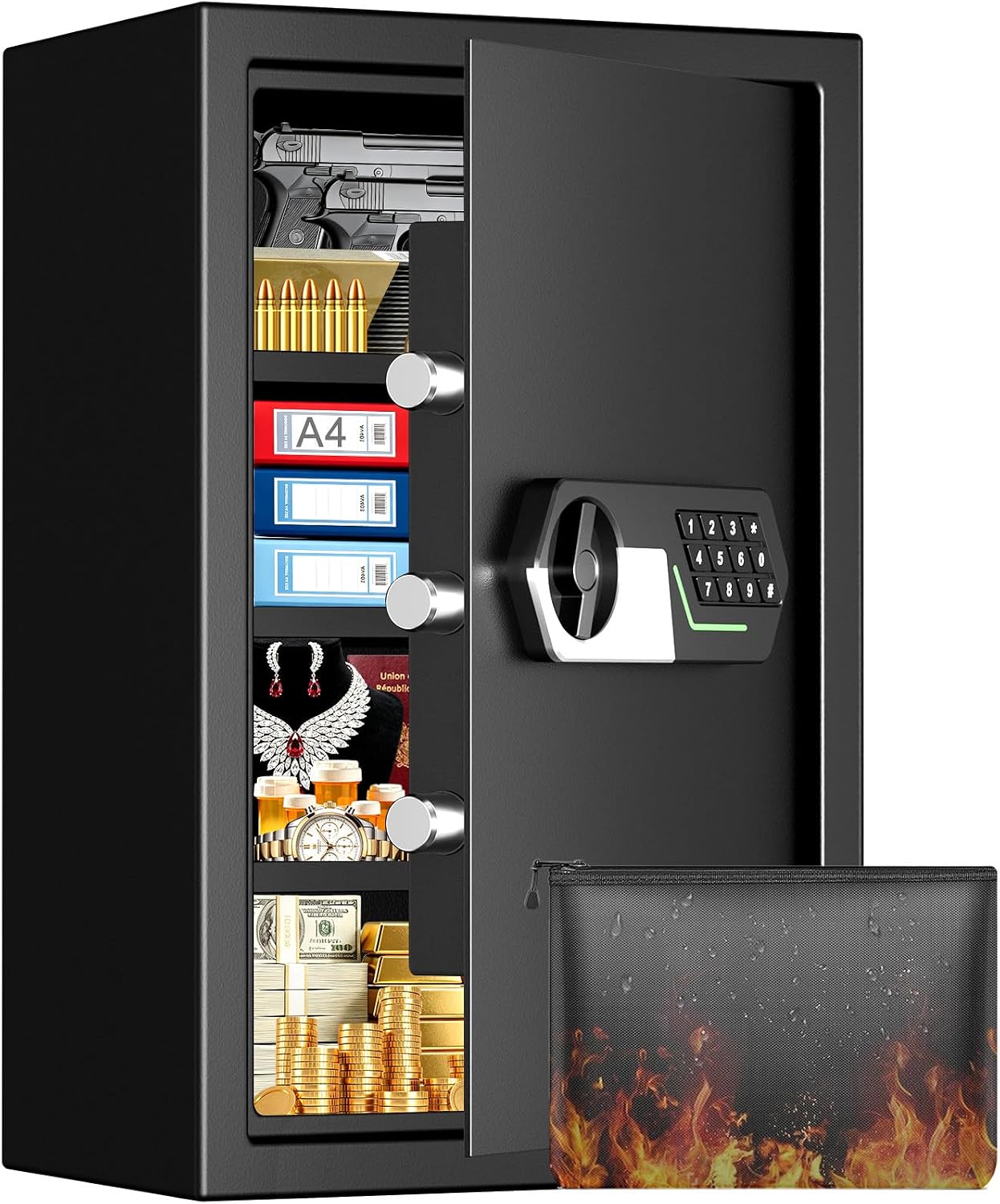
5.2 Cuft Large Home Safes with Fireproof Waterproof Bag, Digital Security Safe Box with Keypad Key and 3 Removable Shelves, Anti-theft Document Safe for Home Money Valuables
A 5.2 cubic foot digital safe with keypad and key entry, three removable shelves, and an included fireproof waterproof bag. This is the capacity leader of the group and the one that covers a full household of paperwork, cash, and small valuables in a single box.
Visit on Amazon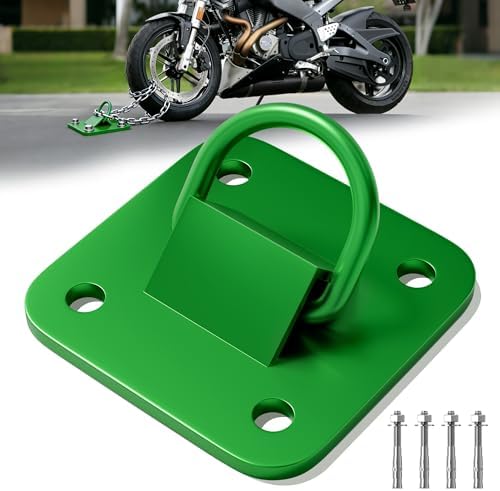
Concrete D Ring Anchor Plate with Bolts, Steel Floor Anchor
A steel D-ring plate and bolt kit for fastening a safe or other heavy item to a concrete floor. Anchoring is the single step that turns a portable box into something a thief has to work at instead of carry.
Visit on Amazon
Viking Security Safe VS-20BLX Mini Biometric Safe
A compact biometric safe built for quick access to a small set of items. Fingerprint entry is genuinely fast, and the trade-off is a lock that depends on a battery and a sensor staying healthy.
Visit on Amazon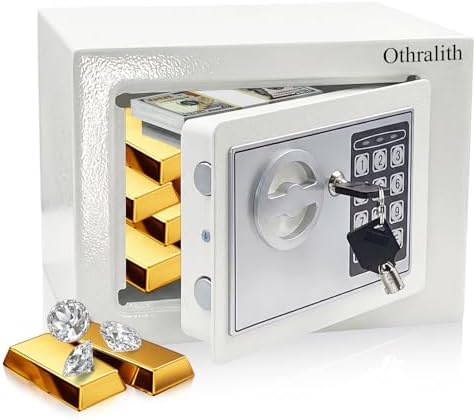
Small Safe Box for Money, Mini Money Safe for Home (Black)
Check current Amazon price
A small black money box sized for a shelf, drawer, or closet floor. Low capacity and low cost, which makes it a reasonable first step for cash and a few small items rather than a document archive.
Visit on Amazon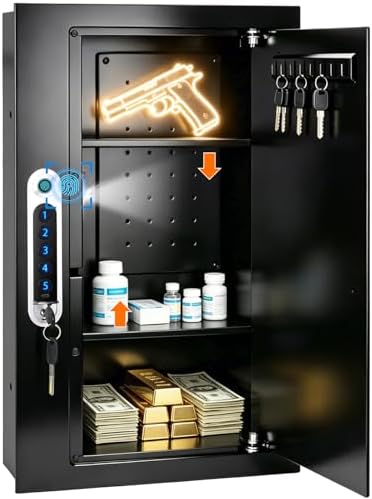
23.6" Tall White Biometric Wall Safe Between 16" Studs | Home In Wall Safe
A tall in-wall safe sized to sit between standard 16 inch studs, with biometric entry and a white finish that blends into the wall. Wall mounting removes the dolly problem entirely, since there is nothing to carry away.
Visit on Amazon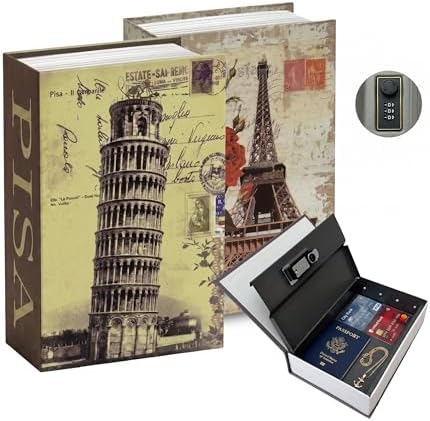
2 Pcs Diversion Book Safe with 3-Digit Lock, Hidden Metal Box (Pisa&Paris)
Two book-shaped metal boxes with three-digit combination locks. This is diversion rather than defense: they hide small items in plain sight on a shelf and depend on nobody bothering to pick one up.
Visit on AmazonPrices and availability may change. Check the retailer for current details.
How these products were compared
This guide compares interior capacity and layout, lock type and entry method, mounting and anchoring options, portability and weight class, and intended use case. The comparison is built from the product information supplied for each model and from general locksmith principles about how consumer safes fail. It is not a hands-on test, and nothing here should be read as a claim that any specific unit was pried, dropped, or manipulated. Product names, images, and retailer links are matched to the correct product so that every card points to the item shown.
The practical point of comparing those five things is that a safe is only as strong as its weakest feature. A generous interior means nothing if the box weighs twenty pounds and sits unbolted on a carpet. A fingerprint reader means nothing if the battery dies while you are out of town. Read the criteria in that order and the shortlist usually sorts itself out.
How to choose the right home safe
Start with the lock, because the lock is the safe. A steel box with a two-dollar lock is a steel box with a suggestion. Digital keypads are the honest middle ground: fast enough that you will actually use them, simple enough that a low battery is an inconvenience rather than a crisis. Biometric readers are faster still, and the trade-off is real. A sensor or a battery can fail, and when it does you want a key override on the same unit. Mechanical dials remain the most durable option and the slowest to open, which is why they show up on older safes rather than bedroom boxes. Whichever you pick, confirm the exact model includes a backup key or a bypass, because the day the electronics quit is the day you need it.
Capacity should follow normal use, not the one time a year you store something odd. Measure the largest item you expect to keep inside, add a few inches on every side, then compare that against the interior dimensions of the models you are considering. The 5.2 cubic foot unit in this roundup is aimed at households that want everything in one place: deeds, passports, birth certificates, jewelry, and a folder of cash. A mini money box or a compact biometric safe is aimed at a nightstand drawer's worth of valuables. Buying too small is the most common mistake, and it usually ends with a second safe purchase.
Then decide how the safe stays where you put it. Weight is security, and a light safe is a theft convenience for anyone with a dolly. Two approaches work. You can buy a heavy safe and hope the weight alone discourages lifting, or you can buy a moderate safe and bolt it down. The second route is cheaper and often better. That is why a steel floor anchor belongs in the same conversation as the boxes themselves, and why an in-wall unit that lives between two studs sidesteps the problem entirely. If you are mounting into concrete, plan the anchor before you buy the safe, not after.
Finally, read fire ratings the way you would read a nutrition label. A rating is a number of minutes at a specific temperature, and it means something only if the test behind it was real. If a listing says fireproof without a rating, treat that word as decoration. The included fireproof waterproof bag on the top pick here is a useful second layer for paper documents, but it is a bag, not a safe, and it does its best work inside a locked box.
5.2 Cuft Large Home Safes with Fireproof Waterproof Bag, Digital Security Safe Box with Keypad Key and 3 Removable Shelves, Anti-theft Document Safe for Home Money Valuables
This is the pick for the household that is tired of scattering important paper across three hiding spots. It offers the largest interior in the group, three removable shelves that let you separate documents from valuables, and two ways in: a keypad for daily access and a key for the day the keypad misbehaves. The included fireproof waterproof bag adds a layer of protection for documents, and the shelf design means you can reconfigure the interior as your storage needs change rather than buying a second box.
The honest trade-off is that capacity and convenience do not equal invulnerability. A safe this size is heavy but not immovable, and an unanchored safe in a ground-floor room is still a carry-out risk for a prepared thief. Pair it with a floor anchor, or at minimum place it where lifting it would be awkward and loud. It is also the largest footprint in this roundup, so measure the closet, cabinet, or floor space before it arrives. If you need something that disappears into a wall or a bookshelf instead, the alternatives below do that job better.
Alternatives to consider
The Concrete D Ring Anchor Plate with Bolts, Steel Floor Anchor is better suited to anyone who has already chosen a safe and wants it to stay put, since bolting down is the cheapest security upgrade available. The 23.6" Tall White Biometric Wall Safe Between 16" Studs is a stronger fit when floor and closet space are already spoken for and you would rather recess the safe into a wall cavity between studs.
The Viking Security Safe VS-20BLX Mini Biometric Safe, the Small Safe Box for Money, Mini Money Safe for Home (Black), and the 2 Pcs Diversion Book Safe with 3-Digit Lock, Hidden Metal Box (Pisa&Paris) cover the smaller end of the range. The Viking is the compact biometric option for fast access, the small black money box is the low-cost entry point for cash, and the two book safes are the choice when the goal is hiding a few items in plain sight rather than defeating tools. None of those three is a substitute for a locked, anchored safe, and they should not be sold as one.
Day-to-day use and maintenance
Electronic locks live or die on batteries. Put a reminder in your calendar to change them on a schedule rather than waiting for the low-battery beep, and keep the backup key somewhere outside the safe, because a key locked inside is a very expensive paperweight. Test the entry method once a month with the door open so you find a failing keypad or sensor before it matters. If the safe has a biometric reader, register more than one finger and clean the sensor according to the manufacturer's instructions, since oils and dust degrade reads over time.
Anchored or not, placement matters. A safe in a bedroom closet gets more privacy than one in a front hallway, and a safe that is visible from a window advertises itself. Keep the interior dry, avoid stacking paper directly against a door seal, and leave a little air space so humidity does not turn documents soft. If you use a fireproof bag, keep documents flat inside it and close it fully, because a bag that is left open protects nothing. Store the combination somewhere you will remember that is not a sticky note on the safe itself.
Buying checklist
- Measure the space, including door swing and clearance to open the safe fully.
- Choose the interior capacity based on normal use rather than an occasional edge case.
- Confirm that the exact model includes the lock type you want plus a key or bypass override.
- Decide how the safe will be anchored, and buy the floor or wall hardware at the same time.
- Read the fire rating's fine print rather than the word "fireproof" on the listing.
- Verify the current retailer price, availability, and return terms before ordering.
Final recommendation
Choose the 5.2 Cuft Large Home Safes with Fireproof Waterproof Bag, Digital Security Safe Box with Keypad Key and 3 Removable Shelves, Anti-theft Document Safe for Home Money Valuables when you want one locked, organized place for documents, cash, and valuables, and you are willing to anchor it. Choose the Viking Security Safe VS-20BLX Mini Biometric Safe when space is limited and fast access to a handful of items matters more than capacity. If hiding rather than locking is the actual goal, the book safes and the small money box fill that role honestly, as long as nobody mistakes them for real security.