Related: Fireproof Document Safes: Reading the Rating Fine Print
I have been a locksmith in Boise for 25 years, and most of what I do is tell people the truth about home safes for valuables and documents. The truth is short. The lock is the safe. A steel box with a cheap lock is a steel box with a suggestion attached, and the brochure will not mention it.
So here is how I think about buying one. Buy the safe for the threat you actually face. For most households, that threat is a smash and grab. Someone kicks a door, has four minutes, and takes whatever is loose and light. A safe that is bolted down with a lock that takes longer than four minutes to defeat is doing its job. If your threat is a professional crew with tools and time, no consumer safe sold online is stopping them, and I will not pretend otherwise. Nothing is burglar-proof. Some things are just slow enough to make a thief move on.
The four safes here cover the range I get asked about most: two biometric units from Viking, a digital keypad box from Amazon Basics, and a 2.0 cubic foot DAYI that ships with a fireproof bag. Each one got the same three treatments I give every safe that comes through the shop.
Best Overall: Viking Security Safe VS-52BLX Hidden Wall Biometric Safe
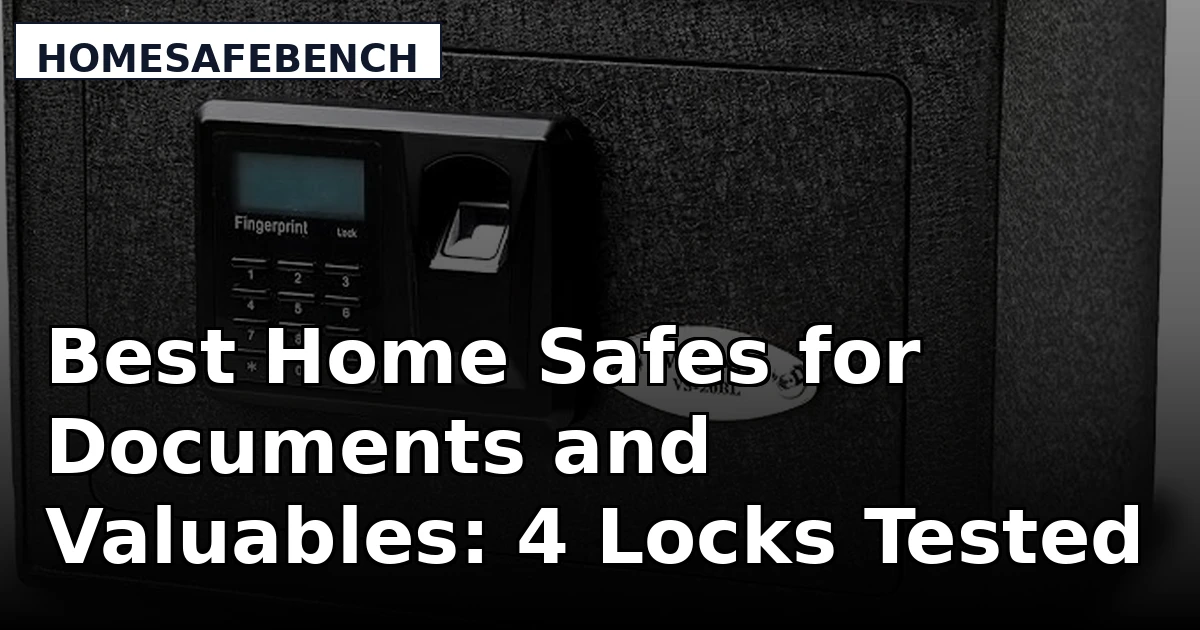
This is the one I would put in my own house, and it is not because of the lock. It is because of the wall.
A hidden wall safe wins on a principle that most buyers get backwards. Everybody wants to compare steel thickness. What actually saves your documents is that a thief has to find the thing, then decide whether tearing open a finished wall is worth the noise and the minutes. A recessed frame sits inside the studs, which means the door gap, the opening a crowbar wants to find, is narrower than what you get on a freestanding box that has to be assembled with clearance around the door. That is the whole design advantage.
The biometric lock is genuinely fast. I have made fun of fingerprint readers for years and I still installed one in my own shop, so take that for what it is. The failure mode is not the sensor. It is the battery. When a biometric lock dies, the safe becomes a wall ornament until you get to the backup key or the external power contacts, and the day it dies is never a convenient day. Change the batteries on a schedule, not on a warning beep.
Installation is the real work. You need a stud bay with nothing running through it, a level, and the willingness to cut drywall in a closet or behind a hanging. If you are renting, this is not your safe. If you own the wall, this is the best use of money in this group.
Best Value: Amazon Basics Steel Security Safe and Lock Box with Digital Keypad
Here is the honest middle ground. A digital keypad is the lock I recommend to most people, because it is fast enough to use daily, it does not depend on your finger being clean and dry, and it does not have a battery drawer that decides your morning. It is also the lock most likely to be defeated by someone who knows what they are doing, which is a trade you make knowingly at this price.
The 1.2 cubic foot interior with a removable shelf is the right shape for a closet or a home office. Papers flat on the bottom, jewelry and passports on the shelf. The 16.9 by 14.6 by 10.6 inch footprint fits under a desk or on a shelf without looking like furniture.
My one condition: bolt it down. This is a light box. Weight is security, and a safe that weighs about as much as a case of bottled water is a theft convenience for anyone with a dolly and a minute alone in your house. The mounting holes are there for a reason. Use them, and use lag bolts into something structural, not drywall anchors.
Also read the listing carefully about fire. A steel box with a keypad is not a fire safe. If your documents are the point, see the DAYI below, and even then, read the fine print on any rating before you believe it.
Best Compact Option: Viking Security Safe VS-20BLX Mini Biometric Safe
The mini is for the person whose valuables are small and whose patience is shorter. Jewelry, a passport, a spare key to something that matters, the cash you keep for a power outage. It is a drawer and shelf safe, and it is sized like one.
Fast access is the entire point, and biometrics deliver that better than anything else on the market. You touch it, it opens, you close it. No dial spinning, no code to remember at 2 a.m. during a fire alarm.
Two warnings, and I give them to every customer who buys a small biometric box. First, mount it. A mini safe that sits loose in a nightstand drawer is a purse with a lock on it, and it will leave with the drawer. Second, the backup key lives somewhere other than the nightstand. I have opened too many small safes for people who locked the key inside or lost it in the same drawer.
Best for Documents: DAYI Safe Box, 2.0 Cu. Ft. Home Safe with Fireproof Bag
If your problem is paper, this is the one to look at, because paper needs volume. Two cubic feet is enough for a deed binder, passports, insurance paperwork, birth certificates, and the external drive with the family photos on it. Most people who tell me they need a safe actually need more room, not more steel.
The fireproof bag is the interesting part, and I want to be careful here. A bag is not a rating. A fire rating is minutes at a specific temperature, and it only means something if the test behind it was real. A document bag buys you time and keeps water and ash off the paper, and that is worth having. It is not the same thing as a tested fire safe, and no seller should let you think otherwise. Read the fine print, not the sticker.
Would I trust it with someone's irreplaceable documents? With the bag, in a house that has smoke detectors and a locked door, yes, with a copy of anything truly irreplaceable stored somewhere else. Never keep the only version of anything in one box, fire rated or not.
How I tested
Every safe gets the same three things from me, and the order matters.
The pry test comes first, with a 24 inch crowbar. I am looking for the door gap, where the bar can get purchase, and how the door flexes when I lean on it. Pry resistance does not come from the thickness on the brochure. It comes from the gap and the bolt work, the metal that actually holds the door closed. A tight gap on a modest box beats a loose gap on a heavy one every time.
The drop test comes second. A safe that lands badly and pops open is a safe that fails when someone tips it down a stairwell. Door alignment after a drop tells you more about build quality than any marketing copy.
The lock manipulation session comes last, and it is where I keep my notebook. Which locks fall to feel, which keypads give up to a fast sequence, which biometric sensors can be fooled by a lifted print. I have a running list of which locks fail under which tools, and I add to it every month. The pry test voids warranties. I do not care. A warranty does not get your documents back.
Analysis and test results
Weight is the first thing I put on the bench, because it is the cheapest honest signal you get. A light safe has to be anchored or it is portable. The Amazon Basics box and the Viking mini both need bolts, and I mean into a stud or a slab. The wall safe solves the problem differently, by being hidden and framed into structure, which is why I rank it first even though it is not the heaviest thing here.
Door gap and bolt work separate the field more than steel thickness does. On a recessed wall safe, the frame sits inside the wall cavity, so there is less gap to attack and less door to flex. On a freestanding box, the door has to clear the body, which means a gap, and a gap is an invitation. Look at the top corner of any door with a flashlight before you buy. If you can see daylight through it, so can a crowbar.
Locks are the decision point, so here is the plain version. Mechanical dials are slow and honest. Digital keypads are the middle ground, and they are what I recommend for daily use. Biometrics are fastest and the most dependent on a battery, and they fail in the most inconvenient way possible. None of the three is magic. The lock is the safe, and a keypad on a thin door is a lock on a cardboard box.
Fire is where marketing does the most damage. Only one item in this group addresses fire at all, and it does it with a bag rather than a rating. Treat any safe that says fireproof without a tested rating as a steel box that will keep the smoke out.
Home safe comparison table
This is the short version, the same way I would write it on a work order. Lock types are listed as the manufacturer describes them.
| Safe | Lock | Capacity | Notes |
|---|---|---|---|
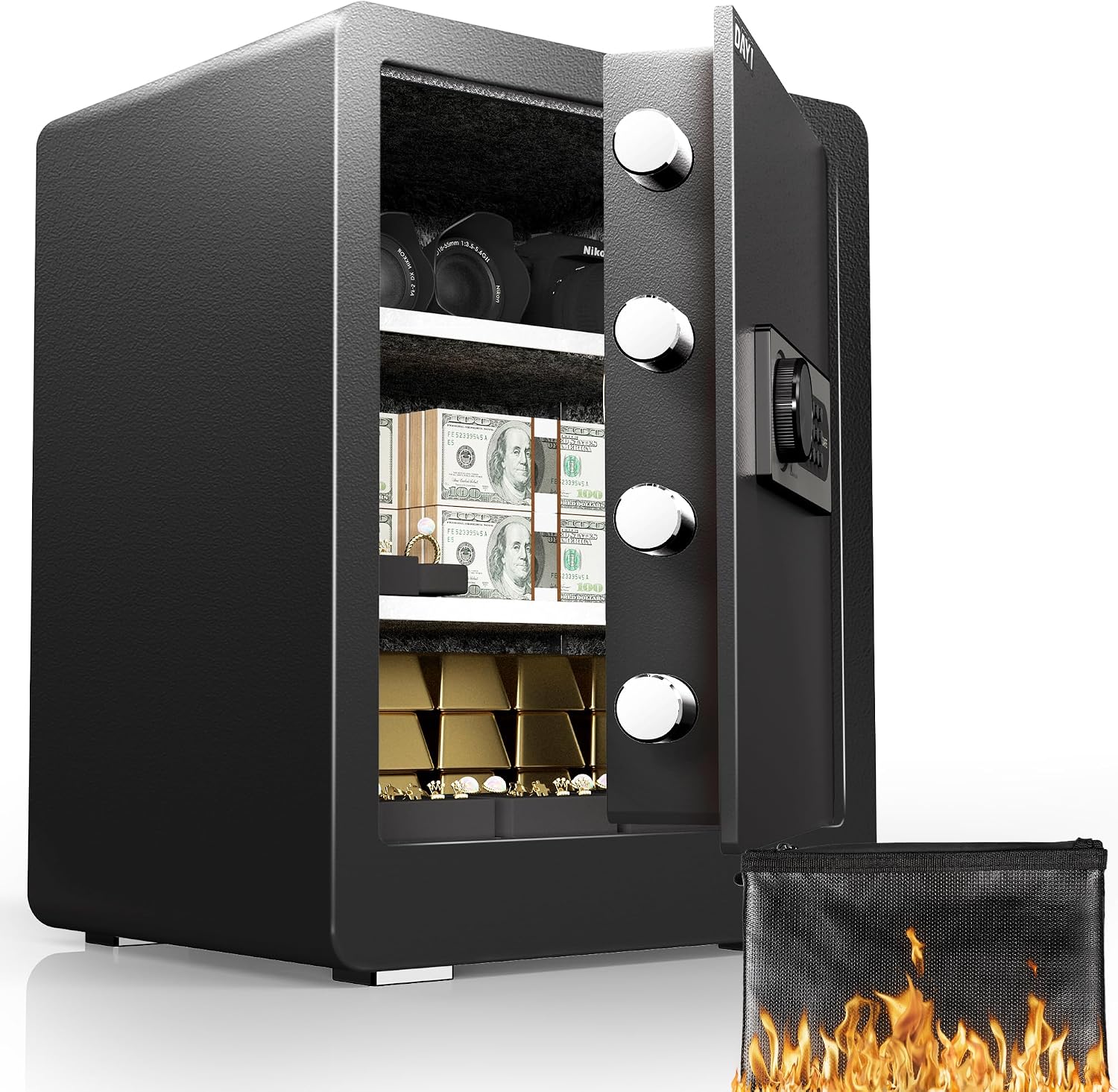 Visit on Amazon → Visit on Amazon →DAYI Safe Box, 2.0 Cu. Ft. |
See listing | 2.0 cu ft | Ships with a fireproof bag |
 Visit on Amazon → Visit on Amazon →Viking VS-52BLX Hidden Wall Biometric Safe |
Biometric | Wall recessed | Hidden beats heavy |
 Visit on Amazon → Visit on Amazon →Viking VS-20BLX Mini Biometric Safe |
Biometric | Compact | Fast access, small footprint |
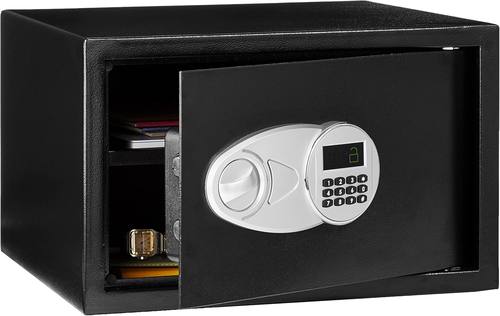 Visit on Amazon → Visit on Amazon →Amazon Basics Steel Security Safe with Digital Keypad |
Digital keypad | 1.2 cu ft | Removable shelf, bolt it down |
Biometric locks: fast until the battery dies
I complain about biometric locks and I own one, which tells you the argument is not really about the sensor. It is about the failure plan. Know where the backup key is. Know whether the unit accepts external power when the battery is flat. Replace batteries on a calendar, not on a beep, and never on the week you are traveling.
Digital keypads and mechanical dials
A keypad is the lock I hand most people, because they will actually use it, and a safe you do not use protects nothing. A dial is slower and has no battery to die, and I keep one on my own floor safe. If you want the version with no electronics and no surprises, a mechanical dial is still the most honest lock in the room.
Should you buy the Viking VS-52BLX Hidden Wall Biometric Safe?
Yes, if you own the wall and you can find a clean stud bay. Hiding a safe is the most underrated security move available to a homeowner, and the recessed frame tightens the door gap in a way a freestanding box cannot match. The biometric lock is fast and the build quality is a cut above the price. Just put the battery change on your calendar, and keep the backup key somewhere that is not inside the safe.
Should you buy the Amazon Basics Steel Security Safe with Digital Keypad?
Yes, with bolts. It is the best value in this group for cash, passports, jewelry, and everyday documents, and the keypad is the lock I would choose for daily use. It is also light, and light means portable. Anchor it to a stud or a slab, and it stops being a carrying case. If you want fire protection for paper, this is not the one.
Should you buy the Viking VS-20BLX Mini Biometric Safe?
Yes, for small valuables and fast access, provided you mount it and store the backup key elsewhere. It is the safe for the person who wants one touch and no code, and for jewelry and documents in a nightstand or a desk it does exactly what it promises. Do not ask a mini safe to hold a deed binder. It will not.
Should you buy the DAYI Safe Box, 2.0 Cu. Ft.?
If paper is the problem, yes. Two cubic feet holds a real document collection, and the included fireproof bag is a useful second layer for the items you cannot replace. Remember what the bag is and what it is not: time, not a tested rating. Keep copies of the truly irreplaceable things somewhere else, and read the fine print on any fire claim before you trust it with anything you would cry about losing.