Related: Home Safe Sizes Explained: Cubic Feet Versus What Actually Fits
There is no burglar-proof safe. Anyone who tells you otherwise is selling a feeling, not a box. What you can buy is time: minutes against a thief, minutes against a fire, and a door gap that decides how many of those minutes exist in the first place. That is the honest frame for shopping a fireproof home safe, and it is the frame I use after 25 years of picking, drilling, and prying other people's.
I keep a workshop notebook of which locks fail under which tools. That notebook has been more useful to me than any brochure, because the brochure will tell you a safe is military grade and a 24 inch crowbar will tell you the truth. Most consumer safes I open take me ten minutes. The question is never whether I can get in. The question is whether the person in your house at 2 a.m. can.
So this is not a list of the biggest boxes. It is a list of four boxes that do four different jobs, and the job matters more than the price tag. Buy the safe for the threat you actually face. For most households that threat is a smash and grab and a house fire, not a professional crew with a stethoscope.
What a document safe actually has to do
Paper has one enemy that a safe can solve and one that it cannot. Fire it can solve, if the box keeps the inside cool while the outside burns. Water it can solve, if the seal holds during a flood or a fire hose. A determined thief it cannot solve, not at these sizes, and any product that implies otherwise is marketing.
Read the fine print on any fire claim. Two numbers matter: how many minutes, and at what temperature. A box rated for a short burn at a lower temperature will protect paper from a kitchen fire and lose to a house fire that burns for an hour. If the listing does not name numbers, treat the word fireproof as decoration.
Then look at the lock. The lock is the safe. A key lock on a document box is there to keep the box closed and to slow a curious guest. A combination lock adds convenience. Neither is high security, and that is fine as long as you know it going in.
SentrySafe HD4100: the one I would put paper in
SentrySafe is the value standard in this category, and the HD4100 is the model that makes the case. The listing calls it fireproof and waterproof and describes it as a file folder and document box with a key lock. That combination, in a box sized 14.3 by 15.5 by 13.5 inches, is what a document safe is supposed to be.
Here is why I like it as the default pick. It is purpose-built for paper. Folders fit, which sounds obvious until you buy a safe with a deep well and no way to organize anything. The key lock is simple and it will not eat batteries or lock you out with a dead keypad. And the fire and water language is attached to the box itself, not to an accessory inside it.
What it will not do is stop someone who wants in. It is a document box, not a vault, and it is light enough that the right person walks out with it. Bolt it to a shelf, put it in a closet behind something boring, and it does its job. Buy it for the papers you cannot replace. 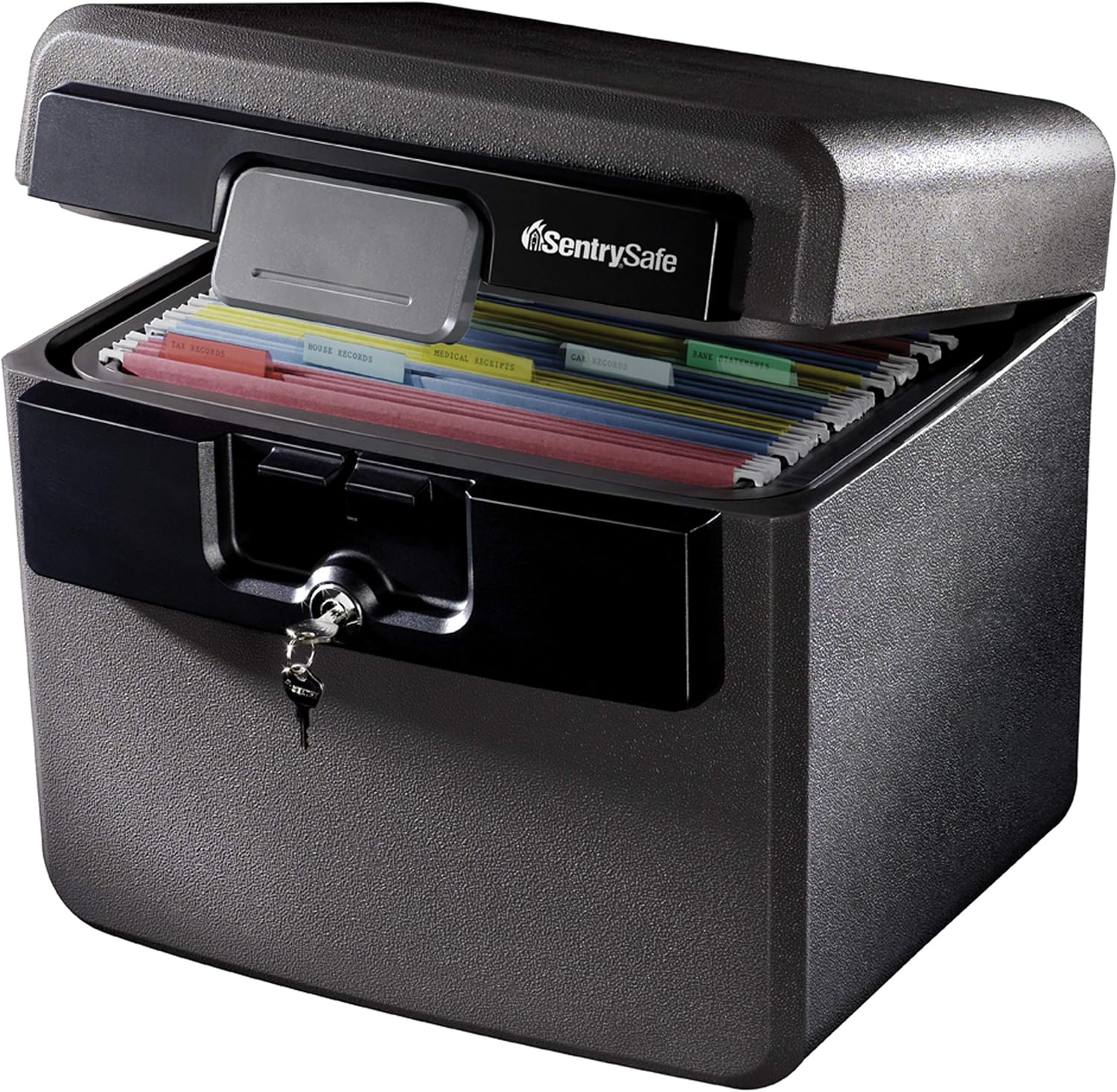 Visit on Amazon →
SentrySafe 1170: the compact document box
The 1170 is the same philosophy in a smaller shell. The listing calls it a fireproof document box with a key lock, 0.61 cubic feet, and 13.6 by 15.3 by 12.1 inches. If your important paper fits in one hanging folder, this is the box.
It is the one I recommend to renters and to anyone in an apartment, because 0.61 cubic feet is a thing you can put on a closet shelf, under a bed, or in a storage unit without reorganizing your life around it. It is also the easier of the two SentrySafe models to hide, and hiding beats bolting for a lot of people.
The tradeoff is capacity. It holds documents and not much else. If you are trying to fit a stack of tax returns, insurance policies, passports, and a binder of medical records, you will run out of room and start stacking paper in a way that bends corners. Buy it for the essentials, not for the archive. 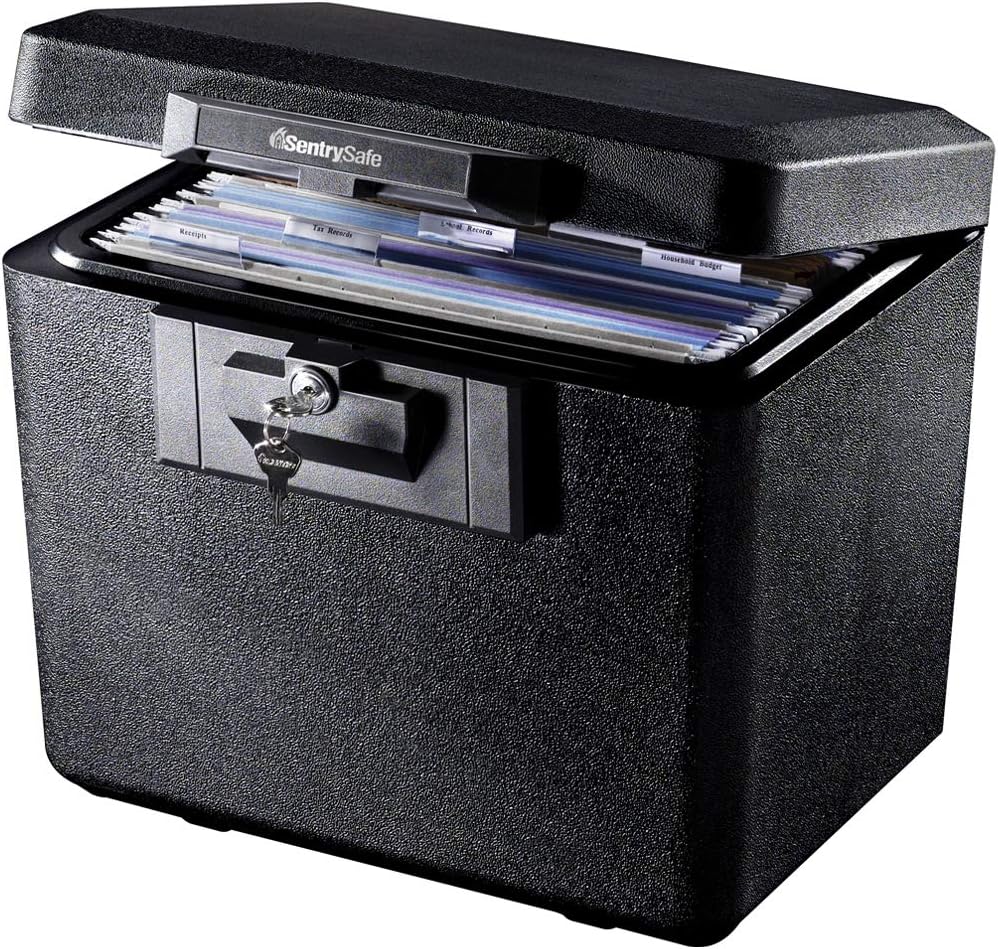 Visit on Amazon →
23.6 inch tall large home safe: volume, with a caveat
This one is a different animal. It is a 23.6 inch tall standing safe with 4.6 cubic feet of space, and the listing pairs it with a fireproof and waterproof bag. Read that carefully, because it is the most honest piece of labeling in this group. The box is not rated fireproof. The bag is.
I want to be fair to it, because there is nothing wrong with that arrangement if you understand it. A fire bag protects what is inside the bag. It does not protect what is sitting beside the bag on the shelf. So if you buy this safe, the documents go in the bag every single time, and everything else in there is on its own.
What it does well is volume and presence. 4.6 cubic feet holds a lot: boxes, folders, a camera, a hard drive, the things that do not fit in a document box. It looks like furniture, which means it will not be shoved into a closet and forgotten. What it does not do is weigh much, and an unbolted safe of that size is a dolly job for two people. Bolt it into a corner or accept that it moves. Buy it if you need space, not if you need a measured fire rating on the steel.  Visit on Amazon →
Amazon Basics portable security case: a lock box, not a safe
Call this what it is. The Amazon Basics case is a portable lock box with a combination lock and a handle, sold in a large size in black, and its own listing mentions dorms and personal items. It is not a fire safe and it is not a burglar safe. It is a place to put things so they are not lying in a drawer.
That is a real job, and it is the job most people actually need first. Roommates, cleaning crews, little kids, a house full of guests. A locked case with a combination stops the casual hand and removes the excuse. It also travels, which matters if you move between a dorm and a home or you want something for the car on a road trip.
The line is simple. Do not put anything in here that you cannot replace, and do not put paper in here and consider your documents handled. If you want fire protection, you are shopping in the SentrySafe aisle. If you want your watch and your spare keys to stop wandering, this is the cheap, correct answer. 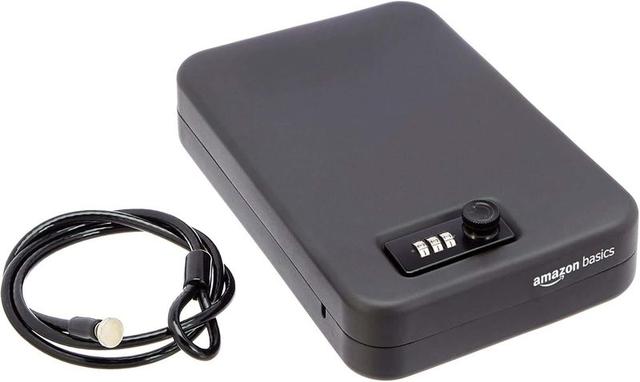 Visit on Amazon →
How I would sort any of these
The checklist I run on a document safe never changes. First, the lock. What kind is it, and what does it take to manipulate or defeat it? A key lock is only as good as the keyway and the person holding the key. A combination lock is only as good as the person who left it on the default code.
Second, the door gap. I look at the opening a crowbar wants to find, and I think about whether the bolt work behind it is doing anything or just decorating the edge of the door. A tight gap with a couple of solid bolts beats a thick door with a loose fit every time.
Third, weight and anchoring. Weight is security. A light box is a theft convenience for someone with a dolly, so the question is whether you are going to bolt it. Fourth, the fire claim, and whether it names minutes and temperature or just says fireproof. Anything that fails the fourth question without an answer goes in the cash box category, not the document category.
The document safe lineup at a glance
| Safe | Lock | Fire and water | Best for | Where to buy |
|---|---|---|---|---|
| Visit on Amazon → SentrySafe HD4100 |
Key lock | Fireproof and waterproof per the listing | Most households with paper to protect | Visit on Amazon → |
| Visit on Amazon → SentrySafe 1170 |
Key lock | Fireproof document box per the listing | Small document sets and renters | Visit on Amazon → |
| Visit on Amazon → 23.6 inch Tall Large Home Safe |
Not specified in the listing | Bag included, box itself not rated | Volume, boxes, and larger valuables | Visit on Amazon → |
| Visit on Amazon → Amazon Basics portable security case |
Combination lock | None | Small valuables and casual deterrence | Visit on Amazon → |
Two of these four protect paper from fire. Two do not. That is the single most useful thing I can tell you about this lineup, and it is the reason I put the fire column in the table instead of a price column. Prices move. Ratings are the reason you are buying.
Should you buy the SentrySafe HD4100?
Yes, for most people. It is the box that matches the job: folders fit, the key lock is honest, and the fire and water claims belong to the box, not to an accessory you might forget to use. It is not heavy and it is not a thief-stopper, so plan to bolt it or hide it.
If you own a home and you keep insurance paperwork, deeds, and passports, this is the category you want. If you are buying a safe to protect jewelry from a burglar, no box at this size is the answer.
Should you buy the SentrySafe 1170?
Yes, if your document pile is small and your space is smaller. Roughly 0.61 cubic feet is a folder of paper, not an archive. It hides easily, which is worth more than people admit, and the key lock keeps it closed.
Skip it if you are already stacking paper on the floor. Buy the larger document box instead of learning to fold a deed in half.
Should you buy the 23.6 inch tall large home safe?
Buy it for volume. 4.6 cubic feet is a genuine amount of storage and the cabinet shape makes it usable for things that are not paper. Just be honest with yourself about the fire rating, which lives in the bag, and about the weight, which is not enough to stop two people with a hand truck.
Should you buy the Amazon Basics portable security case?
Buy it as a lock box and nothing more. For a dorm, a shared house, or a drawer full of watches and spare keys, it does the work for very little money. Do not put irreplaceable paper in it, because fire, water, and crowbars do not care about a combination lock.
The bottom line
Match the box to the threat. A house fire is the threat that most people ignore and the one that most reliably destroys the things you cannot replace, which is why the fire and water models lead this guide. A smash and grab is the threat that people overestimate, because no consumer box in this lineup stops it, and the honest move is to bolt the box down and stop pretending the brochure helps.
Buy the SentrySafe for paper. Buy the tall safe for space. Buy the lock box for the drawer that keeps growing legs. And write down where you put the key, because I have opened more boxes for locked-out owners than for thieves.