Related: Best Home Safe for Documents and Cash
I have been a locksmith in Boise for 25 years. In that time I have opened more safes than the manufacturers would like to admit, including a few the owners swore were impenetrable. I have also watched people spend real money on a fireproof home safe and then keep the emergency key in the drawer right next to it.
Here is the sentence I want you to carry out of this article: the lock is the safe. A heavy steel box with a cheap lock is a suggestion, not a barrier. I can open most consumer safes in about ten minutes. The question that matters is whether the person standing in your hallway at 2 a.m. can do the same thing with a crowbar and a flashlight.
So this is not a list of the shiniest boxes. It is how I separate a fireproof home safe from a prop. Four items are on the bench this month: two safes at very different price points, a garage keypad that handles the perimeter, and one thing that has no business in a security article at all. I will explain that last one when I get to it.
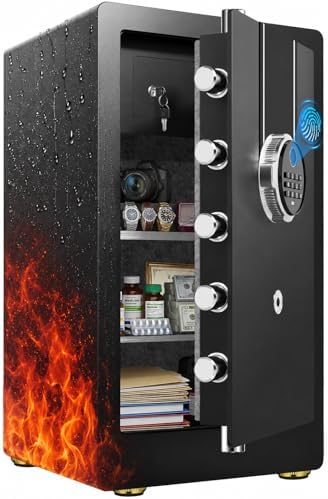
The Big Box: 31.5''H Large Fireproof Waterproof Safe for Home Office
The name does most of the talking here: fireproof, waterproof, 31.5 inches tall, built for a home office. In my experience a tall safe is usually the right call, because the height forces an honest conversation about what you are actually protecting. Documents, external drives, passports, the folder your spouse keeps asking about. A cabinet this size lets you keep all of it in one place instead of scattered across three drawers and a shoebox.
The two claims worth reading twice are fireproof and waterproof. Fire ratings are measured, not imagined. One hour at 1,550 degrees means something only if the test behind it was real, and the fine print is where you find out what was tested and what was not. Waterproof matters more than people think, because the same fire that cooks your paperwork gets put out with a hose. A safe that survives the heat and then fills with water has still ruined the paper.
What I would check before trusting it with anything irreplaceable: the door gap first, then the bolt work, then the lock. A tall door with a wide gap is a crowbar invitation no matter how thick the steel is. A tight gap and bolts that engage the frame are what actually stop a pry bar. Weight matters too, and a tall safe is easier to bolt down than to carry off, which is half the battle.
The Budget Pick: Amazon Basics Steel Security Safe and Lock Box
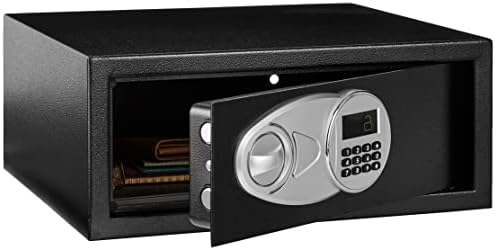
At 0.7 cubic feet, roughly 17 by 15 by 7 inches, this is the safe that goes on a closet shelf or gets bolted into a nightstand. It has a digital keypad, an electronic lock, and an emergency key, which is the combination I recommend to almost everyone who asks me what to buy on a modest budget. The keypad is the honest middle ground. Biometric locks are faster right up until the battery dies, and then they are a very expensive paperweight.
This is a steel security box. It is not advertised as fire rated, and I would not treat it like one. Cash, jewelry, a passport, a spare set of keys: yes. Your grandfather's naturalization papers: no. Not because the box is bad, but because heat does not care how much you like the box. Buy the safe for the threat you actually face. For most households that threat is a fast smash and grab, and a bolted down box with a keypad beats a locked desk drawer every single time.
Two things I would do before trusting it. Bolt it down, because weight is security and this box is light enough for one person with a dolly. And put the emergency key somewhere outside the house, because the number one way a keypad safe gets opened is a key sitting in the same room as the safe.
The Perimeter: Genie Garage Door Opener Wireless Keyless Keypad
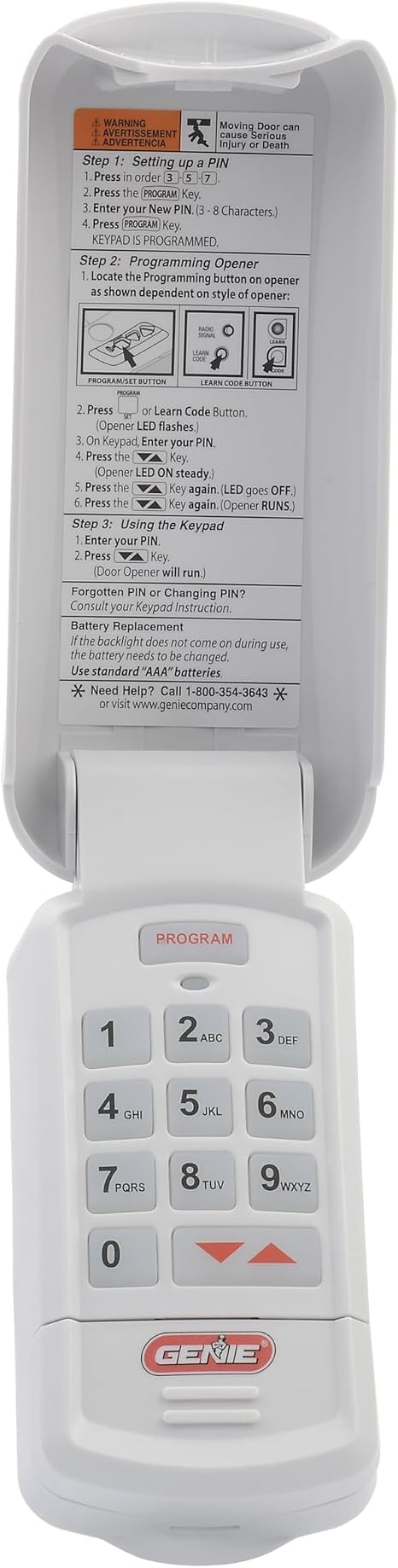
Most people lock the front door and leave the garage wide open. A keypad mounted on the garage frame is the cheapest perimeter upgrade in this article, and it solves a problem I see every week: the spare key under the flowerpot, or the hide-a-key that has been sitting in the same spot since 2011.
This one is wireless, keyless, and compatible with Genie Intellicode openers. You set a PIN and you get in without a remote or a key. Give the dog walker a code instead of a key, change the code when the arrangement ends, and you have not handed out a copy of anything. That is real access control, and it costs less than most people spend on a spare key rotation.
The honest caveat: a garage keypad is convenience and access control, not a lock. If someone wants into your garage, a keypad does not stop them. What it does stop is you leaving a key outside, which is the actual vulnerability in most homes. Pair it with a solid deadbolt on the door between the garage and the house and you have closed the loop.
The Odd One: Paul Sebastian Design Perfume
I told you one item on this bench had no business in a security article. This is it. A soft floral fragrance spray, 3.4 fluid ounces, day and night. There is no lock on it. You cannot store a passport in it.
I am including it because it arrived in the same batch as the safes, and because there is a lesson buried in the silliness. When people ask me what belongs in a safe, the answer is almost never the thing that is easy to replace. Perfume goes on the dresser. Documents, cash, jewelry, and the backup drive go in the box. If you are buying a safe for someone who keeps their real valuables in a shoebox, buy the safe and let this be the stocking stuffer.
How I judge a safe
Same three checks every time, whether it is a small box or a vault.
First, the lock. Mechanical dial, digital keypad, or biometric. A dial is slow and nearly immune to a dead battery. A keypad is fast and honest about what it is. A biometric is fast until it is not, and the battery is a single point of failure. I keep a mechanical dial at home and recommend keypads to customers, and yes, I know how that sounds.
Second, the door gap and the bolt work. Pry resistance does not come from the thickness of the brochure. It comes from a tight gap and bolts that actually engage the frame. Get down on the floor with a flashlight and look at the gap between the door and the body. If a dime slides in, a crowbar will find it.
Third, the fire rating fine print. Minutes at a specific temperature, tested by whom, and does the rating cover paper or media. A safe rated for paper documents will still cook a hard drive. If the listing says fireproof with no number attached, that is marketing, not a rating.
And weight. A 20 pound safe is a theft convenience for anyone with a dolly. If it is light, bolt it. If you rent and cannot drill, buy heavier than you think you need.
The reference table
Everything on the bench this month, sorted by what it is actually for. Prices move, so check the listing. Note that the last row is not security equipment and I am not going to pretend otherwise.
| Product | Access | Stated protection | Best for | Price |
|---|---|---|---|---|
 Visit on Amazon → Visit on Amazon →31.5''H Large Fireproof Waterproof Safe for Home Office |
Lock and keypad per the listing | Fireproof and waterproof per the listing | Documents, drives, and heirlooms in a home office | $369.99 |
 Visit on Amazon → Visit on Amazon →Amazon Basics Steel Security Safe and Lock Box |
Digital keypad plus emergency key | Steel security box, no fire rating advertised | Cash, jewelry, keys, and a passport on a closet shelf | $85.04 |
 Visit on Amazon → Visit on Amazon →Genie Garage Door Opener Wireless Keyless Keypad |
PIN entry, no key or remote | Access control for Genie Intellicode openers | Giving a code instead of handing out a key | $34.99 |
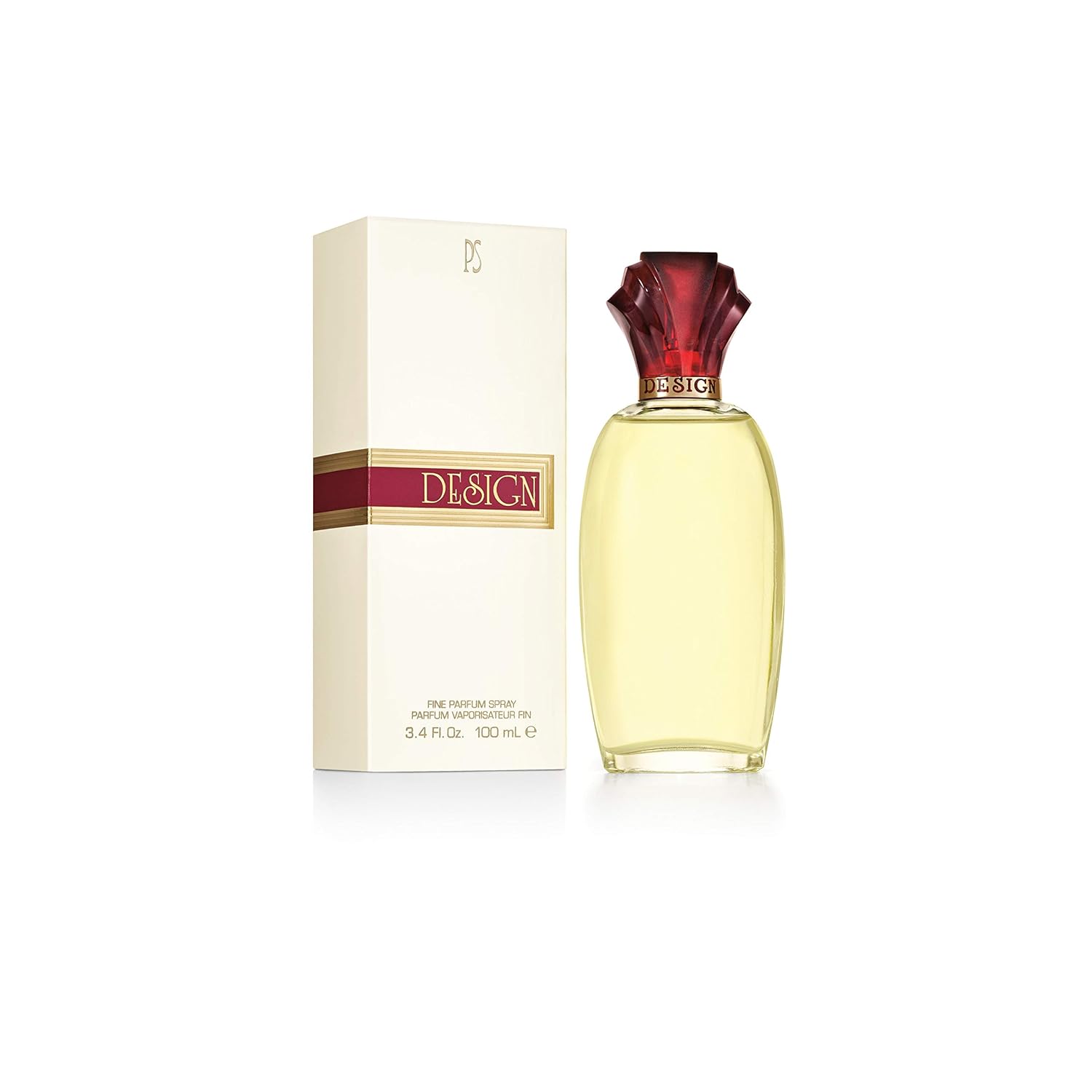 Visit on Amazon → Visit on Amazon →Paul Sebastian Design Perfume |
Spray bottle, no lock at all | None | A gift, not a security product | $20.20 |
What the table actually tells you
Two safes, two jobs. That is the whole point of the table. The large fireproof unit is for the things you cannot replace, and the small keypad box is for the things you would rather not lose but could survive losing. Buying the wrong one for the wrong job is how people end up with a wet passport and a perfectly dry stack of junk.
The garage keypad is the row most people skip, and it is the one I would buy first if I were starting from zero. The cheapest break in is almost never a picked lock. It is an open garage, an unlocked window, or a key that has been under the same rock for a decade. Access control on the perimeter does more for your actual risk than upgrading a safe you already own.
On the safes themselves, pay attention to the door gap and the bolt work before you pay attention to anything on the box. Pry resistance is a geometry problem, not a marketing problem. And read the fire rating like a contract, because that is what it is. A number attached to a temperature and a duration is a promise. The word fireproof by itself is a mood.
One more thing about keypads: they eat batteries. If a keypad goes dead in a month, the safe is telling you something about its electronics. Keep a spare battery on the shelf, and keep the emergency key somewhere that is not the drawer beside the safe. I have opened more keypad safes with a found key than with any tool in my bag.
Should you buy the 31.5''H Large Fireproof Waterproof Safe?
Yes, if documents are the priority. It is the only item here built around protecting paper and drives from heat and water, and the height means you can actually organize what you own instead of stuffing envelopes into a gap. Read the fire rating fine print before you commit, then check the door gap when it arrives and bolt it down. If you have a folder of irreplaceable paper and no plan for it, this is the plan.
Should you buy the Amazon Basics Steel Security Safe?
Yes, for cash, jewelry, keys, and everyday documents, as long as you are honest about the limits. It is a steel box with a digital keypad and an emergency key, and it is not advertised as fire rated. Bolt it down and it handles the threat most people actually face. If you need fire protection for paper, this is not that product, and no amount of bolting changes the chemistry.
Should you buy the Genie Wireless Keyless Keypad?
Yes, and it may be the best value on this page. It replaces the spare key under the mat with a code you can change, which removes the single most common way a house gets entered without force. It is access control, not armor, so put a real deadbolt between the garage and the house. Do that and the perimeter is as tight as most homes need it to be.
The perfume, for the record, is a gift. Nothing else on this bench is.