Related: How to Bolt a Safe Down Without Cracking the Floor
The lock is the safe
I have been a locksmith in Boise for 25 years, and I have opened more safes than most manufacturers would care to admit. Some were pried open by a teenager with a crowbar and twenty minutes. Some came open by feel, no tools at all, just a manipulation session and a quiet room. Almost none of them failed because the steel was too thin. They failed at the lock, or at the door gap, or because the box weighed 20 pounds and walked out of the house under one arm.
So when somebody asks me about home safes with digital keypad locks, I do not start with cubic feet. I start with two questions. What are you putting inside, and who is coming for it? For most households the real threat is a smash and grab, not a professional crew with a stethoscope and a free weekend. Buy the safe for the threat you actually face, not the one on the television.
The four products below cover the range I get asked about most: two SentrySafe keypad boxes, one tall safe box that arrives with a fireproof bag, and one item that has nothing to do with locks but belongs in the same conversation.
How I judge a home safe
Four things, in this order.
The lock. A $500 safe with a $2 lock is a steel box with a suggestion. On a digital keypad, that means a lock body with real substance behind it, not a plastic housing with a solenoid and a prayer. Keypads are the honest middle ground. They are fast enough that you will actually use them every day, there is no biometric sensor to fail on a cold morning, and there is no key to lose under the floor mat.
The door gap. Pry resistance comes from the door gap and the bolt work, not the thickness of the brochure. A tight gap with live bolts on all four sides makes a crowbar work for a living. A wide gap with two bolts on one side is an invitation with a bow on it.
Weight and anchoring. Weight is security. A light box is a theft convenience for somebody with a dolly and a jacket. Every one of the safes here either ships with a bolt down kit or should be anchored anyway. If it can be carried, bolt it. If you rent and cannot drill, chain it to something that does not move.
The fire rating. Read the fine print, not the sticker. A rating is minutes at a specific temperature, measured under a protocol, not the word fireproof in 40 point font. If a listing does not state a rating in minutes, treat the box as a storage container and add your own layer of protection.
[16.54" Tall] Safe Box, 2.8 Cuft Home Safes With Fireproof Bag
This is the capacity play of the group. At 2.8 cubic feet and 16.54 inches tall, it holds what the smaller boxes cannot: binders, a stack of tax records, a laptop with room left over for the small stuff. Height matters more than people expect. Tall boxes let you stand documents up instead of laying them flat, and a document that stands up is a document you can find in a hurry.
The fireproof bag is the honest part of the package. It tells you where the fire protection actually lives on a box in this class. Use it the way it is meant to be used: papers and passports inside the bag, bag inside the safe. That is layering, and layering is how people keep documents through a real fire instead of hoping a sticker was truthful.
The listing does not spell out the lock, so if the lock is your deciding factor, ask before you buy. Check current Amazon price.
SentrySafe Shelf Safe with Digital Keypad Lock, X105
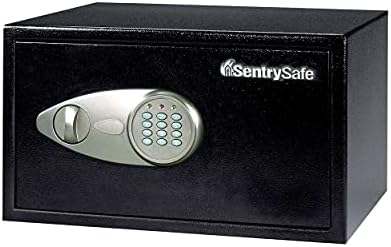
SentrySafe is the value standard for a reason, and the X105 is the one I recommend to people who live in apartments and hate drilling holes. The exterior is 8.9 by 16.9 by 13.6 inches, which is the footprint that fits on a closet shelf or a desk return without announcing itself. Interior volume is 0.98 cubic feet, so this is a documents, jewelry, and cash box, not a camera collection box.
The interior lining is not decoration. It keeps a watch or a stack of passports from getting scuffed against bare steel, and it deadens the rattle when somebody bumps the shelf. The bolt down kit is included, which tells you the manufacturer expects this thing to be anchored, and they are right. A 0.98 cubic foot box that is not bolted is a box somebody carries out in a laundry basket.
The keypad is the reason this safe gets used instead of admired. No dial to spin, no key to hide. Check current Amazon price.
SentrySafe Black Home Safe with Shelf and Digital Keypad, X125
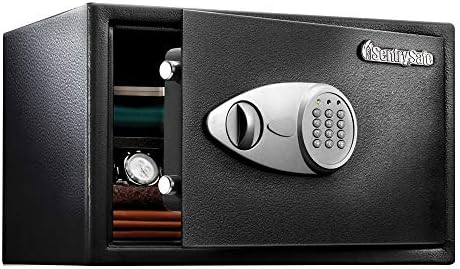
The X125 is the X105 with more room and a shelf, and that shelf is the difference between a box and a system. Papers and folders go underneath. Jewelry, keys, spare cards, and the passport you actually use go on top. Nothing gets buried, which means nothing gets tossed on the dresser because you did not want to dig for it.
Exterior dimensions are 10.6 by 16.9 by 14.6 inches, and the listing calls it a large safe for a laptop, documents, and money. That is an accurate description of the job. If you work from home and your laptop is the thing you cannot replace, this is the box that swallows it along with the paperwork.
Same digital keypad family as the X105, same daily-use logic. A safe with a shelf is a safe that stays organized, and an organized safe is one you keep using after the novelty wears off. Check current Amazon price.
55 Gallon Water Preserver Concentrate
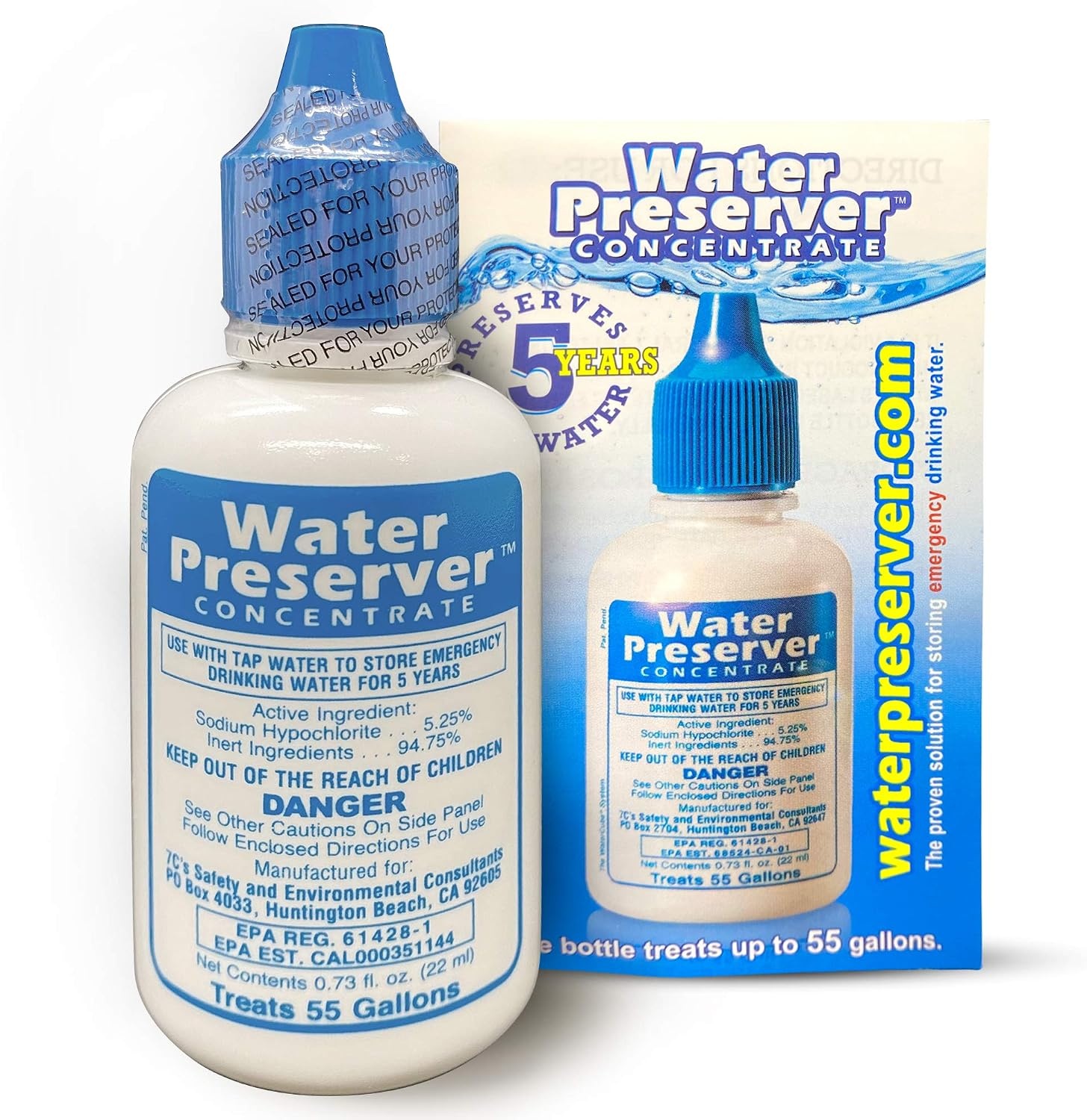
No lock on this one, and it still belongs here. When I talk to people about what they store for an emergency, two categories come up every time: the papers they cannot replace, and the water they cannot drink without. The first goes in the safe. The second goes in barrels in the garage, and barrels go stale.
This concentrate is dosed for 55 gallon storage and states five year protection. The math is simple: treat the water when you fill the barrel, date the barrel with a marker, and stop pretending you will rotate it every six months. If you are storing water for an earthquake, a hurricane, or the week the municipal line breaks, treating it is cheaper than replacing it. Check current Amazon price.
The comparison table
This is how the four stack up on the numbers the listings actually state. Read it as a starting point, then go check the lock details and the fire language on the product page before you spend anything.
| Product | Stated capacity | What comes with it | Best for |
|---|---|---|---|
![[16.54" Tall] Safe Box, 2.8 Cuft Home Safes With Fireproof Bag](/images/products/B0DQC4JM5N.jpg) Visit on Amazon → Visit on Amazon →Tall safe box, 16.54 inches tall |
2.8 cubic feet | Fireproof bag | Bulk document storage |
 Visit on Amazon → Visit on Amazon →SentrySafe X105 |
0.98 cubic feet | Digital keypad, interior lining, bolt down kit | Shelf and closet installs |
 Visit on Amazon → Visit on Amazon →SentrySafe X125 |
Large, sized for a laptop | Digital keypad, interior shelf | Laptops plus paperwork |
 Visit on Amazon → Visit on Amazon →Water preserver concentrate |
Treats 55 gallons | Five year stated protection | Emergency water storage |
What the table does not tell you
The table cannot tell you how a door feels when you close it, and that is the part I care about. A keypad safe lives or dies on two things the spec sheet hides: how tight the door sits in the frame, and whether the lock body is bolted to the door or hanging off a plate. You find that out by putting your hand on the door and trying to move it side to side. If it wiggles, a crowbar will find that wiggle.
Batteries are the other thing the table will not tell you. Keypads eat batteries, and a keypad that dies while you are at work is a keypad that locks you out of your own documents. Change them on a schedule, not when the low battery chirp starts, and keep the backup key somewhere other than the drawer under the safe. That drawer is the first place a thief looks.
Fire ratings deserve their own paragraph. Minutes at a temperature is a measurement. Fireproof is a word. If a listing does not state the rating in minutes, the fireproof bag inside the box is doing the real work, and you should treat it that way: documents sealed in the bag, bag in the safe, safe away from the garage wall where the lawnmower gas lives.
Weight matters too, and it is the number nobody lists. A box that one person can carry is a box that one person can steal. Bolt it down, and if you cannot bolt it, put it somewhere a thief has to work in the open to reach it.
Should you buy the tall safe box?
If your problem is volume, yes. It is the largest interior in this group by a wide margin, and the included fireproof bag gives you a real second layer for documents instead of a promise printed on cardboard. Just confirm the lock details on the product page first, because the listing is thin on that point and the lock is the part I would want to know about.
Should you buy a SentrySafe X105 or X125?
Yes, and which one depends on one question: does a laptop need to fit? The X105 is the shelf and closet box, with a bolt down kit included and an interior lining that protects what you put in it. The X125 is the same idea with a shelf and enough room for a laptop plus the paperwork. Buy the one that matches the object you would cry about losing.
Should you buy the water preserver?
Yes, if you are storing water in barrels and you have already accepted that you will not rotate it on schedule. Treating 55 gallons for a stated five years is a small line item next to the cost of the barrels themselves, and it turns a plastic drum in the garage into something you can actually drink from after a bad week.
The bottom line
Nothing here is burglar-proof, and anybody who tells you otherwise is selling something. What you can do is put a decent lock between a thief and the thing you cannot replace, anchor it so it does not leave the house, and layer the fire protection instead of trusting a word. Buy the lock, not the brochure.