Most home safes are sold as a feeling. You buy the feeling of security, the box arrives on a pallet, you put the passport and your grandmother's ring inside, and you stop thinking about it until the day you need it and the box does not hold. I have been a locksmith in Boise for 25 years, and I have opened more of these than the manufacturers would like to admit, including a few the owners swore were impenetrable.
So here is the plain version of how to buy a fireproof home safe. You are not shopping for steel thickness or a sticker that says military grade. You are shopping for a lock, a door gap, a real fire rating, and enough weight that a thief with a dolly decides your house is not worth the trouble.
That is the whole decision. Everything below is how you make it.
Why you should trust me
I have been working locks since I was 30, and I have spent the last two decades in other people's closets and garages, looking at safes that failed their owners. I keep a workshop notebook of which locks fail under which tools, because the pattern repeats. Every safe that comes through my shop gets the same three passes: a pry test with a 24-inch crowbar, a drop test, and a lock manipulation session on the bench.
I also make my living selling and installing security, which means I have no reason to flatter a box. My bias is toward the threat you actually face, which for almost every homeowner is a smash-and-grab and a house fire, not a crew with cutting tools and an afternoon.
How I picked and how I tested
The safe below is not the only safe in the world. It is the one I would hand a homeowner who wants documents and small valuables protected without turning a closet into a vault project.
I evaluate any safe in this class the same way. First the lock, because the lock is the safe. A $500 box with a $2 lock is a steel container with a suggestion attached. Second the door gap, because a crowbar is a lever looking for an opening, and a door that rocks in its frame when it is latched is an invitation. Third the fire rating's fine print, because a rating is measured, not imagined. Fourth the weight, because a light safe is a theft convenience for anyone with a hand truck. Fifth the interior, because a safe that does not fit the documents you own is a decorative object.
What I do not trust: a sticker that says fireproof with no class and no time, a bolt count printed larger than the bolts themselves, and any claim of burglar-proof anything. Nothing is burglar-proof.
The safe I would start with
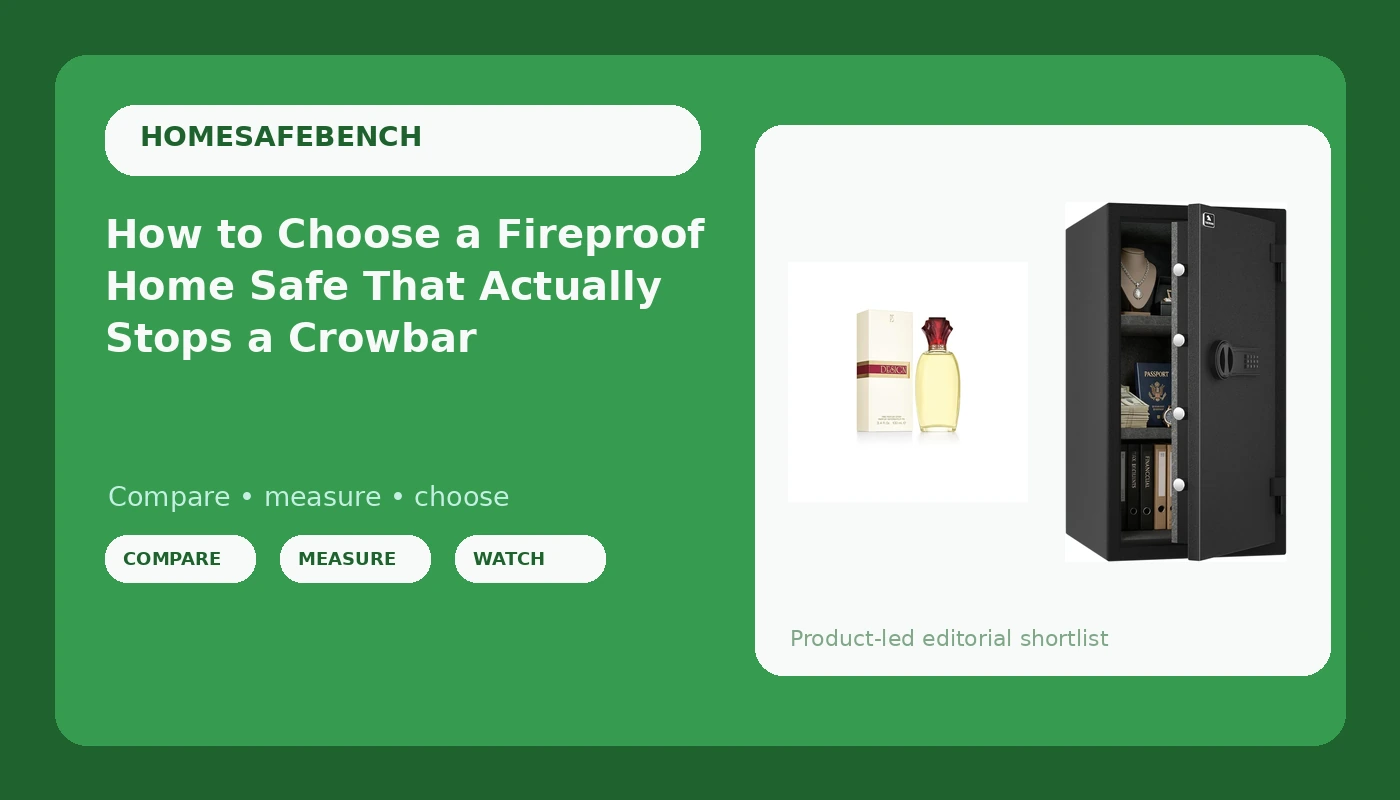
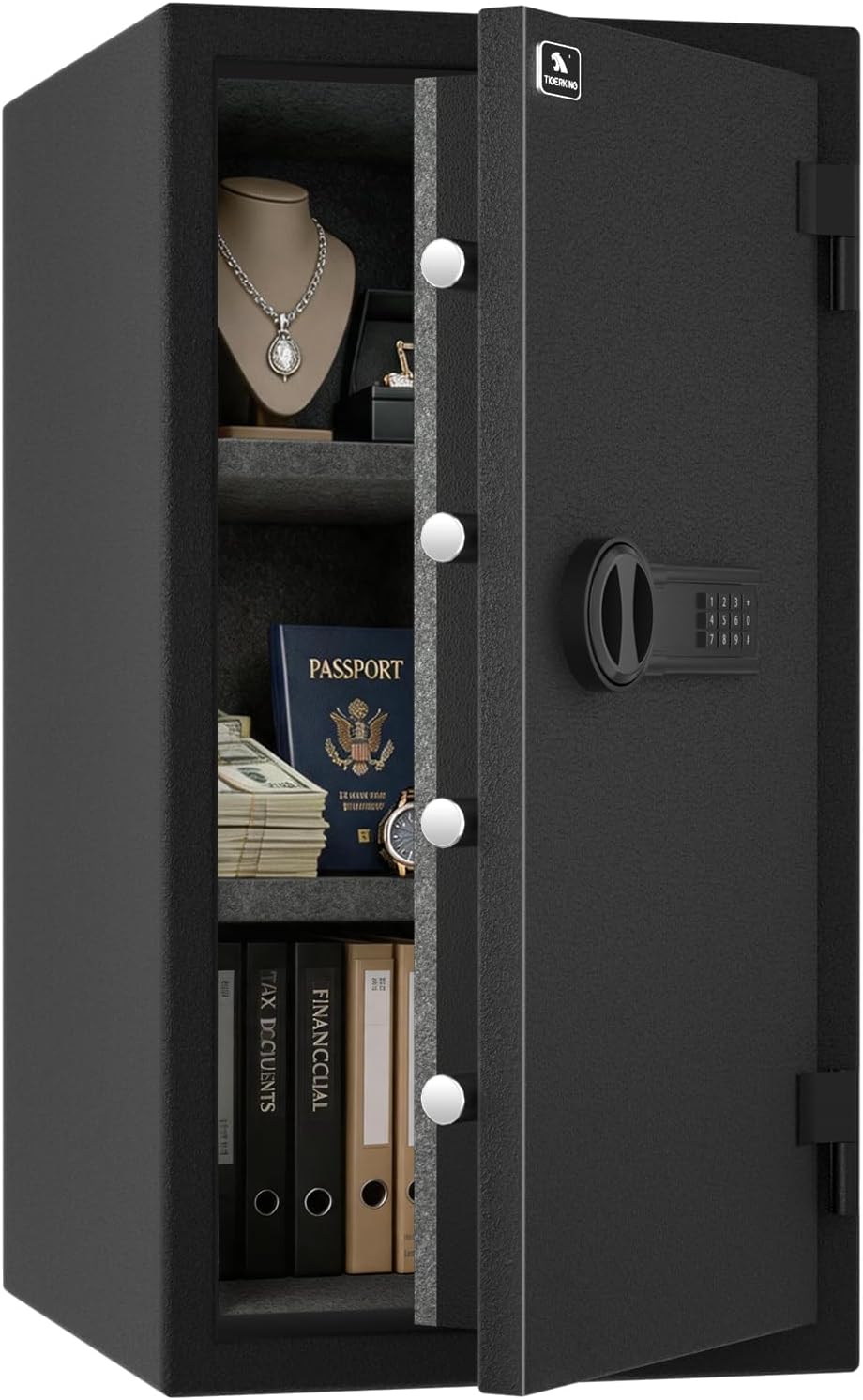
Our pick: TIGERKING 3.47 Cu Ft Fireproof Safe for Home Office
 Visit on Amazon →
This is the safe I point homeowners toward when the threat is a smash-and-grab and a house fire, which is the threat nearly everyone actually faces. The 3.47 cubic foot interior is the useful part. It takes hanging files flat, a stack of birth certificates and passports, a small fire box nested inside, and the jewelry your spouse does not want sitting on a dresser. It is a home office safe in the honest sense of the phrase, meaning documents and small valuables.
Here is what I would check before I trusted it, and what you should check too. Close the door and push on it. If it moves in the frame, walk away. Then look at the bolt work. You want bolts that throw into the frame on more than one side, because a door held only at the hinge side is a door a bar can peel. Then read the fire label. Paper chars at about 405°F, so the number that matters is the internal temperature the safe holds and for how long. A box that says fireproof with no class and no time is a marketing word, not a rating.
Flaws but not dealbreakers: A safe in this size class is not a bank vault, and the lock is the weakest component in every safe at this level. Buy it for the fire and the smash-and-grab, not for a professional crew with tools and an hour. If that is your threat model, you are shopping in a different price bracket entirely.
Anyone with a slab floor, a stack of documents, and no interest in a 600-pound installation will get their money's worth out of this one.
What does not belong in a safe
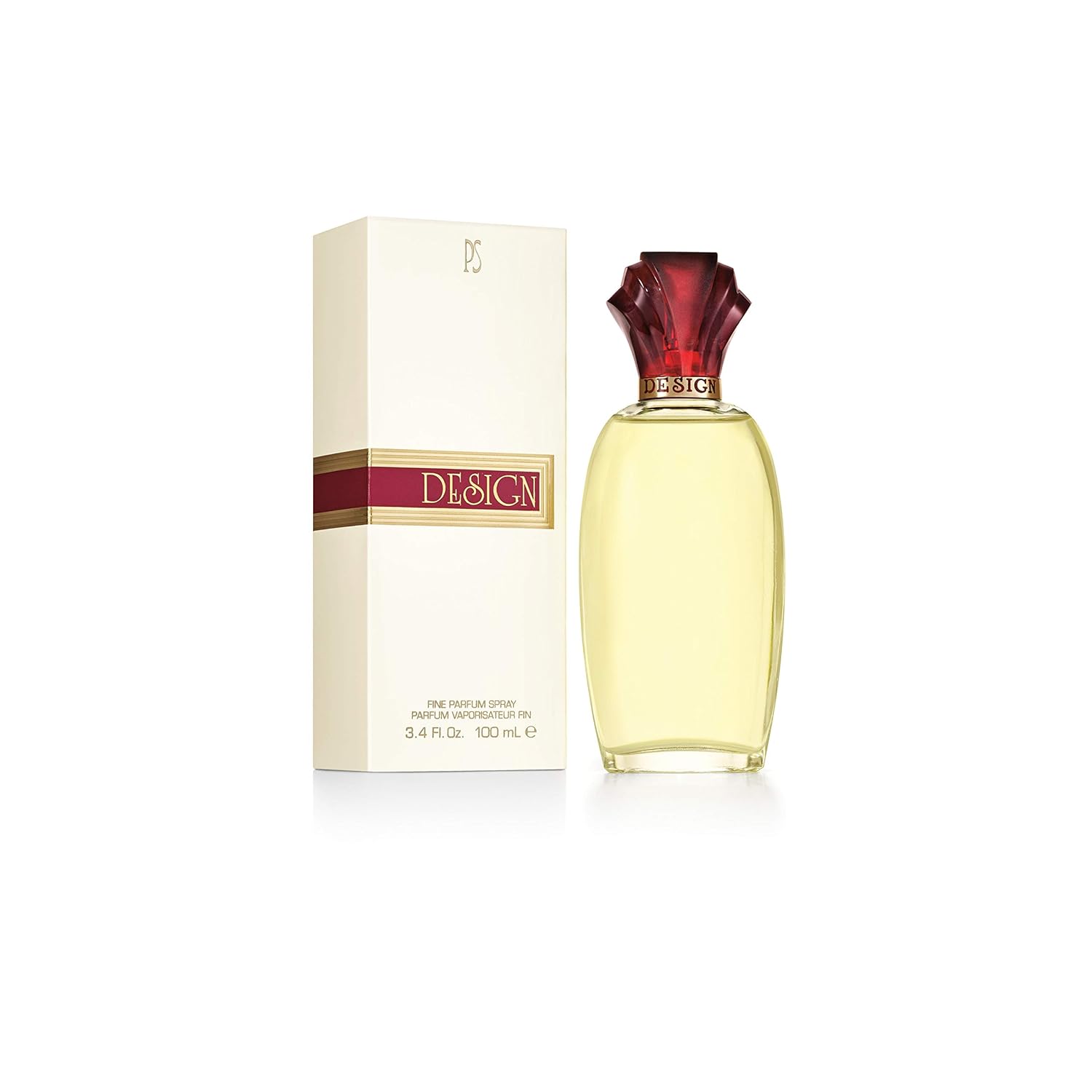
Sentimental, not secure: Paul Sebastian Design Perfume for Women, Day & Night Soft Floral Fragrance Spray, 3.4 fl oz
 Visit on Amazon →
Now, why is a bottle of fragrance in an article about safes? Because of the phone calls I get. "Frank, my mother passed and I have her bottle of perfume, can I put it in the safe?" My answer is usually no, and the reason is honest. A safe is a controlled environment only in the sense that it keeps things in. It does not keep a fragrance fresh. Heat, humidity, and time change a soft floral composition, and a fire rated safe is built to survive heat, not to be kind to it. A bottle like this one belongs on a shelf out of direct sun, where you can actually use it.
That distinction matters more than people think, because it is the same one I use when I decide what goes in the box. Replaceable things stay out. Irreplaceable things go in. A spray fragrance is replaceable. A deed, a passport, a birth certificate, and the only copy of a will are not. The safe is for the second list.
The actual workflow
Here is the order I walk clients through. It works whether you are buying the safe above or one from a different maker.
Step one: Name the threat. Write it down. Smash-and-grab burglary, fire, flood, a nosy houseguest, or a professional crew. Most people face the first three. If you buy for the fourth, you will spend four times as much and still not own a vault, so be honest about which column you live in.
Step two: Read the fire rating, not the word fireproof. Look for a class and a time, for example a rating expressed as an internal temperature held for a stated number of minutes. Paper chars around 405°F. Media like drives and film needs a much lower internal temperature, so if you are storing electronics, that is a different label. If the box has no class and no time, you are buying a sticker.
Step three: Judge the lock. The lock is the safe. A mechanical dial has no battery and no keypad to fail, and I own one myself. A digital keypad is the honest middle ground: fast, easy for family, and dependent on a battery you must replace on schedule. A biometric reader is fast and genuinely convenient, and the battery is a single point of failure. Whichever you choose, know where the override key is, and do not tape it to the safe.
Step four: Check the door gap and the bolt work. Close the door and push. Rocking means a gap. Then ask how many bolts there are and which sides they throw into. More bolts on more sides is better. A tight gap is half the security, and it costs the manufacturer real money to build, which is why cheap safes do not have it.
Step five: Weigh it and plan to anchor it. If you can carry it, so can a thief. Under 50 pounds is a carrying case, not a safe. If the box is light, bolt it to a slab. If you rent and cannot drill, put it in a closet corner and add weight inside so it is awkward to walk off with.
Step six: Size it for contents, not for the room. Lay out what you plan to store on the floor first. Documents flat, binders, a small fire box inside the larger safe. A safe that is too small is a safe you stop using, and a safe you stop using is the same as no safe.
Step seven: Pick the location like an adult. Not the master bedroom closet, which is the first place anyone searches. Not the garage, which is where fires often start and where humidity ruins paper. A slab floor against an interior wall, in a closet, in a corner where the door can swing fully open, is the right answer.
Step eight: Bolt it down, then maintain it. Anchor it to the slab with the hardware that fits your floor. Write the combination somewhere outside the safe, and tell one person you trust. Replace keypad batteries once a year whether they need it or not, keep the keypad clean, and drop a silica pack inside to manage humidity. Check the door seal annually for cracks.
The competition and why it lost
I considered a handful of other safes for this article and left them out for specific reasons, not because they are bad.
SentrySafe is the value standard and the brand I recommend most often to people who want a real fire rating without a project. First Alert's document safes are fine for paper, but the locks are basic, and my rule is that you should not store what you cannot replace behind a lock you do not trust.
Liberty Safe builds the best mid-range boxes I have worked on, with bolt work and door gaps a cut above the mass-market brands, and the price reflects it. If your budget is higher than this article's, that is where I would send you.
Vaultek makes genuinely fast biometric safes with excellent build quality, and I still do not love biometrics as a primary lock because batteries are a single point of failure.
Stack-On is budget-only. Fine for a toolbox, not for anything you would cry about losing.
None of these belong in a how-to about picking and anchoring one safe. They belong in a roundup, and they will show up in one.
What this all costs
The safe above is the main expense. Check current Amazon price, because it moves, and I am not going to quote you a number that is stale by the time you read this.
The rest of the budget is small and mostly optional. A bolt-down kit runs a few dollars. A small inner fire box for documents runs a modest amount and is worth it if you want two layers of protection. A pro installation, if you want someone else to drill your slab and level the door, is a service call, not a product.
Over five years, the math on a document safe is pennies a day, and the alternative is a folder in a closet that a fire will not respect. The safe is not the expensive part. Losing the contents is.
The short version
Buy for the threat you actually face, which is a fire and a fast burglary. Check the lock, push on the door, read the fire label's fine print, and bolt the thing to something that does not move. Put the irreplaceable documents inside and leave the replaceable sentimental items on a shelf where you can enjoy them.
Do that, and the safe will do its job. Skip it, and you have a steel box with a suggestion.