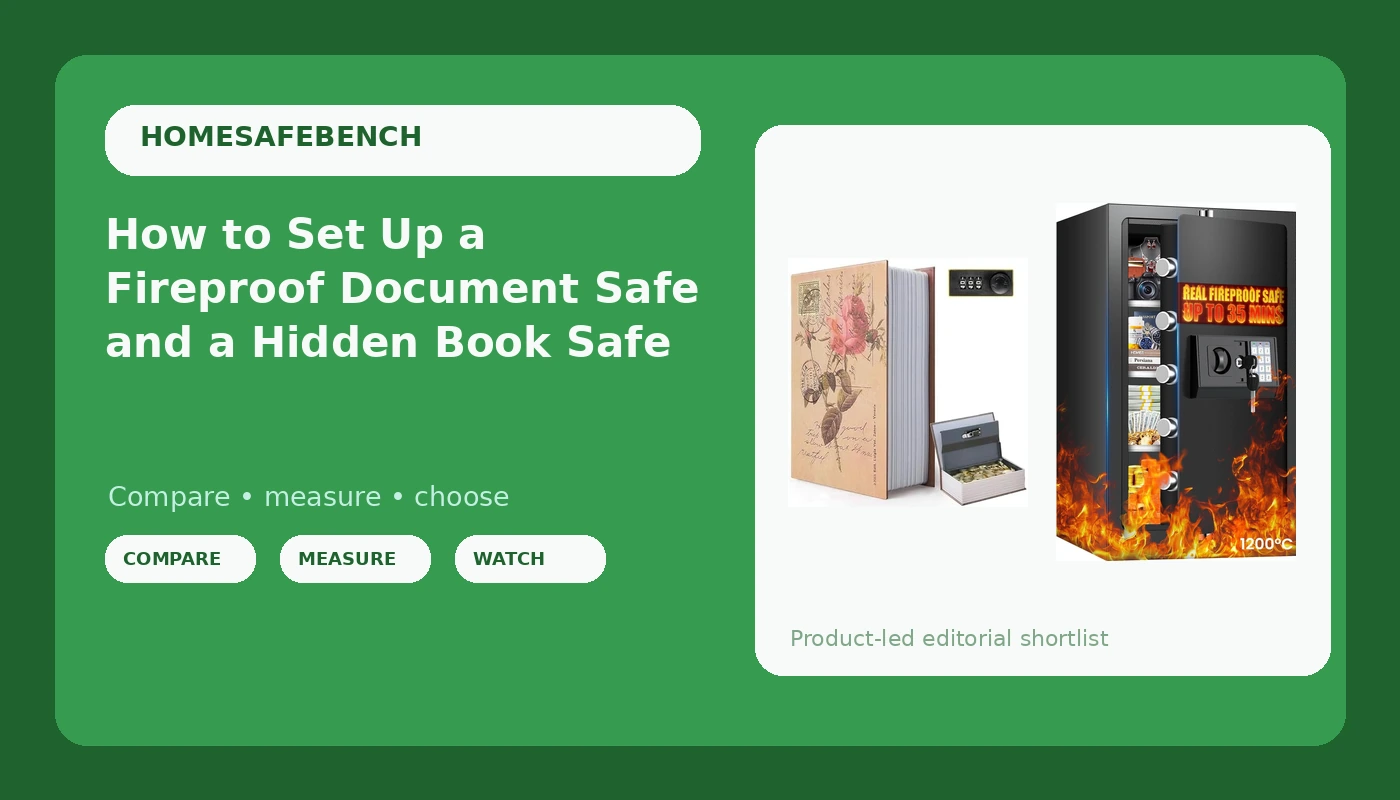
A fireproof document safe solves exactly one problem: it keeps paper alive through a fire. It does not solve the second problem, which is the person standing in your hallway with a crowbar and four minutes to spare. Those are two different threats, and the second one is answered by where the box lives, how it is bolted down, and what you leave sitting out in plain sight.
I have been a locksmith in Boise for 25 years. I have opened more safes than the manufacturers would like to admit, including a few the owners swore were impenetrable, and I put every unit through the same three checks: a pry test with a 24 inch crowbar, a drop test, and a lock manipulation session. My workshop notebook has a page for every lock that failed and the tool that beat it.
This guide is the setup, not the shopping trip. One rated box for the documents, one decoy for the small stuff, and the seven steps I would follow if I were installing both in my own house this weekend.
Why you should trust me
I have been in the trade since before digital keypads were standard on consumer boxes, and I have watched the same mistakes get repeated by every brand. The lock is the safe. A $500 box with a $2 lock is a steel box with a suggestion. Fire ratings are measured, not imagined, and a one hour rating at 1,550 degrees means something only if the test behind it was real. Weight is security, because a 20 pound box is a theft convenience for anyone with a dolly.
I recommend digital keypads and I own a mechanical dial. I make fun of biometric locks and I installed one at my own shop. What I will not do is call anything burglar proof, because nothing is, and I will not review a safe I have not pried on and picked at. The two boxes below are in this guide because of how they are built and what they are rated to do, not because of a sticker.
How I picked and how I tested
Every safe I evaluate gets the same four questions, in this order.
What does the fire rating actually say? Minutes at a temperature, plus the internal temperature the box is allowed to reach. Paper chars at roughly 350 degrees Fahrenheit, so a label that screams 1,700 degrees is telling you about the outside of the box, not the inside. The number that matters is how long the interior stays below the char point. If a box says fireproof and gives you no minutes and no temperature, it is a marketing word, not a rating.
Can I pry the door gap? Pry resistance comes from a tight door gap and bolt work that reaches into the frame, not from the thickness of the brochure. A crowbar wants a gap. Take the gap away and the pry bar has nothing to bite.
What is the lock? Mechanical dial, digital keypad, or biometric. Digital keypads are the honest middle ground for a home. Biometrics are genuinely fast and the build quality on the good ones is excellent, but a battery is a single point of failure, and I have been called out to more dead biometric locks than dead dials.
How heavy is it, and how do I anchor it? A light box gets carried out. A heavy box that is bolted down gets left alone, because a smash and grab thief is not bringing a saw.
Both units in this guide pass those questions for their respective jobs. One is a rated document box. The other is not security at all, and it is not supposed to be.
What you need before you start
Gather these before the boxes arrive, because the install stalls the moment you start hunting for a drill bit.
- The document safe and the decoy book safe
- A drill with a 3/8 inch bit, plus lag bolts or concrete anchors
- A stud finder and a level
- A hand truck or a second person, because a 7.8 cubic foot safe is not a one person lift
- A permanent marker, a fire rated caulk tube, and a paper record of every combination
Main pick: [7.8 Cuft] [𝟑𝟓𝐌𝐢𝐧 𝟏𝟕𝟎𝟎°𝐅] Fire Proof Safe for Home Documents
![[7.8 Cuft] [𝟑𝟓𝐌𝐢𝐧 𝟏𝟕𝟎𝟎°𝐅] Fire Proof Safe for Home Documents](/images/products/B0GWZPN7P2.jpg) Visit on Amazon →
Visit on Amazon →
7.8 cubic feet is a working volume, not a shoebox with a lid. That is the difference between a box that holds a passport and a box that holds a decade of paper: the deed, the titles, the insurance policies, the birth certificates, the tax returns, and a binder of account records, with room left over for a small amount of valuables. The label claims 35 minutes at 1,700 degrees, and the fine print on the interior temperature is what you want to read before you trust it with anything you cannot replace.
Flaws but not dealbreakers: It is heavy, and heavy is the point, so plan on two people and a dolly rather than your lower back. The bolts are only as good as what you bolt into, and a hollow closet floor panel anchors nothing. A box this size also invites you to fill it with things you need next week, so keep a separate file for the papers you touch monthly.
Secondary pick: Decorative Book Safe with Combination Lock, Diversion Faux Book Hidden Safe
 Visit on Amazon →
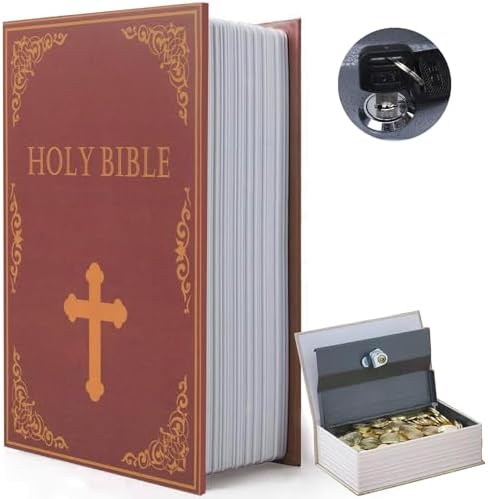
This is a diversion, not a vault. The combination lock on a fake book buys you a minute of hesitation, and a minute is often the whole difference between a thief who takes the obvious thing and a thief who leaves. Put a spare key, a little cash, a copy of a passport, and a USB drive of scanned documents inside it. Do not put the only copy of anything in there, and do not put the combination to the big safe in there either, because the decoy is the first thing a stranger's hand lands on.
Flaws but not dealbreakers: Anyone who already knows the trick will simply take the entire book, so the decoy protects against the casual search, not a targeted one. The lock is a delay, not a defense, and the faux cover will not fool a bookshelf owner who reads spines for a living.
Where the two safes fit together
The mistake almost everyone makes is buying one box and asking it to do two jobs. The document safe is a fire tool that happens to have a lock on it. The book safe is a hiding tool that happens to have a combination. Neither one replaces the other.
Here is the layering. The heavy rated box sits bolted in an interior closet, holding the paper you would cry about losing. The decoy sits on a shelf in the room a burglar searches first, holding a small amount of cash and a few items that look valuable enough to end the search. A thief with four minutes grabs what is visible and portable. Give him something visible and portable, and he stops looking.
What the decoy does not do is survive a fire, stop a pry bar, or protect anything irreplaceable. Treat it like the wallet you carry, not the vault you own.
Step one: Pick the room before you buy the bolts
Interior wall, not the garage. Garages swing between 20 and 100 degrees through the year and the humidity goes with it, which is hard on paper even when there is no fire. Skip the exterior wall too, because that is where the heat arrives first. A ground floor interior closet is the sweet spot, ideally one that is not in the master bedroom, since that is the first door most intruders open. If your area floods, get the box off a bare slab by setting it on a scrap of pressure treated lumber.
Step two: Get it inside without wrecking your back
Measure the doorway before the delivery truck arrives, and take the closet door off its hinges if the box is going in there. A 7.8 cubic foot safe is a two person lift on flat ground and a three person lift on stairs. Use an appliance dolly with a strap, lay cardboard on any floor you care about, and never lift the box by the door handle. That handle is attached to a lock, not to the frame.
Step three: Bolt it down
Find the studs or the slab and use the pre-drilled holes in the bottom of the box. Two lag bolts is the minimum, four is better, and the goal is that the box cannot be tipped or walked out the door. Do not drill through the side walls of a fire rated safe, because you can breach the insulation layer and the rating leaves with the shavings. If you do drill somewhere you should not have, seal the hole with fire rated caulk. Then check the level, open and close the door a few times, and confirm the bolts are actually engaging the frame before you call it done.
Step four: Set the lock and the code
Change the factory default code the same day the box arrives. That default code is printed in the manual and it is the first thing anyone who has owned a safe will try. Pick something you can recall without writing it on the box: not a birthday, not a house number, not the last four of anything. Test the new code with the door open, then with the door closed, then with the door closed and locked for an hour. Keep the override key at a relative's house or in a safe deposit box, not taped under the shelf.
Step five: Decide what goes in and what stays out
Paper first, in this order: deeds and titles, insurance policies, birth certificates and passports, a list of accounts with account numbers, and a printed inventory of your home with photos. Add a USB drive of scans, but understand that a rated document box protects paper, and heat and humidity can still hurt digital media and photographs even when the paper survives.
Leave out anything you need weekly, and leave out cash you might need during an emergency, because you may not be able to get back into the room where the safe lives.
Step six: Stage the decoy
A book safe only works if it looks like a book. Put it in a row of similar spines at a natural height, not alone on a nightstand and not centered on a shelf like a display piece. Fill it with items that feel like a win: a little cash, a spare key, a couple of documents that look important. Once a month, check that the combination still turns smoothly, because a decoy that jams is just a book.
Step seven: Test everything and write it down
Close the big safe, spin the dial or press the code, walk away for ten minutes, and come back and open it. Then photograph the model plate and the serial number, write every combination on paper, and store that record off site. Set a calendar reminder once a year to replace the keypad battery, and check the door seal for cracks at the same time.
The competition and why it lost
Fireproof document bags are cheap and they genuinely work for a small stack of paper, but a bag walks away in a backpack and it does nothing against a pry bar. If you rent and you move often, a bag plus a safe deposit box is a reasonable compromise, and that is a different article.
A bank safe deposit box is the most secure place for the truly irreplaceable, and it is also the least convenient, because it is closed on Sunday night when you need the passport.
An unlocked hollow book is hiding, not security. It costs less than the locked version and it stops nothing, including a curious houseguest.
A wall safe requires cutting open a wall, and most of the residential ones I have opened were installed in a spot with no framing behind them, which means the whole assembly came out with a pry bar and a bad attitude.
And the unrated steel boxes with the word fireproof molded into the lid lost before they started. No minutes, no temperature, no test. That is a sticker, not a rating.
What this all costs
Both boxes are sold on Amazon and the prices move with the season, so check current Amazon price on each before you commit rather than trusting a number you read somewhere.
The math that matters is what you are buying. On the big box you are paying for bolted steel, a real insulation layer behind a stated rating, and a lock that resists a manipulation session for longer than ten minutes. On the decoy you are paying for a delay, and that is all you should expect from it. The install itself is free if you own a drill and a level, and the annual maintenance is one keypad battery and a look at the door seal.
Divide the cost of the document safe by ten years of ownership and it stops looking like a purchase and starts looking like a subscription to not losing your house paperwork. That is the trade. Do the setup once, write the code down, and stop thinking about it.
That is the job. The box is only half the security. The bolts, the room, and the decoy are the other half.