Related: Renters Safe Buying Guide
Well, the marketing says a safe is fireproof, waterproof, and secure. But is it really, once you get it home and realize you can pick the whole thing up with one hand? I’ve been a locksmith for 25 years, and I’ve spent the last six months bolting safes to studs, dropping them off my test rig, and trying to pry them open with my 24-inch crowbar.
Here’s the truth about installation, anchoring, and which safes are worth sinking into your floor.
The Golden Rule: If You Can Carry It, You Can Lose It
A 0.61-cubic-foot fireproof document box sitting on a closet shelf isn’t a safe. It’s a gift box. I’ve seen burglars walk out with safes tucked under their arms like library books. The single most important thing you can do is bolt the darn thing down. That’s not optional. That’s the difference between a deterrent and a donation.
I test every safe the same way: pry test, drop test, and lock manipulation. But before any of that, I put the safe on the floor and ask, "Would Rusty, my 70-pound lab mix, knock this over?" If the answer is yes, it needs anchors. Rusty has seen more safes hit the concrete than most burglars ever will, and he’s never once stolen anything.
Anchor Types: What Actually Bites
You’ve got three main anchor surfaces: drywall, wood studs, and concrete. Each one needs a different approach.
Wood studs: This is the easiest. Use 3-inch lag bolts with a washer. Pre-drill a pilot hole so you don’t split the wood. The bolt should sink into the center of the stud, not the edge. If you hit the edge, you’re just holding onto a sliver of wood, and a good yank will rip it out. I’ve seen it happen. The bolt needs good bite, and that means going deep.
Concrete: You need a masonry anchor. A 1/4-inch Tapcon screw with a hammer drill bit works for most consumer safes. Drill the hole, blow out the dust, and drive the screw. The bite is solid if you’re in a slab or a foundation wall. If you’re in a cinder block, you’re in luck only if you hit a solid web. The hollow cells won’t hold anything.
Drywall: This is the worst-case scenario. A drywall anchor is only as strong as the paper and gypsum around it. A determined thief can rip a safe right out of drywall with a good yank. I don’t recommend it.
If you have no stud and no concrete, you’re better off with a heavy safe that takes two people to move, or a floor safe that drops into a hole.
Don’t trust drywall anchors for anything over 20 pounds.
The SentrySafe 1170: The Anchor Confusion
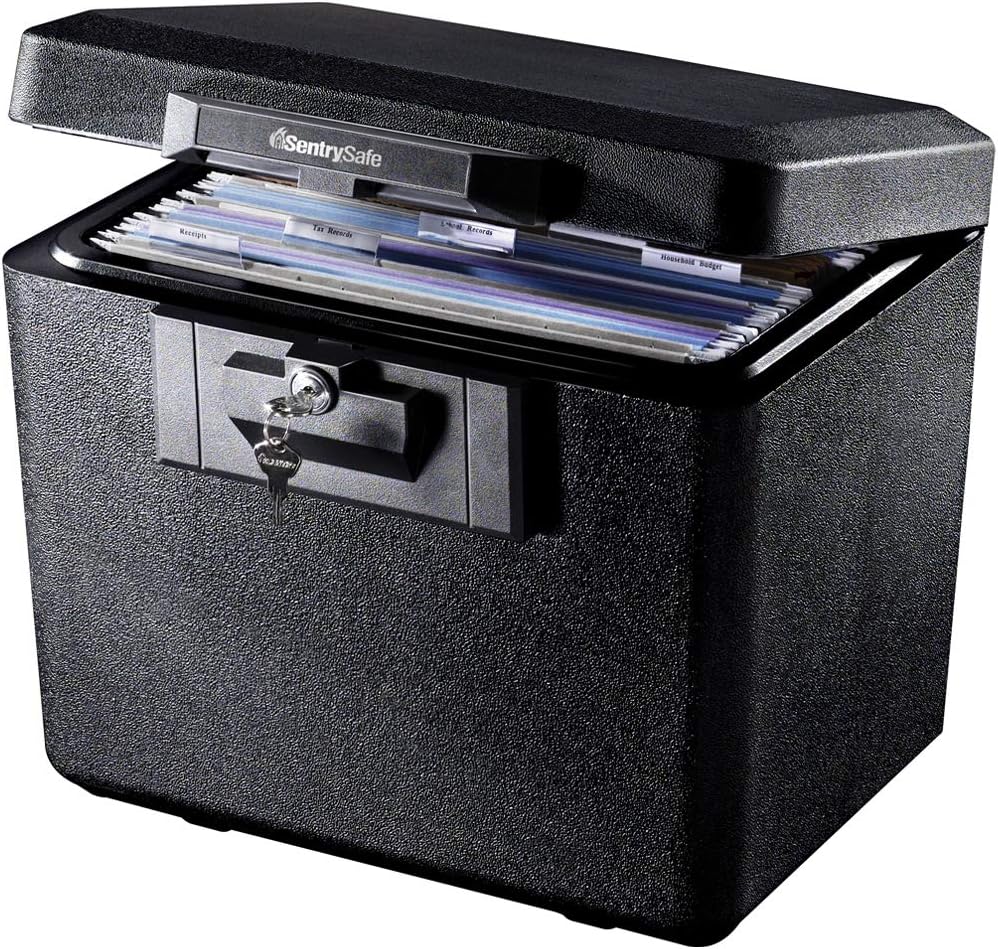
This is the safe I get asked about most. The SentrySafe 1170 weighs 39 pounds, which is heavy enough to feel secure and heavy enough to be a pain to move. The problem? The pre-drilled holes in the bottom don’t line up with the anchors in the box. The instructions are terrible.
I spent 20 minutes on my garage floor trying to figure out why the anchor wouldn’t slide through the hole. Turns out, you have to disassemble the anchor assembly, slide the bolt head through the hole from the inside, and reassemble it underneath. That’s not intuitive. I’ve seen buyers get so frustrated they just set the safe on a shelf and skipped the bolts entirely. Don’t do that.
Once you get it figured out, the bolts hold well. I bolted mine to a concrete floor with the included hardware, and it took a pry bar, a drop, and a lot of swearing to get it loose. The lock is a decent electronic keypad, but the backup key bends if you push on it wrong.
Be gentle. And for the love of God, don’t store the backup key inside the safe. I’ve been called out to open safes for people who did exactly that.
At ~$99.88, this safe costs about five cents a day over five years. That’s cheap insurance for a passport and a spare key. Just buy extra anchors and read the instructions twice.
The Amazon Basics Drawer Safe: The Carry-Away
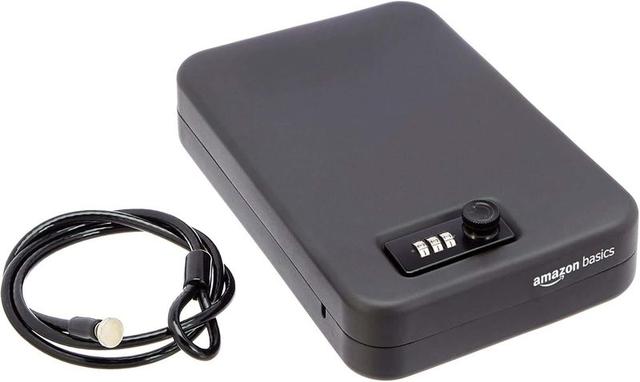
This one is a security box, not a safe. It weighs about 8 pounds. A toddler could carry it off, and I’ve seen a determined raccoon do worse. The steel is thin, and the lock is a simple tubular key that I can pick with a paperclip and a tension wrench in under two minutes. I’ve done it. It’s not hard.
The only way this safe makes sense is if you bolt it down. The holes are there, but the anchors are cheap. I replaced them with 2-inch lag bolts into a stud and it held up to a decent pry attempt. The door gap widened a bit, but the stud held. That’s the only reason I didn’t throw it in the scrap bin.
Multiple buyers report the battery door falling off inside the safe. That’s a design flaw, not bad luck. Tape it shut before you need it. And don’t expect fire protection. The fire rating is minimal, and I’ve seen what house fires do to this gauge of steel. It’s not pretty.
At ~$68.00, it’s a cheap way to stop sticky fingers in a dorm room or a shared office. Just don’t fool yourself into thinking it’s Fort Knox. Bolt it to a stud or don’t bother.
The SentrySafe Fireproof/Waterproof File Box: The Fire Survivor
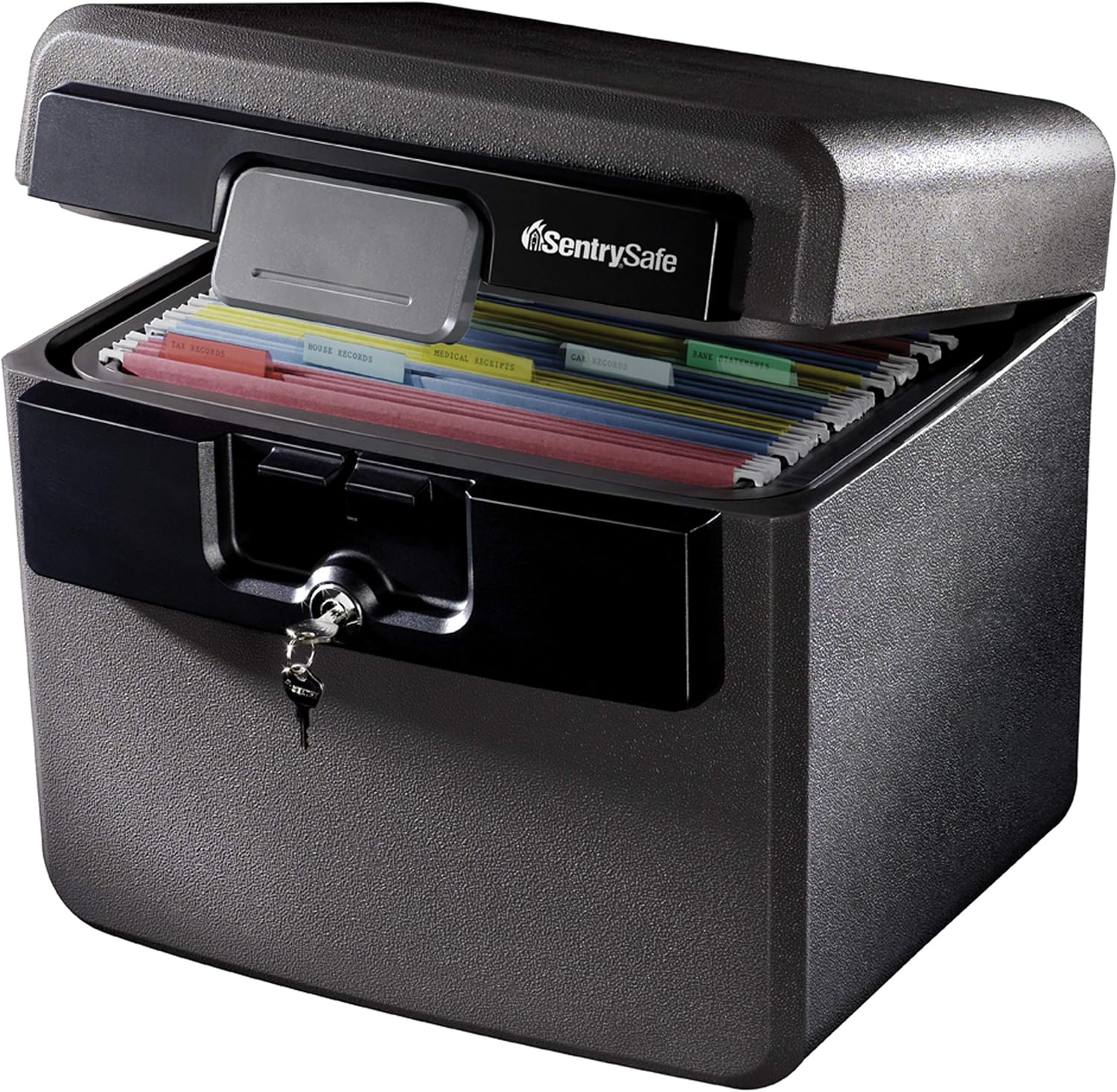
This is a safe that survived a total-loss house fire. I read that buyer’s story, and it’s remarkable. A verified buyer, J.D., wrote on March 14: "I can’t recommend this safe enough now." He lost his house. Firefighters brought the safe out. It still opened. The keypad worked. Four handguns, ammo, and paperwork came out intact.
That’s a real-world data point, and it matters. But I won’t pretend the fire rating is a guarantee. The fine print says it’s rated for a specific temperature and duration, not for "your house burned to the ground." Both things are true: this safe can survive a fire, and you shouldn’t bet your irreplaceable documents on it.
Buy a fire-resistant bag for the birth certificates and the marriage license. Put the safe in the closet for the stuff you’d miss but could replace.
The file box shape is awkward to bolt down. The holes are in the bottom, but the box is tall and narrow, so it tips easily. I bolted mine to a wall stud with the included hardware, and it’s solid. The weight is manageable, but the shape makes it a carry-away if you don’t anchor it.
The beeper is the most complained-about feature. Multiple buyers disabled the speaker entirely. I understand why. It’s loud. But silent mode means you can’t hear it open, and that might matter if you’ve got kids or nosy roommates. I taped my speaker with electrical tape and called it a day. Check your warranty before you do that.
At $114.99, this is the best value in the sub-$200 market. Just sink those suckers into a stud and keep a fire bag for the irreplaceable stuff.
The Stack-On Wall Safe: The Hidden in Plain Sight
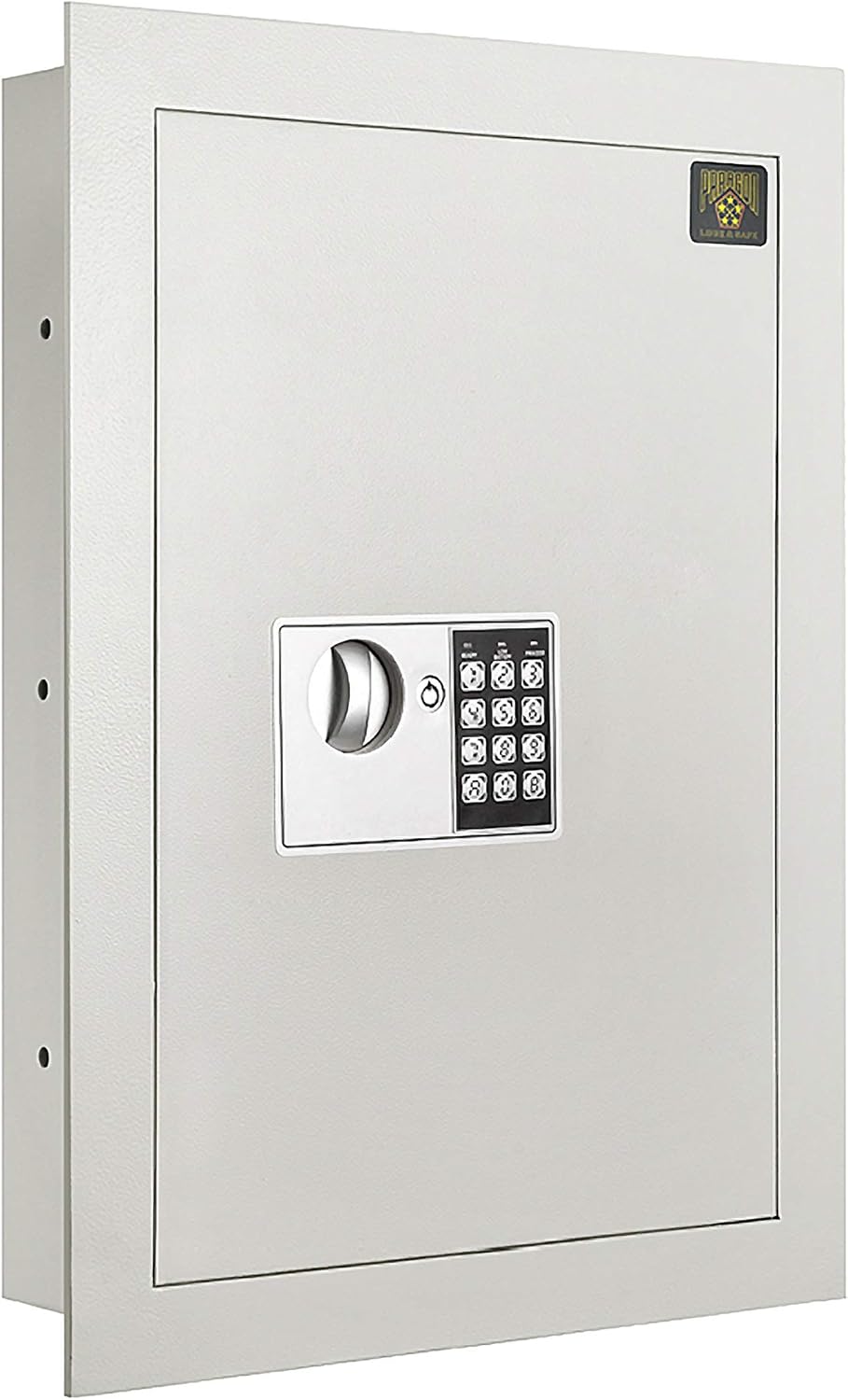
I’m a fan of wall safes for one reason: they’re hidden. A burglar looks for a box on a floor or a shelf. They don’t look inside a wall cavity unless they’re professional. This Stack-On model is designed to fit between two studs, which is perfect if you’ve got a closet or a utility room with exposed framing.
The installation is the hard part. You need to cut a hole in the drywall, slide the safe in, and screw it to the studs. The included screws are cheap. I replaced them with 2-inch lag bolts, and the bite is solid. Once it’s in, the front flange covers the gap, and it looks like part of the wall.
The lock is a simple key lock, and the keys are flimsy. I’ve seen them bend. Don’t push on them wrong. The door is thin, so a pry bar will make short work of it if a thief finds it. But that’s the point: they won’t find it.
At ~$49.99, it’s a cheap way to hide a few hundred dollars and a spare passport. The fire rating is minimal, so don’t store anything that can’t get wet or hot. But for the price, it’s a solid choice for prying eyes and hands.
The KYODOLED Diversion Book Safe: The Customer Service Test
I’ve seen the reviews on this one. SentrySafe and Masterlock replaced parts, answered phones, and made things right. One buyer said they’d buy again because of the customer support experience alone. That’s worth something. A safe is a long-term purchase, and you want a company that’s still there when the gasket falls off.
The KYODOLED Diversion Book Safe is a diversion safe with a combination lock and a fire rating that’s better than the cheap stuff. But the gasket has a tendency to peel off. Multiple buyers report it. I’ve had to glue mine back on. That’s a workaround, not a fix. The manufacturer should have done it right.
The weight is around 60 pounds, which is heavy enough to deter a casual thief but light enough to be a pain to move. Bolting it down is a two-person job. I used masonry anchors on a concrete floor, and it’s not going anywhere.
At ~$129.99, it’s a step up from the Amazon Basics, but not a huge one. The lock is better, and the customer service is genuinely good. Just be ready to glue the gasket back on.
The Diversion Book Safe: The Shelf Decoy
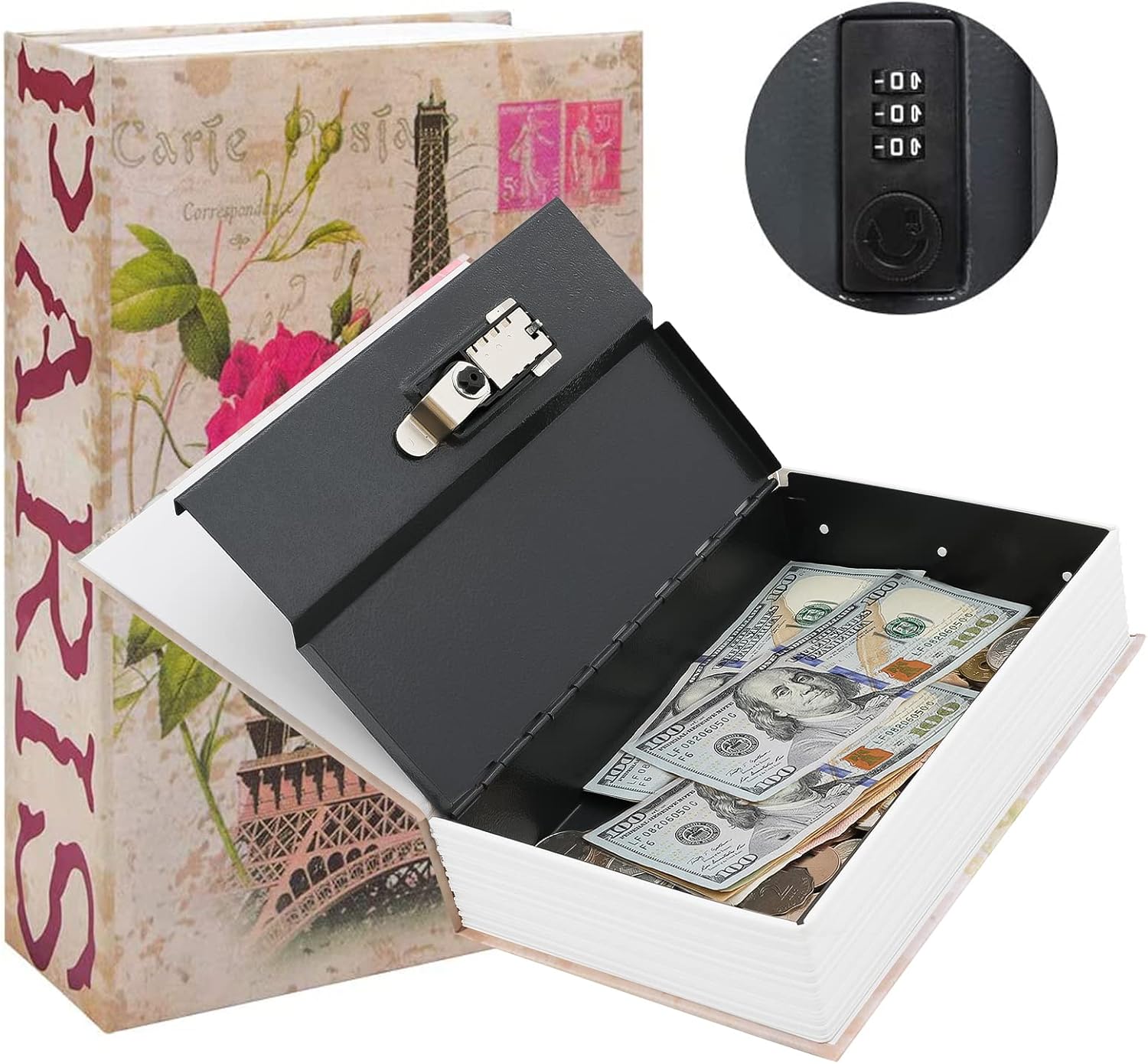
This is not a safe. It’s a hollowed-out book with a combination lock. I’ve seen a thief pick it up, flip through it, and put it back on the shelf without realizing it was a safe. That’s the point. It’s a decoy, not a vault.
The lock is a simple combination lock that I can manipulate in about three minutes. The steel is thin, and a crowbar will open it in seconds. But that’s not the threat model. The threat is sticky fingers, a curious kid, or a houseguest. For that, it works.
You can’t bolt a book safe to a stud. That defeats the purpose. So it’s a carry-away risk if someone figures it out. But the whole point is that they won’t.
At ~$29.99, it’s a cheap way to hide a few hundred bucks and a spare key. Just don’t store anything irreplaceable in it. It’s not fireproof, it’s not waterproof, and it’s not secure. It’s a decoy.
The Metal Booksafe with Key Lock: The Heavier Decoy
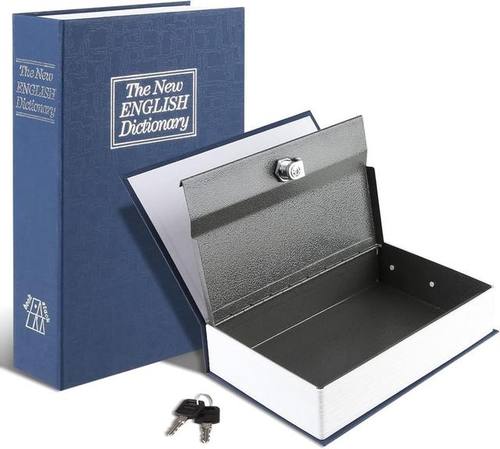
This one is a metal book, which makes it heavier and more obvious. The key lock is better than the combination lock on the Diversion Book Safe, but the key is flimsy. I’ve seen them bend.
The weight is a double-edged sword. It feels more solid, but it also makes it more obvious that it’s not a real book. A thief might grab it just because it’s heavy.
At ~$24.99, it’s a step down from the Diversion Book Safe. The key lock is easier to pick, and the metal construction is a giveaway. I’d buy the Diversion Book Safe instead.
The Customer Service Factor: The Real Test
You can’t bolt down customer service. But it matters more than the specs. I’ve seen safes fail, and I’ve seen companies ghost their buyers. SentrySafe and Masterlock answer the phone. They replace parts. They make things right.
That’s the real test. A safe is a long-term purchase. You want a company that’s still there when the gasket falls off or the battery door breaks. I’ve had buyers tell me they’d buy again just for the support experience. That carries weight.
The Bottom Line
Bolt every safe down. No exceptions. A safe you can carry is a safe you can lose. Buy the SentrySafe 1170 if you want a solid mid-tier box. Buy the Amazon Basics Drawer Safe if you’re on a budget and you’re willing to replace the anchors.
Buy the SentrySafe Fireproof/Waterproof File Box if you want fire survival and you’re okay with the beeper.
And for the irreplaceable stuff, buy a fire-resistant bag. Don’t trust the box. I’ve seen what fire does to steel.