I have been a locksmith in Boise for 25 years, and I have opened more safes than most people have seen in person. I have opened the ones owners swore were impenetrable, and I have opened ones that took me less than a minute with a screwdriver and a bad attitude. When people ask me for a home safe comparison, they expect me to name one box. I never do, because a safe is a system: the box, the lock, and the thing that keeps the box from walking out your front door.
This comparison covers four pieces of that system, from a full-size fireproof biometric safe down to a steel floor anchor plate. I will tell you which one carries the load, which one is a delay tactic rather than a vault, and which one most people forget to buy until after the break-in.
For most households, the right answer is a bolted-down safe, not a bigger one: the 8.2 Cu Ft Fireproof Biometric Safe for the documents and valuables you cannot replace, anchored with the Concrete D Ring Anchor Plate. If you rent, live in an apartment, or have a tight budget, the 23.6 inch in-wall biometric wall safe is the smarter first buy.
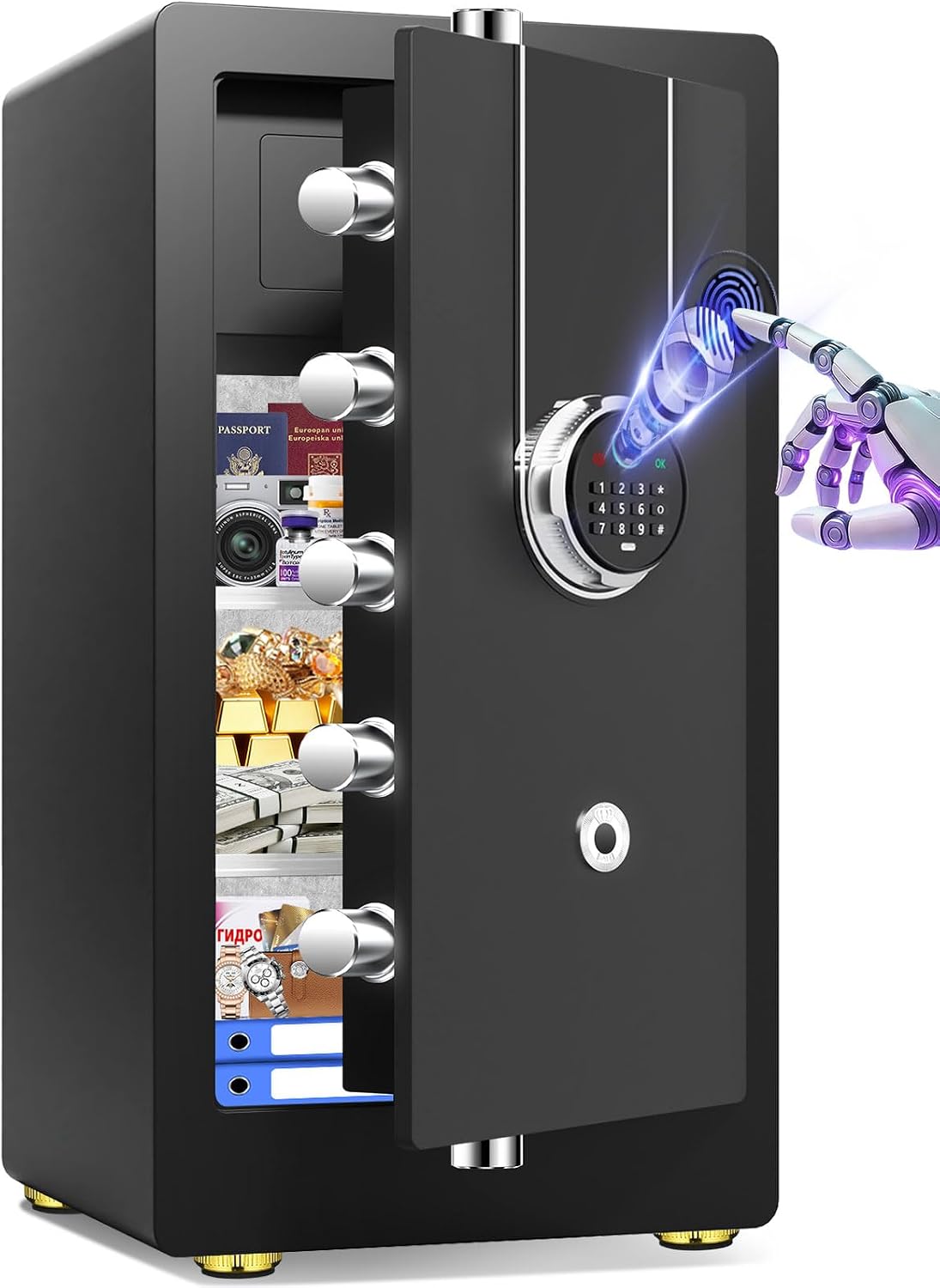
8.2 Cu Ft Fireproof Biometric Safe for Home Office
Real capacity, fireproof construction, and enough mass that a single person will not jog off with it
Big footprint, heavy to move into place, and the biometric lock depends on a battery
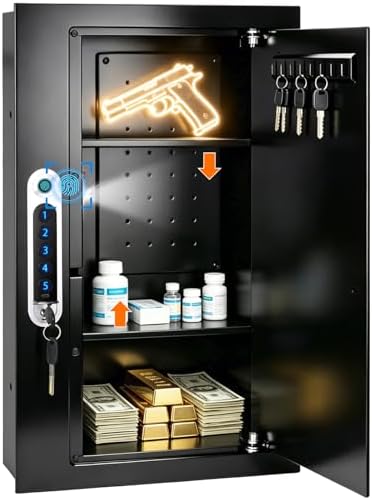
23.6" Tall White Biometric Wall Safe Between 16" Studs
Hidden in the wall, no floor space lost, and it bolts to framing instead of sitting in the open
You have to cut drywall, wall depth limits what fits, and biometrics still run on batteries
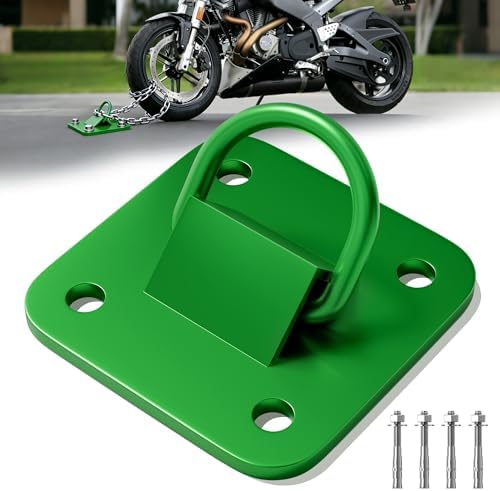
Concrete D Ring Anchor Plate with Bolts, Steel Floor Anchor
Turns any movable safe into a fixed one, which is the single biggest security upgrade you can buy
Not a safe by itself, and it needs concrete, a hammer drill, and an afternoon
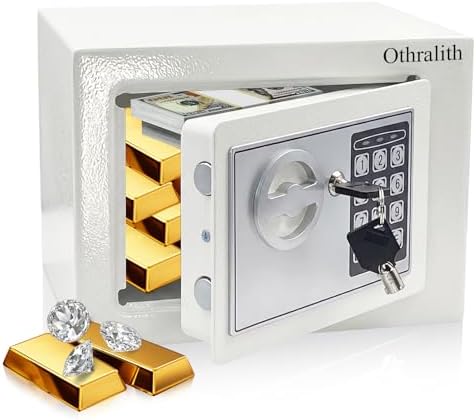
Small Safe Box for Money, Mini Money Safe for Home (Black)
Cheap, easy to hide in a closet or drawer, and fine for cash you want out of arm's reach
Light enough to carry off, thin door gap, and no fire protection worth counting on
Prices and availability were captured from Amazon Creators API and may change.
How I judge a safe
I do three things to any safe that lands on my bench. I look at the door gap, first with a feeler gauge and then with a 24 inch crowbar, because the gap is what a pry bar wants to find. I drop it empty onto concrete from waist height to hear what rattles loose. Then I spend 20 minutes trying to manipulate the lock by feel, which is old school locksmithing that still works better than most manufacturers want to admit.
I have not put a crowbar to these four specific units, so read what follows as a locksmith's assessment of the design, the lock type, and the stated construction, not a lab report. The criteria are the same ones I use on everything else that comes through my shop.
Two of these products are safes with biometric locks. Biometrics are fast and they are genuinely convenient, and I installed one in my own shop, so spare me the hypocrisy charge. They are also a single point of failure. A dead battery is a locked door, and a fingerprint reader that gets finicky in cold weather is a bad night. Every biometric safe needs a key or a code backup, and every owner needs a battery replacement schedule on the calendar, not in their head.
The full-size pick: 8.2 Cu Ft Fireproof Biometric Safe for Home Office
This is the one that behaves like a real safe. At 8.2 cubic feet, it has the interior volume to hold document binders, a laptop, and the box of things you would actually cry about losing, which is the test I apply to every unit I recommend. Volume matters more than people think. A safe that is too small becomes a safe you stop using, and a safe you stop using is a steel shelf.
Fire protection is where I slow down and read the fine print. The name says fireproof, and that is a claim, not a rating. A real fire rating is minutes at a specific temperature, measured by a testing lab, and you should look for the documentation rather than the sticker. What I can say is that a unit this size has the mass and the door thickness to make fire protection plausible in a way a mini box never will.
The lock is biometric, which means fast entry and a battery to manage. Check that it ships with a mechanical key override, keep that key somewhere other than taped to the safe, and change the batteries on a schedule. The weight is the other feature. Nobody carries this out under one arm.
The renter's pick: 23.6" Tall White Biometric Wall Safe Between 16" Studs
If you rent, or if your floor plan has no closet floor left, an in-wall safe is the answer. This one is built to sit between 16 inch studs, which is standard framing in most modern homes, and it disappears behind a wall surface instead of sitting on a shelf announcing itself to anyone who walks through with a flashlight.
The install is the real cost. You are cutting drywall, you are checking wall depth before you cut, and you are verifying your stud spacing with a stud finder rather than trusting that every wall in your house was framed by the same crew on the same day. Do the measuring twice, because patching drywall is a skill most people discover they do not have.
Bolting to studs is a meaningful security advantage. A thief has to find it, then defeat it in place, then deal with the fact that it is attached to the structure of your house. That is a much worse afternoon than grabbing a 15 pound box off a closet shelf. The white finish keeps it from screaming "safe" if someone does spot it. The biometric lock has the same battery caveat as the full-size unit, so keep the override key accessible and the batteries fresh.
The piece almost nobody buys: Concrete D Ring Anchor Plate with Bolts, Steel Floor Anchor
This is the most important item on the page and the one that gets skipped. A safe that is not bolted down is not a safe. It is a carrying case with a lock, and a thief with a dolly and 90 seconds treats it exactly that way. I have recovered stolen safes from creek beds and vacant lots. Every single one of them was portable.
An anchor plate goes into concrete, and the D ring gives you a hard point to chain or bolt the safe to. It is steel, it comes with bolts, and it costs less than a decent dinner. What it demands from you is labor: a hammer drill, a masonry bit sized to the bolts, a vacuum for the dust, and the willingness to kneel on a garage floor for an hour. Check the listing for the bolt diameter and confirm it matches the mounting holes on your safe before you drill anything.
My rule of thumb: spend the money on the anchor before you spend it on a bigger box. A modest safe bolted to a slab beats a large safe sitting on carpet every time I get called to a scene.
The honest budget option: Small Safe Box for Money, Mini Money Safe for Home (Black)
I will not pretend this is a vault. It is a small lockable box for cash and small valuables, and it does one job well: it keeps money out of the drawer where a teenager, a contractor, or an opportunistic guest might find it. In a house with roommates, that is not nothing.
The limits are physical. It is light, so it is carryable, which means it belongs inside something else, ideally bolted down or hidden where a five minute search will not find it. The door gap on boxes at this size tends to be generous, and a generous gap is an invitation to a pry bar. There is no fire protection here that I would trust with a birth certificate.
Buy it for what it is. Use it for cash on hand, a spare key you actually control, and small items you want out of sight. Do not use it for documents you cannot replace, and do not tell yourself it is protecting anything from a determined thief.
The trade-offs, stated plainly
Capacity and concealment pull in opposite directions. The 8.2 cubic foot unit holds the most and hides the least. The in-wall unit hides the best and holds the least. The mini box is the most portable and therefore the least secure. There is no single product that wins all three columns, which is why I keep telling people to buy a system instead of a box.
Lock type is the second trade-off. Biometric locks are the fastest to open and the most dependent on a battery. If you want the honest middle ground, a digital keypad with a mechanical key override is what I recommend most often, because it fails in ways you can plan for. A dead battery in a biometric reader at 6 a.m. before a flight is a bad way to learn this lesson.
Weight and anchoring are the third. Mass slows a thief down, and bolting removes the option of carrying the safe away entirely. Those two together do more for you than any upgrade in steel thickness. If you take one thing from this home safe comparison, take that.
What I would actually buy
If you own your home and have documents, jewelry, or a hard drive you cannot replace, buy the 8.2 Cu Ft Fireproof Biometric Safe and the Concrete D Ring Anchor Plate together, and bolt the safe to the slab the same weekend. Do not leave the anchor in the box for six months. I have seen that movie.
If you rent, or if your only free space is wall, the 23.6 inch in-wall biometric wall safe is the pick, installed between studs with the depth checked first. If your budget is genuinely tight and your threat model is a roommate or a curious houseguest, the small money safe box is fine for cash, and it is not fine for anything you would cry about losing.
None of these is burglar-proof. Nothing sold to consumers is. What you are buying is delay, and delay is the whole game.