Most people shopping for a safe start in the wrong place. They read the word fireproof on the box, assume everything inside is protected, and buy on price alone. Then they get it home and realize the rating covers paper for a specific number of minutes at a specific temperature, that the lock is the cheapest part of the build, and that the whole unit weighs less than a case of bottled water. This guide looks at fireproof home safes for documents the way a working locksmith would: what the lock actually is, how the door sits in the frame, whether the box can be walked out the front door, and what the published fire and water ratings really cover.
The six models here are not interchangeable. One is a travel box designed to be cabled to a hotel closet rail. One is a portable fire chest. Two are biometric safes built around a fingerprint reader. Two are document safes rated for both fire and water. Sorting them by the threat you actually face is the whole exercise, and it matters more than any single spec on the packaging.
Related: How to Read a Safe Fire Rating Without Getting Fooled
Quick answer
The SentrySafe CHW30220 Fireproof and Waterproof Document Safe is the strongest fit for most households protecting paper, passports, and small valuables because it pairs a published fire and water rating with a key lock, a 0.36 cubic foot interior, and an exterior footprint that fits on a closet shelf. Choose the Viking Security Safe VS-38BL Extra-Wide Biometric Laptop Wall Safe instead when you need to secure a laptop or a wider stack of items and want the safe anchored inside a wall.
Home safes worth comparing
The useful split in this category is not brand against brand. It is box against box: what the lock is, how the door meets the frame, how much interior volume you get, whether the unit can be bolted or cabled down, and whether the fire and water claims are published as ratings or just printed as adjectives.
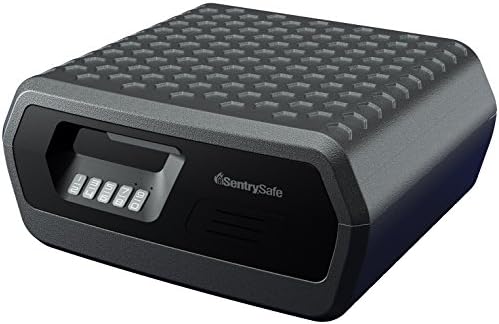
SentrySafe Fireproof and Waterproof Document Safe with Key Lock, Lock Box for Cash, Passport, Jewelry, Exterior: 16.5 in W x 14.8 in D x 7.6 in H, Black, 0.36 Cubic Feet, CHW30220
A document safe rated for both fire and water protection, with a key lock and a 0.36 cubic foot interior. The 16.5 inch wide by 14.8 inch deep by 7.6 inch high exterior is sized for a shelf or closet floor, and the interior is intended for cash, passports, jewelry, and paper records.
Visit on Amazon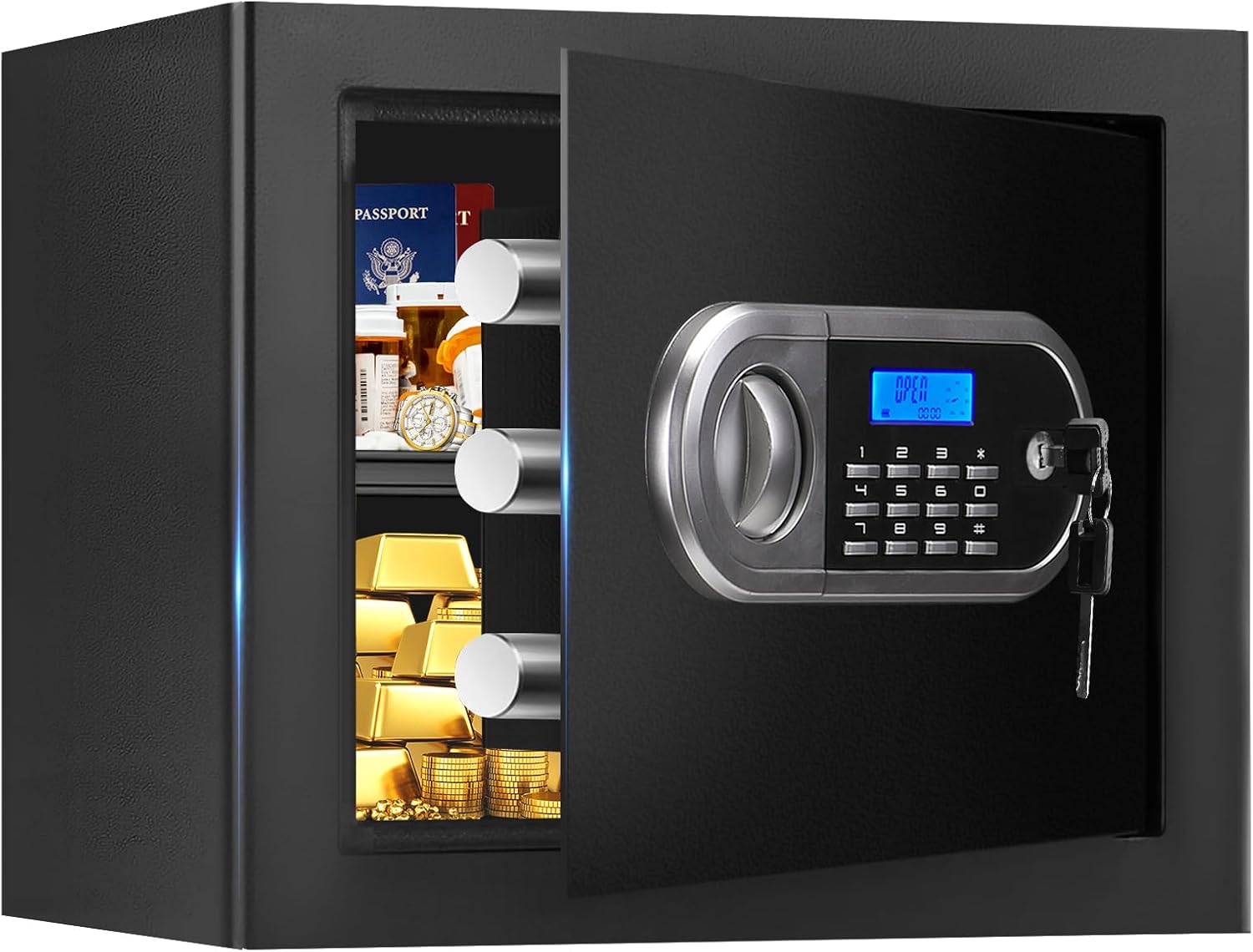
1.3 Cuft Small Fire Proof Safe for Home Documents, Anti-theft Safes for Home Use Fire and Water Proof with Combination Lock, Smart Alert System and Removable Shelf, Digital Document Safe for Jewelry
The largest interior in this group at 1.3 cubic feet, with a combination lock, a smart alert system, and a removable shelf. Built as an anti-theft document and jewelry safe with fire and water protection claims, and the shelf lets you separate paper from small valuables.
Visit on Amazon
Viking Security Safe VS-25BL Fingerprint Home Safe
A compact home safe built around a fingerprint lock rather than a keypad or dial. The appeal is speed of access for the person whose fingerprint is enrolled, and the trade-off is that the electronics and the battery become part of your security plan.
Visit on Amazon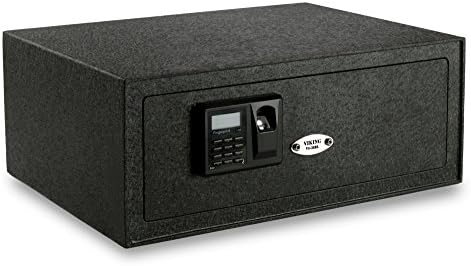
Viking Security Safe VS-38BL Extra-Wide Biometric Laptop Wall Safe
Check current Amazon price
An extra-wide biometric safe designed to be set into a wall and sized to hold a laptop. The wall installation is the security feature here: a safe that lives inside a stud cavity is far harder to carry off than a box sitting on a closet floor.
Visit on Amazon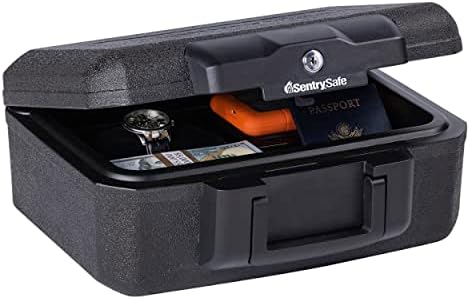
SentrySafe Fireproof Safe with Key Lock, Chest Lock Box for Home or Travel Secures Money, Documents, 0.18 Cubic Feet, 6.1 x 14.3 x 11.2 Inches, 1210
A portable fire chest with a key lock and 0.18 cubic feet of interior space, measuring 6.1 by 14.3 by 11.2 inches. The chest shape is meant for flat documents and cash, and the small footprint is what makes it easy to move between home and travel.
Visit on Amazon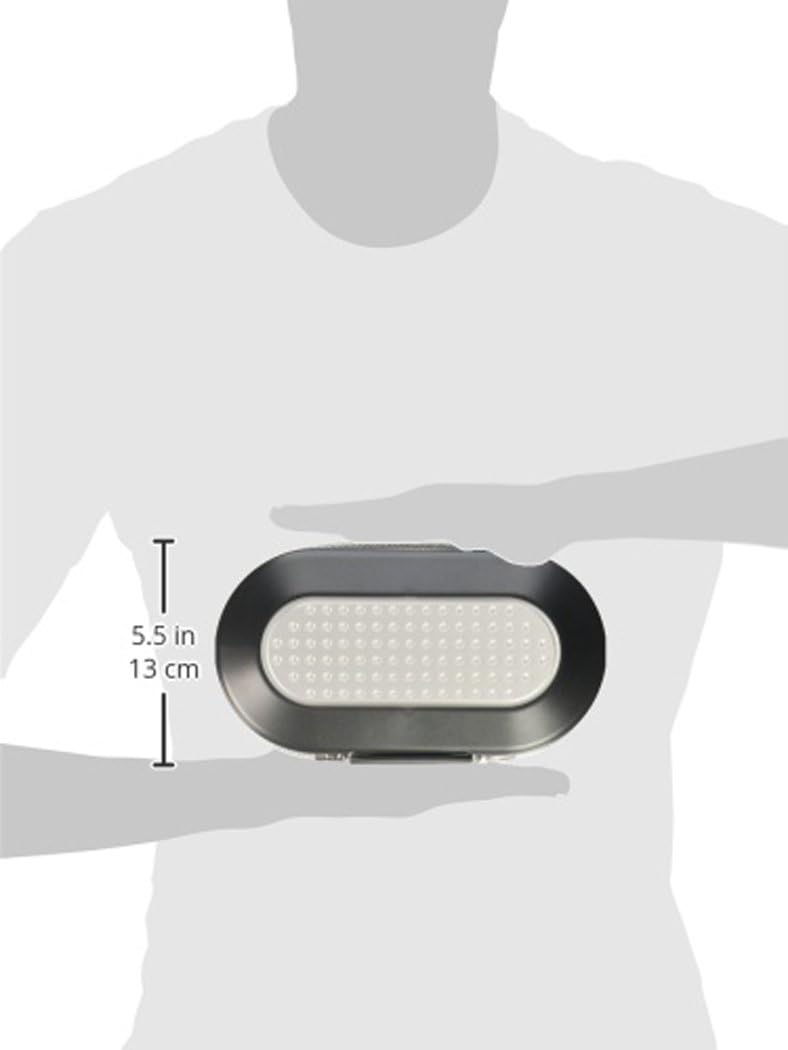
Master Lock Small Travel Safe with Cable, Gray Combination Lock Box, 5900D
A small gray combination lock box with an attached cable, meant to be tethered to something solid rather than bolted down. It is the lightest and most portable option in this group, and the cable is the entire anchoring strategy.
Visit on AmazonPrices and availability may change. Check the retailer for current details.
How these products were compared
This guide compares lock type and locking mechanism, published fire and water protection claims, interior capacity and exterior dimensions, anchoring and mounting options, and the intended use case each model is built for. Product names, images, and retailer links are matched to the same verified product so that every card points to the item shown.
The comparison is based on the manufacturer specifications and product descriptions above, not on destructive testing of these specific units. That distinction matters in a category where the marketing language is aggressive. A safe described as fireproof is not automatically a safe with a published fire rating, and a safe with a published rating is not automatically a safe that will survive a determined thief with a crowbar. Treat the specs as the starting point for your own questions, and confirm current pricing and availability through the retailer link rather than trusting a number printed in an article.
How to choose the right home safe
Start with the threat, not the feature list. For most households the realistic risk is a smash-and-grab burglary, a house fire, or a flood event, and those three threats call for different builds. A smash-and-grab is defeated by weight and anchoring. A fire is addressed by insulation and a tested rating. Water is addressed by sealing and by a rating that explicitly covers it. A safe that is excellent against one of those threats can be mediocre against the others, so decide which one keeps you up at night before you compare anything else.
The second question is the lock, because the lock is the safe. A key lock is simple and has no battery to fail, which makes it dependable but also means the key is a single point of failure and must be stored somewhere other than next to the box. A combination lock removes the key problem but adds a code you can forget. A biometric lock is the fastest option for the person enrolled in it, and the slowest option for anyone whose fingerprint is not in the system, including you if the battery dies. None of these is universally better. If you want to go deeper on anchoring, our guide to bolting a safe to a concrete floor covers the hardware side.
Capacity is where most buyers get surprised. Published interior volume tells you how much space exists, not how much of your actual paperwork fits inside it once the safe is lined with documents. Flat documents stack efficiently. Binders, jewelry boxes, and passport wallets do not. Measure what you plan to store before you commit to a size, and remember that a larger safe is also a heavier safe, which is a security advantage rather than a drawback.
Finally, decide whether the safe needs to be portable or permanent. A cable-locked travel box and a wall-installed biometric safe sit at opposite ends of that spectrum, and buying one when you needed the other is the most common mistake in this category.
SentrySafe CHW30220 Fireproof and Waterproof Document Safe
The top pick earns its place on the combination of two published protections rather than one. Fire and water resistance in the same unit is the pairing that matters for paper records, because the failure modes are different: heat destroys documents in a fire, and water destroys them when the fire department arrives. The key lock is mechanically simple, which suits a document safe that might sit untouched for months at a time. A lock with no electronics has nothing to drain.
The 0.36 cubic foot interior is the middle of this group, sized for passports, cash, jewelry, and a stack of paper rather than for a laptop or a large binder collection. The 16.5 inch wide by 14.8 inch deep by 7.6 inch high exterior is the other half of that trade-off. It fits where a full-size safe would not, and it also means the safe itself is light enough that anchoring or hiding it is worth considering rather than optional. If you need to store a laptop or a wide format document, this is not the right box.
Alternatives to consider
The 1.3 Cuft Small Fire Proof Safe for Home Documents is better suited to households with more to store, since it offers the largest interior here along with a combination lock, a smart alert system, and a removable shelf that lets you keep paper separate from jewelry. The Viking Security Safe VS-25BL Fingerprint Home Safe is a stronger fit when fast access matters more than capacity and you want a fingerprint reader rather than a code or a key.
The Viking Security Safe VS-38BL Extra-Wide Biometric Laptop Wall Safe, the SentrySafe Fireproof Safe with Key Lock 1210, and the Master Lock Small Travel Safe with Cable 5900D cover the remaining use cases. The Viking VS-38BL is the choice when a laptop needs to live inside a wall and the biometric reader is worth the battery dependency. The SentrySafe 1210 is a portable fire chest for flat documents and cash, with a key lock and a footprint small enough to relocate. The Master Lock 5900D is the travel option, a cable-tethered combination box for a hotel room or a rental, and it is the least secure of the six in a fixed location because the cable is the only thing holding it down.
Day-to-day use and maintenance
Every safe in this group has one component that will fail before the steel does, and that component is the lock. Key locks need the key stored somewhere secure and separate, because a key taped to the side of the safe is a lock that has been disarmed. Combination locks need the code recorded somewhere outside the house, or shared with one person you trust. Biometric locks need their battery checked on a schedule, since a dead battery turns a fingerprint safe into a locked box you cannot open without a backup method.
Humidity is the quiet problem with fire and water rated document safes. Sealed boxes hold moisture, and paper stored in a sealed box in a damp basement will mildew even if it never sees a flood. Rotate what you store, check the contents once or twice a year, and consider a desiccant pack if the safe lives in an unconditioned space. Bolting or cabling the unit down is also worth doing on day one rather than later, because a safe that can be carried is a safe that will be carried.
One caveat that applies to all six: no consumer safe in this price range is burglar-proof, and none of these should be described that way. They raise the cost of an attack. That is the job.
Buying checklist
- Measure the interior space you need for flat documents, and measure the exterior space where the safe will actually live.
- Choose the lock type based on how often you will open the safe and whether you can reliably maintain a battery.
- Confirm that the exact model includes the fire or water rating you are relying on, rather than assuming the brand name guarantees it.
- Decide whether the safe must be anchored, bolted, or cabled, and confirm the unit supports that method.
- Plan where the key, code, or backup entry method will be stored, and keep it out of the same room.
- Verify the current retailer price, availability, and return terms before you commit.
Final recommendation
Choose the SentrySafe CHW30220 Fireproof and Waterproof Document Safe when your priority is protecting paper records from both fire and water in a unit that fits on a shelf, and you prefer a key lock with nothing to power. Choose the Viking Security Safe VS-38BL Extra-Wide Biometric Laptop Wall Safe when you need to secure a laptop inside a wall and want fingerprint access. If portability is the requirement rather than permanence, the Master Lock Small Travel Safe with Cable 5900D is the honest answer, as long as you understand that a cable is a deterrent and not a wall.