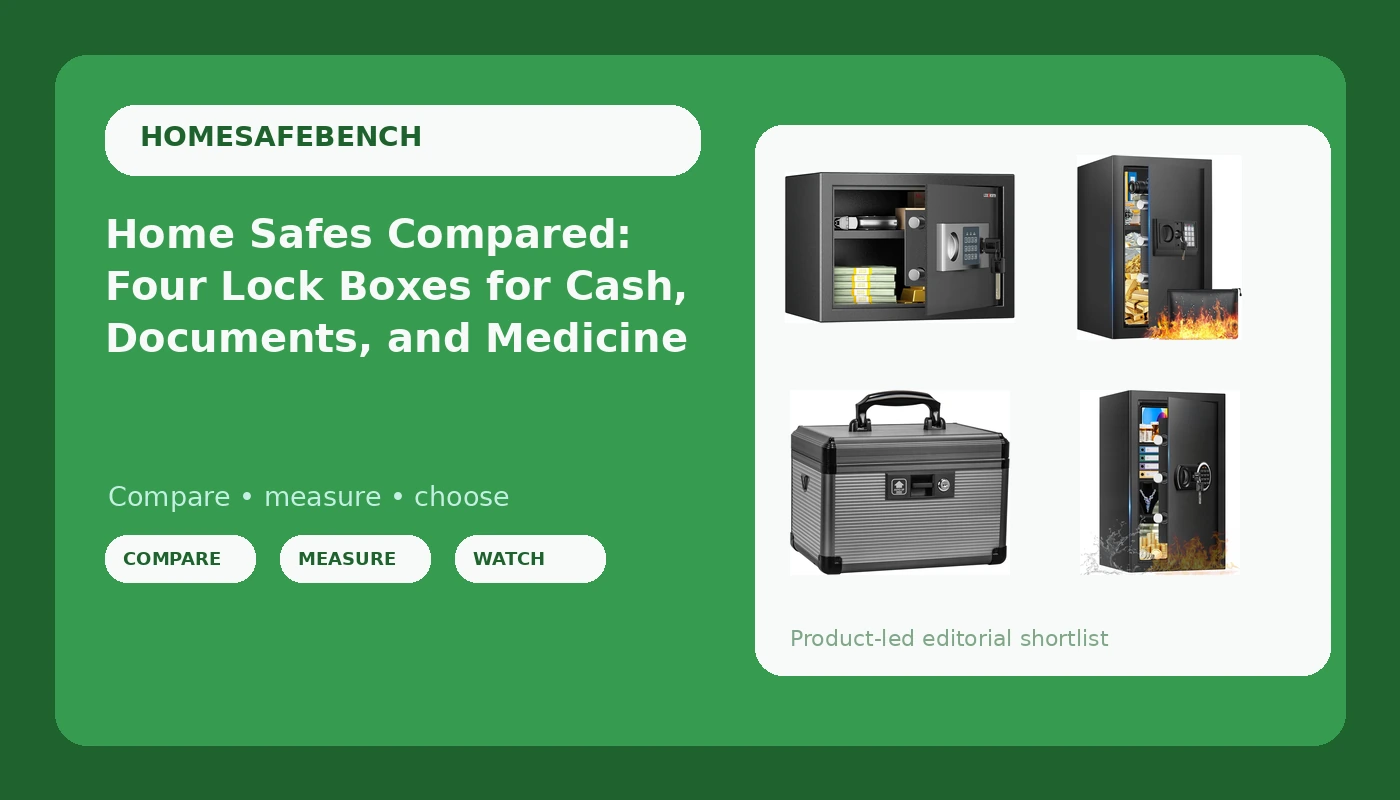
I have been a locksmith in Boise for 25 years, and I have opened more safes than the manufacturers would like to admit, including a few that owners swore were impenetrable. So when someone asks me to compare home safes, I do not start with cubic footage. I start with the lock, then the door gap, then the fine print on the fire claim. This comparison of home safes for cash, documents, and medication covers four boxes that look vaguely similar on a product page and do four very different jobs in a house.
For most households, the 5.1 cubic foot large safe is the pick, because it is the only box here that swallows a document folder, a jewelry box, and a stack of passports at once, and it gives you a keypad and a key. Everything below explains where that recommendation holds and where it falls apart, because if you live in a small apartment, or you only need the painkillers locked up, the right answer is a different box on this list.
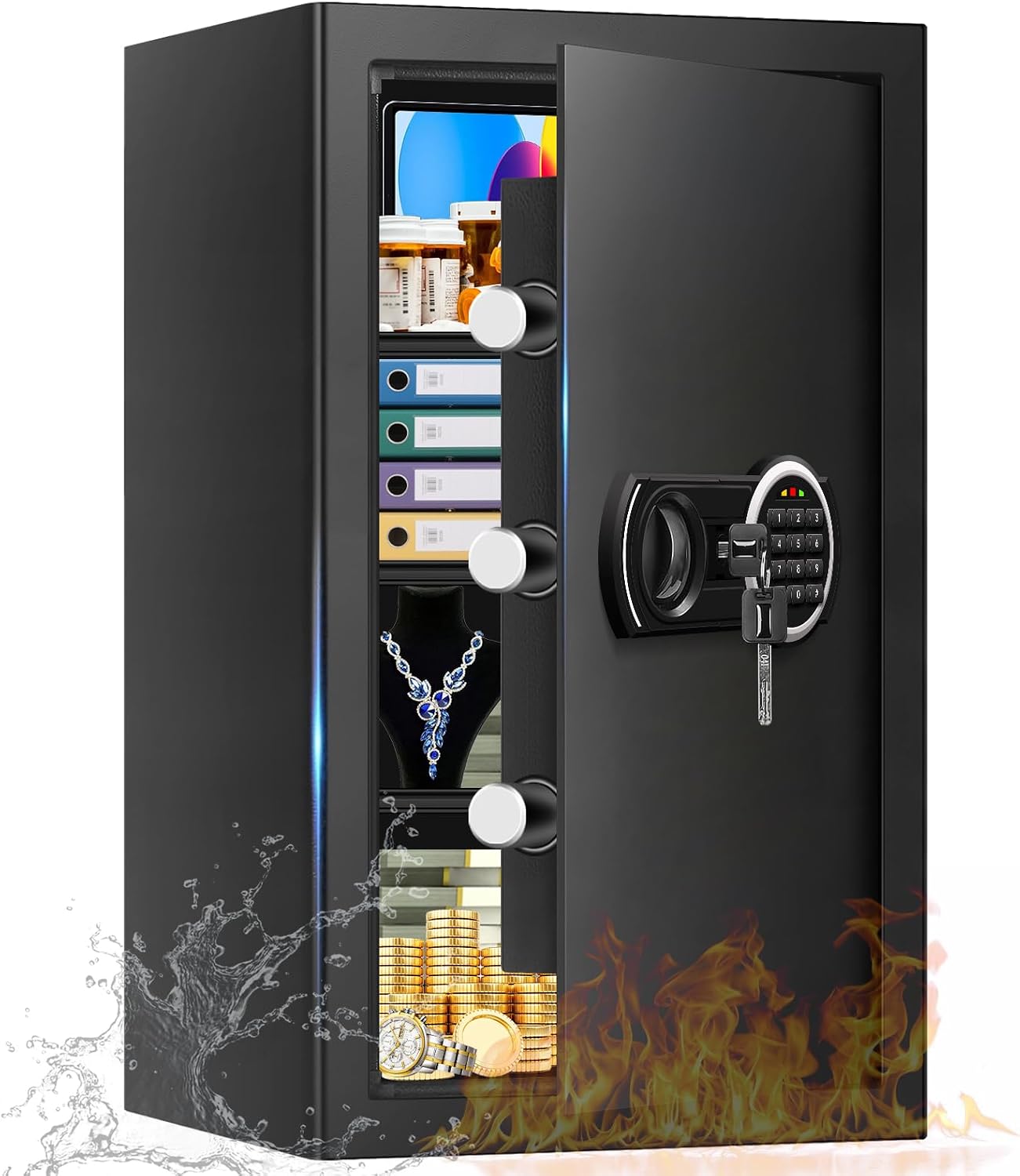
5.1 Cuft Large Safe for Home Use, Fire and Water Resistant Claim, Digital Keypad with Key Lock, 3 Removable Shelves
Most usable volume here, shelves organize documents instead of stacking them, keypad plus key gives you a backup
Fire and water claims are not the same as a published fire rating, and a box this size needs to be anchored
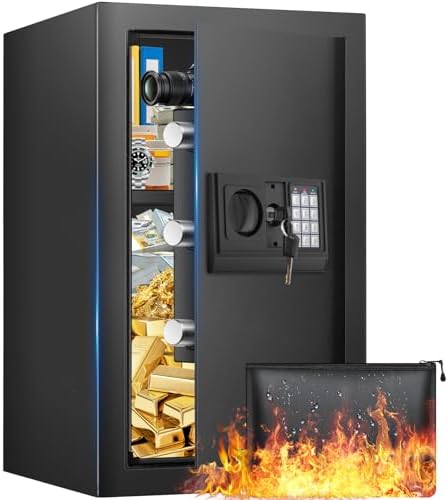
3.3 Cuft Large Home Safe, Digital Safe Box with Smart Alarm System
Alarm adds a warning layer, middle capacity suits a closet shelf, digital entry is quick
Alarm behavior varies by model, and 3.3 cubic feet fills faster than you think
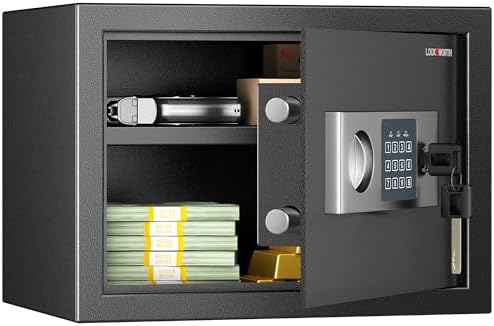
Locksworth Safe for Home, 0.6 Cubic Feet Safety Box, Digital Security Safe, 13.8"W x 9.8"D x 9.8"H
Small footprint, easy to hide in a closet or under a desk, digital keypad with the usual code reset
This is the size class thieves carry away whole, so it has to be bolted or hidden well
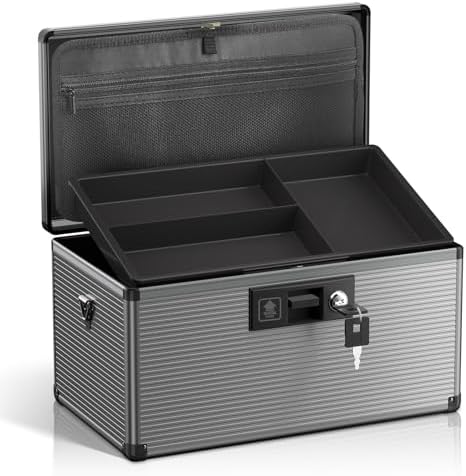
Medicine Lock Box with Key, Aluminum Alloy Box for Medication and First Aid, Removable Tray, 12 x 7.68 x 7.87 Inch
Keyed access control for medication, no batteries to die, removable tray keeps pills sorted, light enough for travel
It is a lock box, not a safe: thin aluminum, no fire protection, no pry resistance worth the name
Prices and availability were captured from Amazon Creators API and may change.
The lock is the safe
A five hundred dollar safe with a two dollar lock is a steel box with a suggestion. That is the first thing I check, and it is why I read a product listing from the bottom up instead of the top down.
Every box in this comparison uses a keypad or a key. There is no mechanical dial in the group, and that is mostly fine for a home. Digital keypads are the honest middle ground between convenience and security, and they fail in predictable ways: dead batteries, sticky buttons, and a code the whole family knows. The failure mode I see most often is a keypad that eats batteries in a month because the electronics never fully sleep. If a keypad safe has a key backup, use the keypad for daily access and keep the key somewhere that is not taped to the back of the safe. That last part matters more than the lock itself.
A key lock is slower and dumber, and it has one advantage that never shows up in a spec sheet: no batteries, no lockout, no firmware. For medication and first aid access, that trade is worth making.
The door gap tells you more than the brochure
Pry resistance comes from the door gap and the bolt work, not from how thick the steel sounds when you knock on it. A tight gap means a crowbar has nothing to bite. A wide gap with a single small bolt means I can fold the door open in a couple of minutes with a 24 inch bar, and I have done exactly that on safes that cost more than everything in this article combined.
The 5.1 cubic foot safe is the one here that advertises anti-pry construction, and on a box that size the door gap matters more than on the small ones, because a large door gives a bar more leverage. If you buy it, anchor it. A safe that is not bolted down is a safe that walks.
Weight is security. A 20 pound box is a theft convenience for anyone with a dolly and a minute of privacy. The medicine lock box weighs almost nothing, and that is fine for its job, but it should never be treated as theft protection.
Fire ratings are measured, not imagined
Here is the sentence that costs people the most money: fireproof is a marketing word, and a fire rating is a test result. A real rating tells you how many minutes the interior stayed under a specific temperature during a test to a standard. If a listing cannot tell you the minutes and the temperature, you are buying hope with a handle on it.
The large safe in this comparison carries a fire and water resistant claim in its name. I am not calling that claim false. I am telling you to find the published rating before you trust a birth certificate to it. Water resistance deserves the same scrutiny. Most residential safes that survive a house fire end up with wet contents from the hoses, so a water claim is meaningful if it is documented, and decorative if it is not.
The Locksworth and the medicine box offer no fire protection at all. For medication that is irrelevant. For passports, it is the whole argument.
The four boxes, by job
5.1 Cuft Large Safe: the document vault
This is the only box here built for volume. Three removable shelves mean you can run it as a document safe with hanging folders on one level and a lock box for jewelry on another, or pull the shelves and stack binders. The keypad plus key combination is the configuration I recommend to almost everyone, because it removes the single point of failure that kills electronic safes in a power outage.
It is also the box with the most to prove. Big doors mean bigger gaps, fire claims mean fine print, and a safe this size is a permanent installation, not a purchase you move between apartments. If your goal is one place for the deed, the passports, the backup drives, and your mother's rings, this is the one that does it.
3.3 Cuft Large Home Safe with Smart Alarm: the middle ground
Three point three cubic feet is a real safe capacity, not a lock box pretending. It fits a document folder, a small jewelry case, and a pistol-free valuables tray without a fight, and it still slides onto a closet shelf.
The differentiator is the smart alarm. Alarm behavior varies by model, so read the listing carefully: some units chirp on a wrong code, some sense vibration or movement, and some do both. None of that stops a determined thief, but it does interrupt the smash and grab crowd, and that is the threat most homes actually face. Confirm what triggers the alarm before you buy, because the marketing language is loose in this category.
Locksworth 0.6 Cubic Feet: the small box that must be bolted
At 13.8 by 9.8 by 9.8 inches, this is the classic nightstand or closet safe. It is the size people buy first, and it is the size that gets stolen most often, because a person can pick it up and walk out with it under one arm. If you buy it, bolt it to a shelf or a floor, or hide it somewhere a stranger would not think to look.
The digital keypad is fine for hotel and office use, which is what the listing targets. Just do not expect the door gap or the bolt work of a larger safe. Small boxes flex, and flexing is what a crowbar wants.
Medicine Lock Box with Key: not a safe, and that is the point
I want to be direct about this one. The medicine lock box is a keyed aluminum alloy box with a removable tray, and its job is access control, not theft resistance. Thin aluminum does not resist a pry bar, and there is no fire protection. What it does well is keep medication and first aid supplies away from children, guests, and anyone who should not be handling them, and it does that with a key that never needs a battery.
For travel it is genuinely useful, because it is light and it closes with a lock instead of a zipper. For valuables, it is the wrong tool, and I would rather tell you that than sell you a false sense of security.
The trade-offs that actually decide this
Capacity against concealment is the first trade. The 5.1 cubic foot safe holds the most and hides the worst. The Locksworth hides easily and holds almost nothing.
Alarm against simplicity is the second. An alarm is a warning, not a barrier. A key lock is a barrier with no warning. Pick the one that matches your threat, and for most people that is a smash and grab burglar with ninety seconds inside the house, not a professional crew with tools and time.
Keypad against key is the third. I recommend digital entry for daily use and a key backup on every box that offers one, because electronics are the most common failure point I see in service calls.
Fire protection against price is the fourth. If documents are the reason you are buying, the fire claim has to be documented. If medication is the reason, you do not need fire protection at all, and you should not pay for it.
What I tell people who ask me at the shop
Buy the safe for the threat you actually face. For most homes, that threat is a quick break in, and the answer is a box that is heavy enough to be annoying, anchored well enough to be immovable, and locked with something honest. The 5.1 cubic foot safe is the best all around pick here for documents and valuables. The 3.3 cubic foot safe with the alarm is the right call for a smaller space where you want the warning. The Locksworth is a starter box for a nightstand or a hotel room. The medicine box is for pills and bandages, and it should never be compared to a safe on theft terms, because it will lose.
Nothing on this list is burglar-proof. Nothing sold to a homeowner is. What you are buying is time, noise, and inconvenience for whoever tries, and a lock that does not quit on you when you need it. That is the whole game.