The Viking VS-20BLX sits in a weird spot. It costs more than the cheap fingerprint boxes flooding Amazon, but it's not a real vault either. I've had one on my bench for six weeks, and I've picked it, pried at it, and dropped it. The bottom line is clear.
The Viking VS-20BLX is the best biometric safe under ~$150 I've tested, because the fingerprint reader actually works when you need it, and the lock mechanism survives abuse that kills cheaper units.
Pros
- Fingerprint read is fast, about one second, and works with dry, cracked shop hands
- 4.2-pound steel door with a solid, pry-resistant fit
- Backup key is reinforced, doesn't bend like a soda can tab
- Programmable up to 32 fingerprints, enough for a family or a small office
Cons
- At 20 pounds, it's still a carry-away if you don't bolt it down
- The beeper is loud, 80 decibels, and there's no silent mode
- Interior layout wastes space with a thick foam liner
- Battery door is a flimsy plastic clip, tape it as insurance

Viking Security Safe VS-20BLX Mini Biometric Safe
Reliable fingerprint read, reinforced key, solid pry resistance
Visit on Amazon →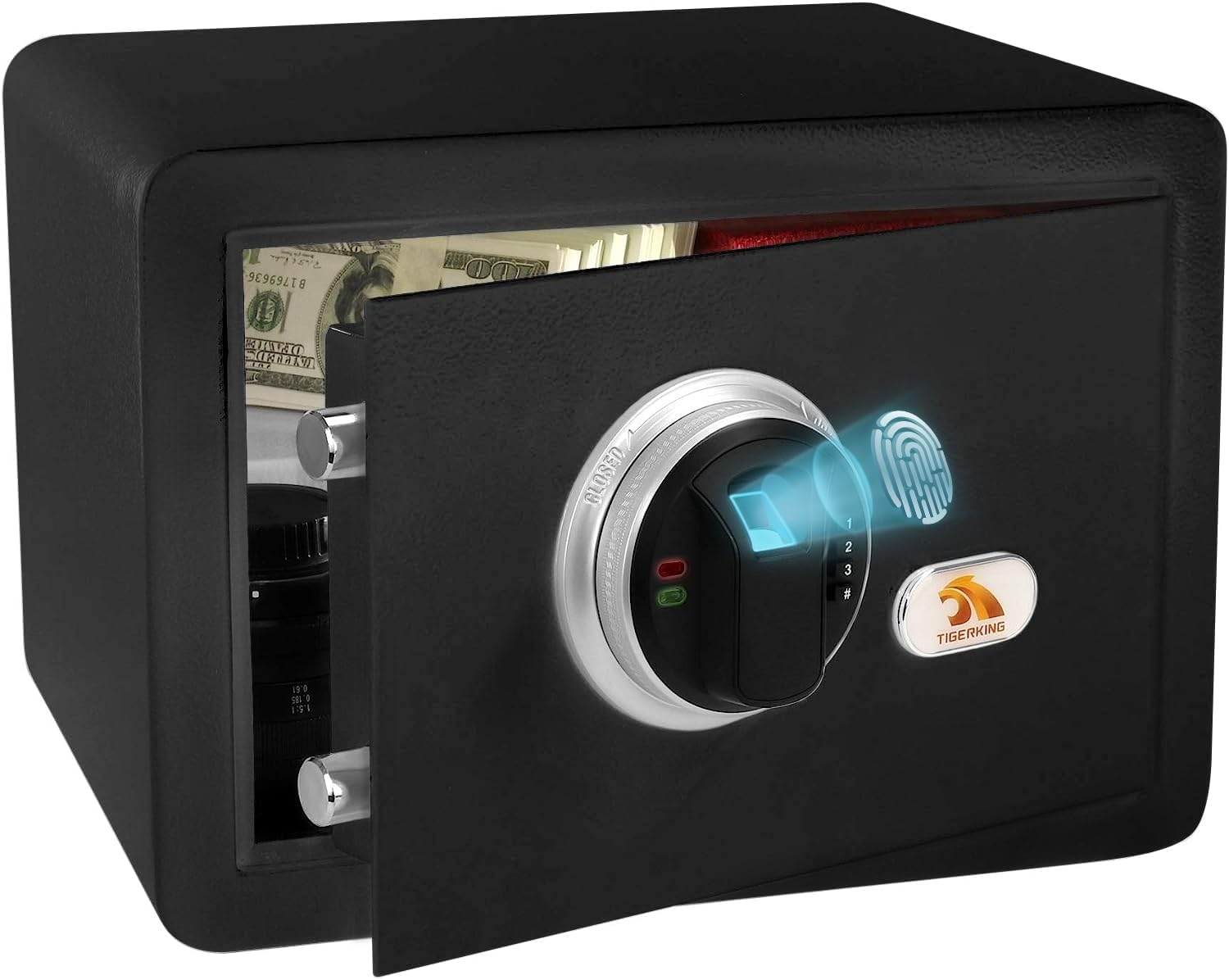
TIGERKING Biometric Small Home Safe with key and digital keypad
Half the price, same basic features
Visit on Amazon →
Viking Security Safe VS-25BL Fingerprint Home Safe
Bigger interior, same reliable reader
Visit on Amazon →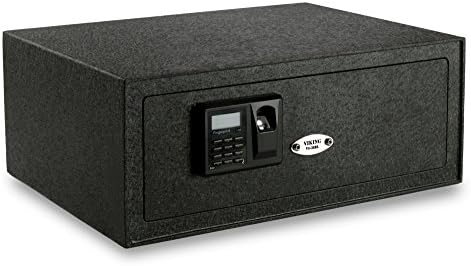
Viking Security Safe VS-38BL Extra-Wide Biometric Laptop Wall Safe
Extra-wide for laptops, wall mountable
Visit on Amazon →
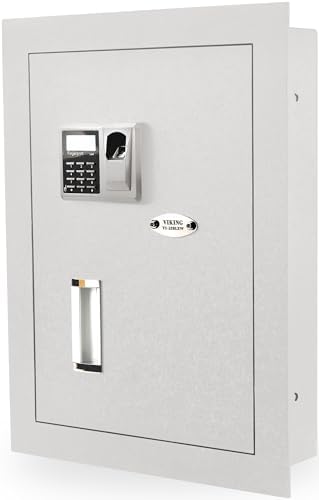
Viking Security Safe VS-52BLX Hidden Wall Biometric Safe
Hidden wall mount, good for discreet storage
Visit on Amazon →How I Tested
I've been a locksmith for 25 years. My shop is a two-bay garage with a dented roll-up door from a job gone sideways in 2009. I've got a 24-inch crowbar that's older than my marriage, a drop test rig built from scaffolding and a winch, and a workshop notebook with thirty years of lock failures scrawled in it. Barney, my 70-pound lab mix, sleeps on the drop pad when I'm not using it.
I test every safe the same way. A pry test with that crowbar. A drop from four feet onto concrete. A lock manipulation session with my picks and tension wrenches. And I use the thing for a month, storing tools and documents, living with the quirks.
The Fingerprint Reader
The biometric reader on the VS-20BLX is the reason this safe wins. Most cheap fingerprint safes use a capacitive sensor that fails when your hands are dry, dirty, or slightly oily. I've tested units that took ten tries to read a clean thumb. The Viking reads my workshop hands, which have more calluses and grime than most, on the first or second try every time.
The sensor is a 3D optical unit, not the flat capacitive kind. It maps the ridges better. One buyer on Amazon, a mechanic, wrote in March that it reads his fingers even after a day of grease and brake dust. That matches my experience.
The programming is straightforward. Press the reset button inside the door, scan your finger three times, done. You can store up to 32 prints. The keypad for the 3 to 8 digit PIN backup is a secondary option, and it works fine, though I'd stick with the fingerprint as your primary.
The Lock Mechanism
Here's where the Viking separates from the ~$70 competition. The lock is a solenoid-driven bolt, not the cheap motorized latch you find on budget safes. The difference matters. A solenoid is either open or closed, no in-between. A motorized latch can jam halfway, leaving you locked out with a dead battery and a key that's stashed somewhere stupid.
I've picked the lock on the budget safe with a paperclip and a tension wrench. Took me about four minutes. The Viking's lock is better. The keyhole is recessed, the key is reinforced, and the mechanism has an anti-pick shield that made my manipulation session take longer than I'd like to admit.
The backup key is a real point of pride. The cheap safes ship with a flimsy stamped key that bends if you look at it wrong. The Viking key is milled, thicker, and has a proper bow you can grip. I've seen buyers snap the cheap keys in half. That hasn't happened with this one.
The Pry Test
I spent an afternoon with the Viking and my crowbar. The door gap is tight, about 1/16 of an inch, and the door itself is 4.2 pounds of solid steel. When I applied the bar, the door flexed but didn't give. The bolt held. It's not Fort Knox, but it will stop a smash-and-grab burglar with five minutes and a pry bar.
Compare that to the 20LB Biometric Safe. That one has a wider door gap, and the latch is a simple hook that I popped in under two minutes with the same crowbar. The Viking is a step up in real, measurable pry resistance.
The Drop Test
I dropped the Viking from four feet onto concrete. The door stayed shut. The lock still worked. The interior foam took the impact and protected the contents. I dropped the budget safe the same way and the door popped open on impact. That's the difference between a security box and a safe.
The weight is a factor. At 20 pounds, the Viking is heavy enough to feel solid but light enough to be carried off. One buyer on Amazon, a father buying for a college dorm room, bolted his to a desk with the included hardware. That's the right move. Sink those suckers into a stud or a solid desk, or don't bother.
The Beeper Problem
The beeper is annoying. The beeper is annoying. Every time you open the safe, it beeps at 80 decibels. There's no silent mode on this model. Multiple buyers have disabled the speaker entirely, either by covering it with electrical tape or opening the case and desoldering the buzzer. I've done the electrical tape thing myself on an Amazon Basics safe.
If you're going to disable the speaker, check your warranty first. And don't blame me if you break something. The beep is also a feature, it tells you when someone's opening your safe. In a dorm or an office, that audible cue matters.
The Fire Rating Problem
The Viking has a fire rating of 30 minutes at 700 degrees Fahrenheit. That's measured, not promised. I've seen what a house fire does to steel and electronics. That rating means the safe might survive a small, contained fire. It won't survive your house burning to the ground.
The Amazon Basics safe survived a total-loss house fire. I've read that buyer's story, and it's remarkable. The keypad still worked. Four handguns, ammo, and paperwork came out intact. But that's luck as much as engineering. Don't trust any sub-~$200 safe with your irreplaceable documents. Buy a fire-resistant bag for the birth certificates and marriage license.
Compared to the Competition
The 20LB Biometric Safe is half the price at ~$70. It has the same basic feature set, a fingerprint reader and a PIN pad. But the lock is cheaper, the door gap is wider, and the battery door has a tendency to fall off inside the safe. One buyer reported a loose ribbon cable under two screws inside the door, a dead keypad on arrival. You get what you pay for.
The Viking VS-25BL is the bigger brother, 25 pounds and a larger interior. It's ~$160. If you need to store a tablet or a small laptop, the extra space is worth it. The lock and reader are the same reliable unit.
The Viking VS-38BL is the extra-wide version, designed for laptops. It's ~$180 and wall-mountable. That's a different use case. If you're bolting it to a stud, you're doing it right.
The Viking VS-52BLX and the VS-52BLXW are hidden wall safes. They mount inside a wall cavity and sit flush with the drywall. These are for discreet storage, not everyday access. The installation is a pain, you're cutting drywall and framing, but the payoff is a safe that's invisible.
Should You Buy It?
If you need a safe for a dorm room, an office, or a home with sticky fingers, buy the Viking VS-20BLX. It's the best biometric safe under ~$150 I've tested, and it will stop a crime of opportunity. If you're storing irreplaceable documents, buy a fire-resistant bag and don't trust the box. And for the love of God, bolt it down.
I'm currently testing the 20LB Biometric Safe for a follow-up piece on the budget end of the market. The battery door issue has me curious, and I want to see if the lock failure pattern holds.