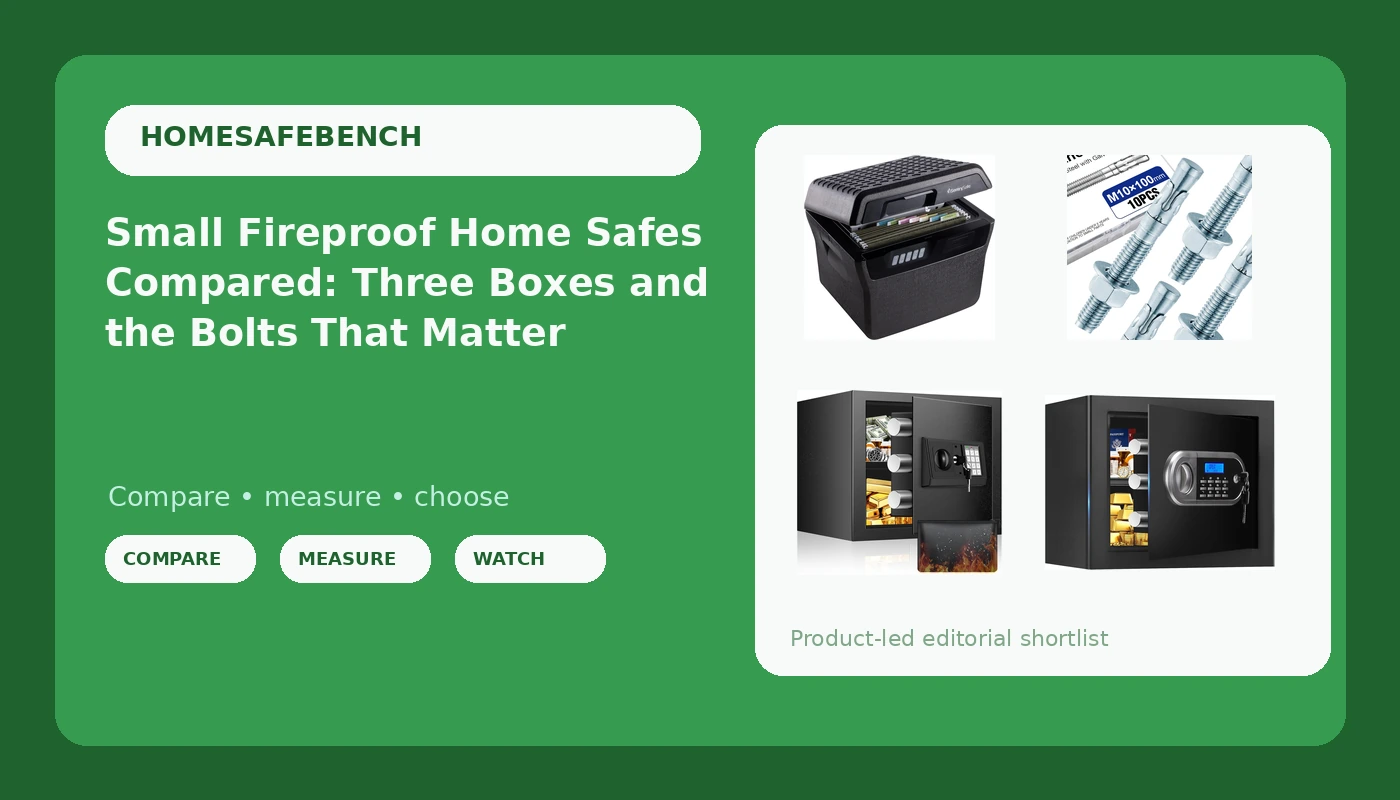
I have opened far more safes than I have bought, which is the honest way of saying that my job for 25 years has been getting into boxes other people believed were secure. I work out of Boise, I keep a notebook of which locks fold under which tools, and I have watched a grown man cry over a fire box that turned out to be a plastic shell with a sticker on it. So when I line up small fireproof home safes for a comparison, I am not ranking brochures. I am ranking the two things that decide whether your documents survive: the lock that holds the door shut, and whether the box is still in your house next week.
Related: How to Bolt a Safe to a Concrete Floor
The short answer: the SentrySafe is the best document box in this group, the 1.3 cubic foot digital safe gives you the most features for the money, the small safe box is the pick when shelf space and weight are the real constraints, and the wedge anchors are the cheapest genuine security upgrade you can make to any of them. The interesting part is why, and it is not the marketing copy.
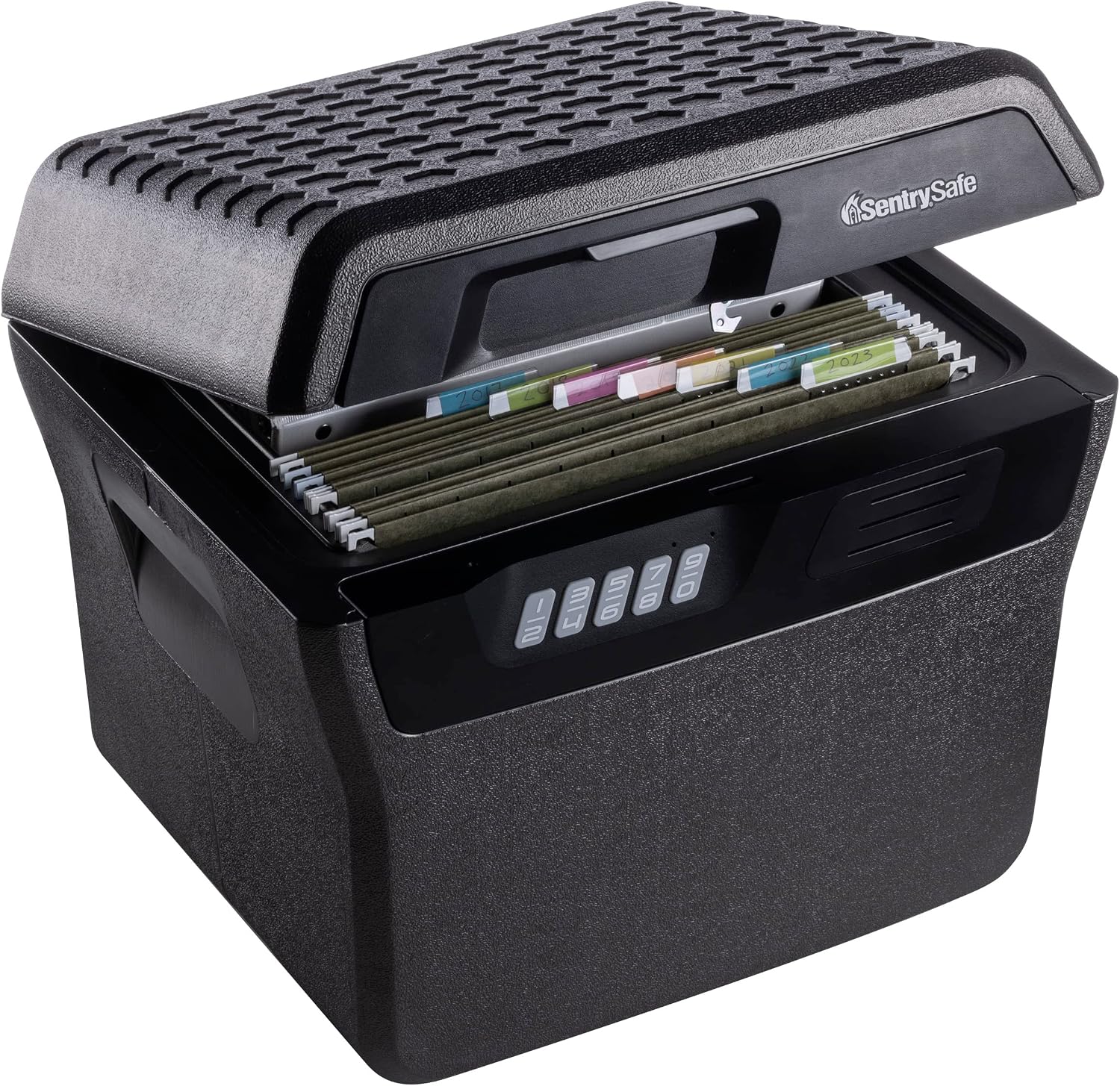
SentrySafe Charcoal Gray Waterproof and Fireproof Safe, Lock Box with Keypad for Documents and Hanging File Folders
The deepest interior here and the only one built around hanging file folders, plus water and fire claims from a brand that has been doing this a long time
The biggest and heaviest box in the group, it wants floor space, and the keypad needs a battery plan
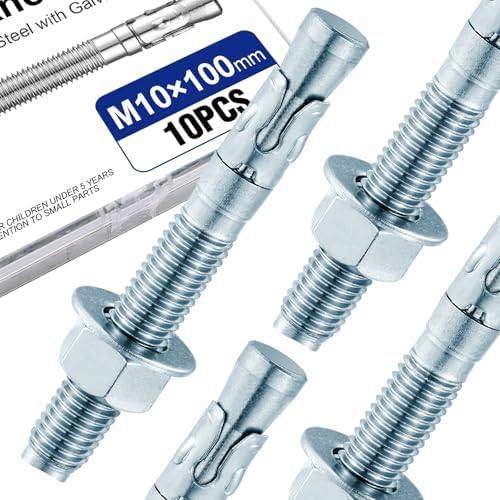
10PCS 3/8" x 4" Concrete Anchor Bolts, Carbon Steel Wedge Anchors
Ten anchors that turn a movable box into furniture, and the single best return on money in this comparison
Not a safe at all, and useless without a concrete slab or a properly framed floor to drill into
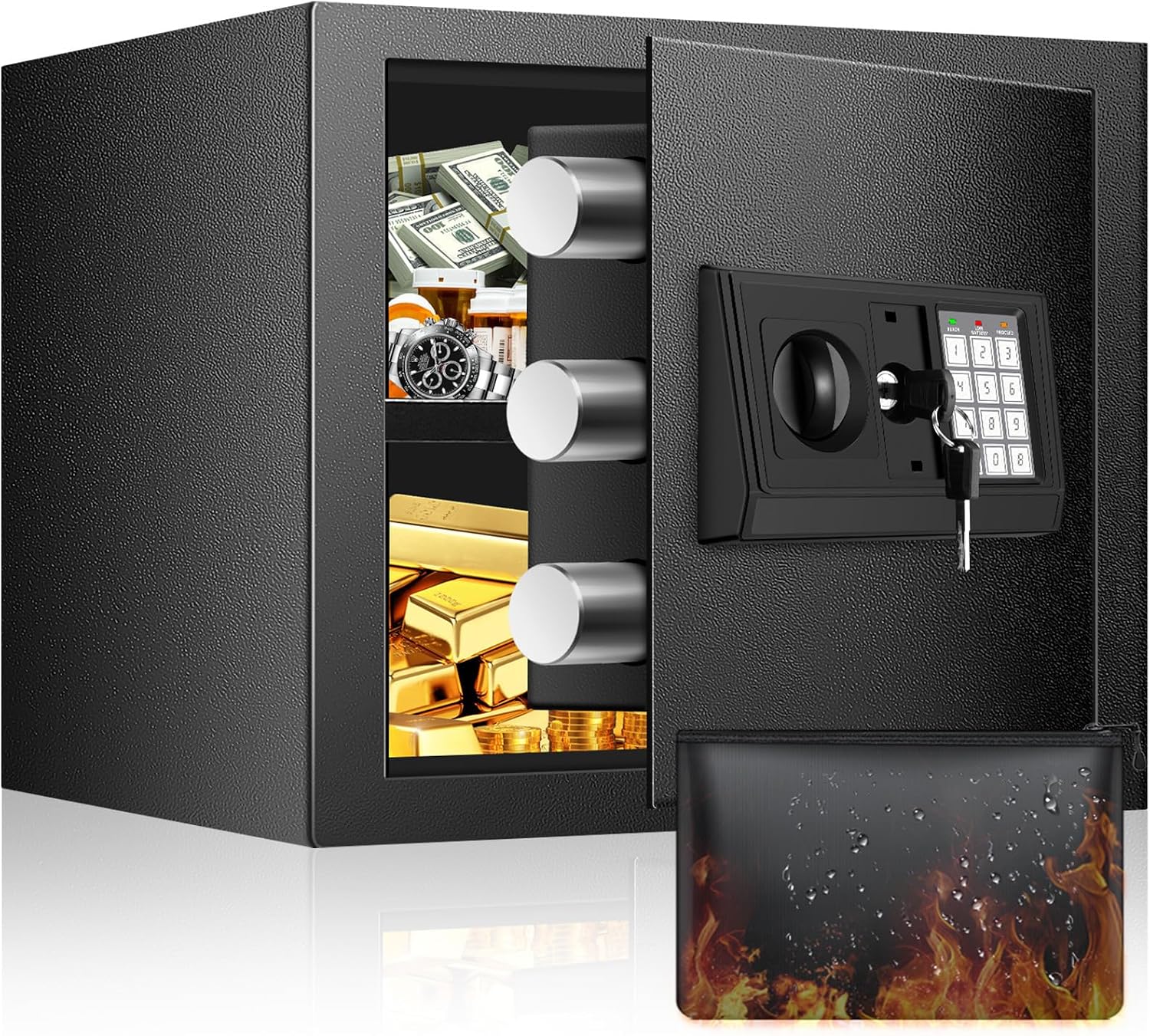
9.84'' H Home Safe Box, Small Safe with Fireproof Waterproof Bag
Light, compact, shelf friendly, and the bag gives you a portable layer for the documents you would grab in an evacuation
The smallest interior here, light enough to carry, and the box itself is a thin shell compared to the SentrySafe
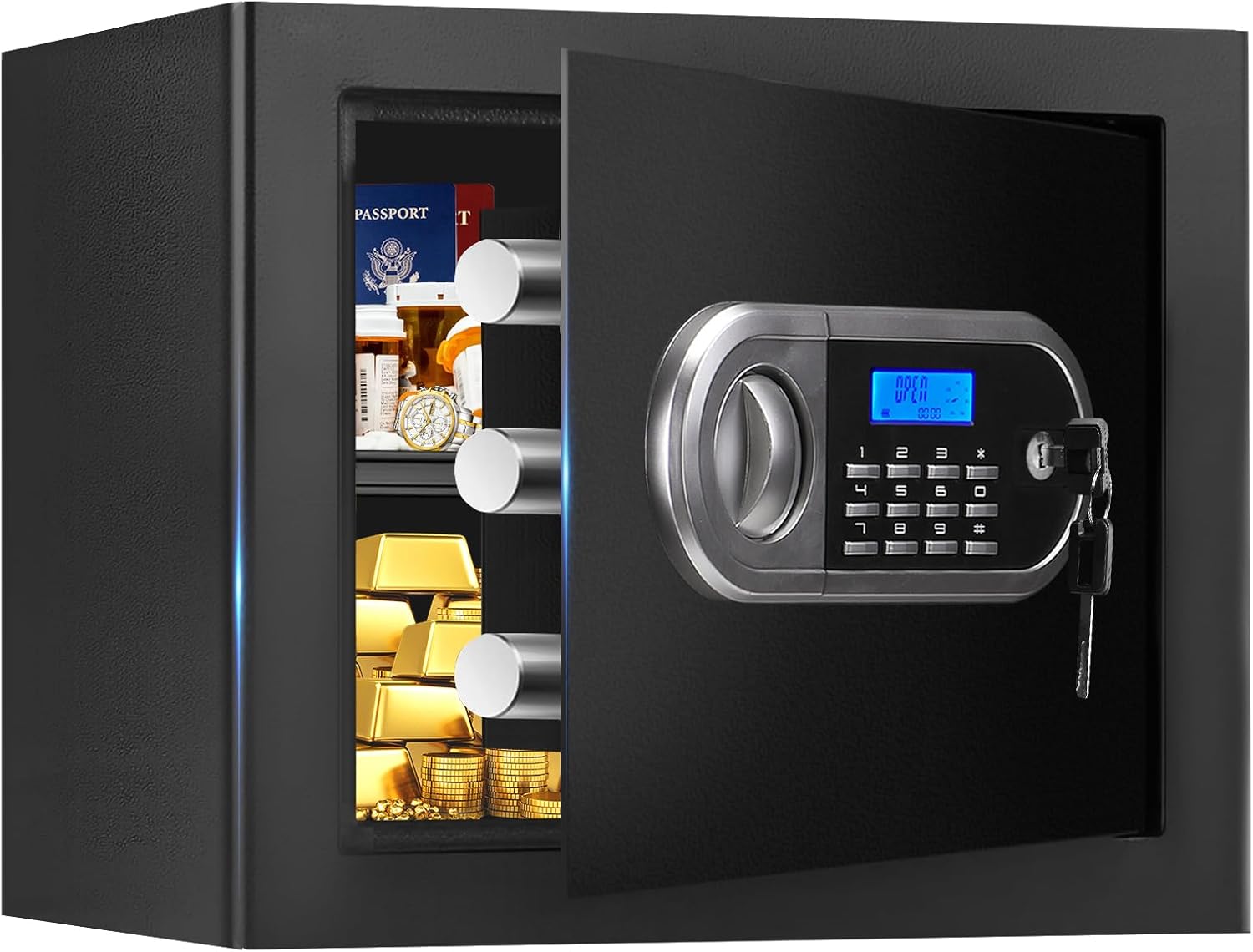
1.3 Cuft Small Fire Proof Safe for Home Documents, Anti-theft Safes for Home Use Fire and Water Proof with Combination Lock, Smart Alert System and Removable Shelf
Combination lock, smart alert, removable shelf, and a real interior volume for documents, jewelry, and a passport folder
The alert is a convenience feature, not security, and it depends on power, network, and batteries that will eventually quit
Prices and availability were captured from Amazon Creators API and may change.
What I actually look at
Four things decide whether a safe is worth your money, and none of them are the steel thickness printed on the box.
The lock. This group covers the three families I have met a thousand times: a keypad, a combination dial, and a key. A keypad is the honest middle ground. It is fast, it does not require a locksmith when you forget the code, and it fails in a predictable way, which is that it eats batteries. A mechanical dial is slower and more reliable, and it is what I keep at home. A key is the weakest option, because keys get copied, lost, and left in a drawer.
The door gap. That is the space between the door and the frame, and it is where a crowbar lives. A tight gap with a proper lip beats a quarter inch of extra plate steel every time. On a small box, the gap is often the whole story.
The bolt work. Bolts are the metal that actually holds the door shut. One bolt in the middle of a small door is a suggestion. Several bolts, or a full length lip that engages the frame, is a real barrier.
Weight and anchoring. A light safe is a theft convenience. If two people can lift it, two people can carry it out. That is where the least glamorous product in this comparison earns its place.
The SentrySafe: the document box most people should buy
The SentrySafe behaves like a filing cabinet that happens to be armored. It takes hanging file folders, which sounds minor until you have tried to keep a birth certificate flat in a box that only holds stacks. The exterior runs about 14.1 by 16.6 by 13.8 inches, so it wants a floor or a bottom shelf, not a closet shelf. The lock is a keypad, and the manufacturer claims both water and fire protection.
Two things I would verify before trusting it with anything irreplaceable. First, whether there is a key override for the day the keypad dies, because every keypad dies. Second, the actual fire language on the listing: minutes and temperature, not the word "fireproof" used as decoration. A claim is not a rating.
My criticism is the one I level at every box this size. It is heavy enough to be annoying and light enough to be carried. Which brings us back to the anchors.
The 1.3 cubic foot digital safe: features per dollar
This is the feature sheet winner. Combination lock, smart alert system, removable shelf, digital entry, and a stated 1.3 cubic feet of interior, which is enough for a stack of documents, a jewelry box, and a passport folder. The removable shelf is more useful than it sounds. Pull it and you get one tall compartment for a binder. Leave it in and you get two shallow ones.
Here is my caution. A smart alert tells you something happened. It does not stop the something. If the alert travels over your home network, it depends on your network, your power, and a battery that will give out at the worst possible moment. Treat the alert as a nice extra and the lock as the security.
The small safe box with the fireproof bag
At 9.84 inches tall, this is the box for someone who has a shelf, not a floor. It is the lightest of the three safes here, which is both the selling point and the weakness. The interesting part of the package is not the box. It is the fireproof and waterproof bag.
A bag is not a safe. It has no lock, no bolt work, and no door gap to worry about. What it has is portability, and portability is underrated in a house fire. The bag is the thing you grab on the way out. The box is the thing that stays behind and takes the heat. If you buy this combination, use it that way: the documents you would need to rebuild your life go in the bag, and the bag lives in the box.
The cheapest thing here is the one that matters most
The wedge anchors are not a safe, and I am including them because they solve the most common failure I see. A burglar does not pick a home safe. He picks it up. The average smash and grab is over in minutes, and carrying a box out of a house takes less time than opening it.
Ten carbon steel wedge anchors, 3/8 inch by 4 inch, are the hardware that turns a box into furniture. You drill through the floor of the safe into a concrete slab, drive the anchor, and torque it down. The wedge expands against the concrete, and the safe stops being movable. Four anchors, one in each corner of the interior floor, is the standard I would use. This is also where people go wrong. Drywall anchors in a wall cavity are not anchoring, and a wood subfloor on a second story is a much weaker attachment than a slab.
Check that the safe has a drillable floor before you buy anchors, and check the anchor diameter against the holes in that floor. A 3/8 inch anchor wants a 3/8 inch hole, which means a hammer drill and a masonry bit that matches. If you rent, get permission before you put four holes in somebody's slab.
Fire ratings and the fine print nobody reads
A fire rating is minutes at a specific temperature. A one hour rating at 1,550 degrees means something only if the test was real, which is why I read the fine print and not the sticker. The word "fireproof" on a box is a description of intent. A rating is a measurement, and measurements have numbers attached.
Two practical notes. First, paper survives more heat than digital media does, so if you are storing drives or photos on cards, the rating you need is stricter than the one you need for deeds and passports. Second, a fireproof bag is a different product from a rated box. The bag buys you time and mobility. The box buys you volume and a lock. Neither one is the other.
The trade-offs, stated plainly
- The SentrySafe gives you the most interior and the best document layout, and asks for floor space, weight, and the highest cost of the three safes.
- The 1.3 cubic foot digital safe gives you the most features and a solid interior for the money, and asks you to accept that the alert and the keypad are conveniences rather than security.
- The small safe box gives you the easiest placement and a portable document bag, and asks you to accept the least interior and the thinnest shell.
- The wedge anchors give you the biggest real world security gain per dollar, and ask for a concrete slab, a hammer drill, and a willingness to put holes in your floor.
Who should buy which
Buy the SentrySafe if documents are the point. Deeds, passports, birth certificates, insurance paperwork, and the folder of things you would need after a fire all fit, and the hanging file layout means you will actually keep them organized instead of stuffed in a pile.
Buy the 1.3 cubic foot digital safe if you want one box for mixed contents. Documents on one shelf, a jewelry box and a few small valuables on the other, and a combination lock you can change without calling anyone.
Buy the small safe box if you live in an apartment, if you are short on floor space, or if you want a document bag you can carry out the door. It is the least safe of the three and the most likely to actually be used, which counts for something.
Buy the anchors no matter which box you choose. They are the difference between a safe and a carrying case.
What I tell people at the counter
Most households face smash and grab, not a professional crew with tools and time. Buy for that threat and you will spend your money in the right places: a lock that does not fail on its own, a door that fits tight, and four bolts into concrete. What you cannot buy at this price point is a box that stops somebody who came prepared, and any listing that tells you otherwise is selling you a feeling.
The lock is the safe. Everything else is a container.