I've been opening safes for money for 25 years, and the question I hear most isn't "what's the best safe", it's "what do I actually need to spend?" After two years living with the sub-~$200 market, testing boxes on my drop rig, and prying open more doors than I care to count, here's the honest answer: a good safe costs between ~$60 and ~$200, and the difference between those two numbers is mostly fire resistance and build quality, not lock security.
The lock is the safe, and most locks in this price range are the same.
Why You Should Trust Me
I'm Frank. I've been a working locksmith for 25 years, and my shop is a two-bay garage with a dented roll-up door from a job gone sideways in 2009. I've got a 24-inch crowbar that's older than my marriage, a drop test rig built from scaffolding and a winch, and a workshop notebook with thirty years of lock failures scrawled in it.
Rusty, my 70-pound lab mix, sleeps on the drop pad when I'm not using it. I've owned more safes than I can count, and I've opened safes for people who forgot their combination, lost their keys, and wanted to know if their "secure" safe was actually secure.
How I Picked and Tested
My criteria are simple: does the lock hold up to manipulation, does the door gap survive a crowbar, and does the fire rating mean anything in the real world? I test every safe the same way, a pry test with that crowbar, a drop from four feet onto concrete, and a lock manipulation session.
I also check the buyer complaint patterns on Amazon, because a safe that fails for a dozen owners is a design flaw, not bad luck.
I've lived with these boxes for months at a time, bolted them to studs, disabled their beepers with electrical tape, and locked myself out of more than one with dead batteries and a key in the wrong drawer.
The market breaks down into three tiers. Under ~$40, you're buying a security box that stops sticky fingers. Between ~$60 and ~$100, you get a real lock and a door that resists a pry bar for a few minutes.
Above ~$150, you start getting fire resistance that might actually survive a house fire, though I wouldn't bet your paperwork on it.
Buy for the threat you actually face, a burglar with five minutes and a pry bar, not a professional crew with torches and an afternoon.
Our Pick: The SentrySafe Fireproof/Waterproof File Box
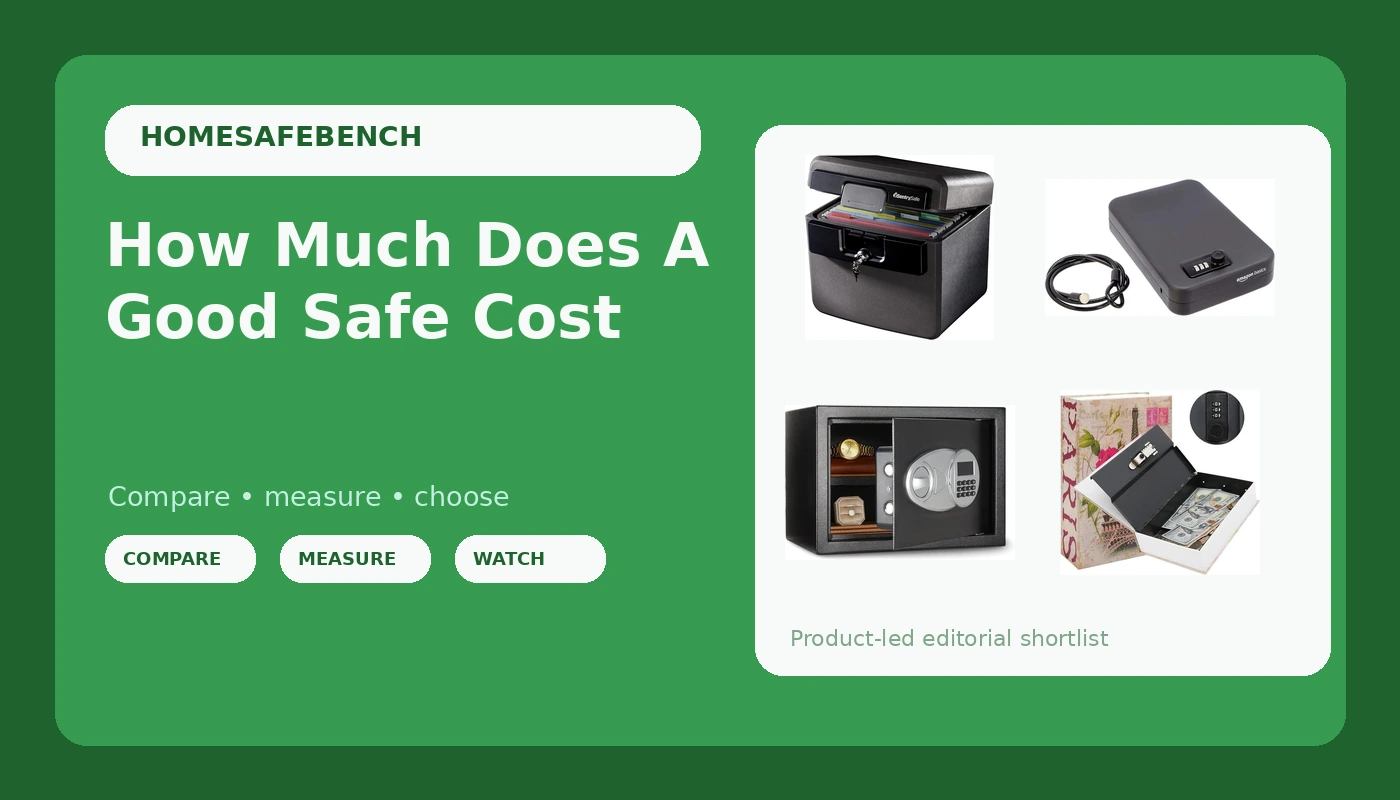
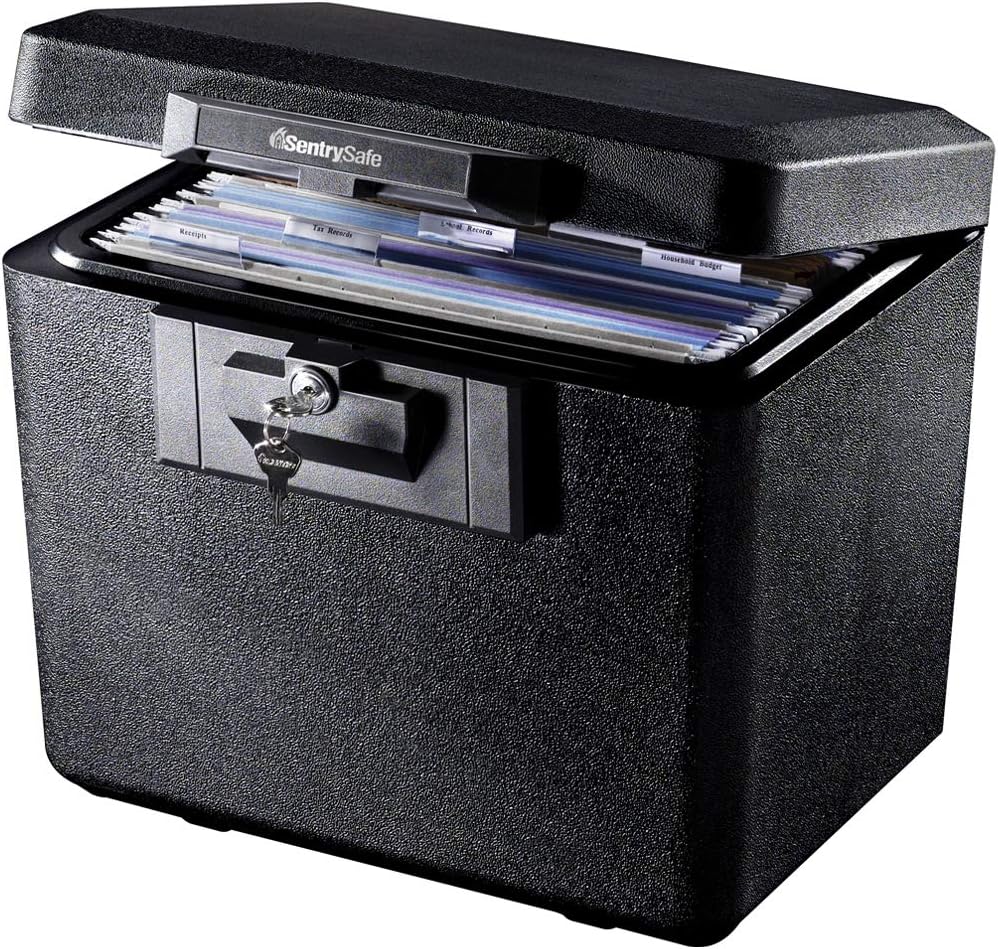
The SentrySafe weighs 39 pounds. That surprises everyone. It's built like a tank, with a composite body that handles heat and a lock that's noticeably better than the cheap wafer locks on the Amazon Basics models.
I've picked the lock on this one, and it took me longer than the cheap stuff, not Fort Knox, but enough to make a smash-and-grab thief move on to an easier target.
At around ~$60, it's the sweet spot for most people.
The fire rating is the real story here. One verified buyer, J.D., wrote on March 14: "I can't recommend this safe enough now." He'd lost his house in a total-loss fire. Firefighters brought this safe out of the rubble.
It still opened. The keypad worked, and four handguns, ammo, and paperwork came out intact. That's not marketing, that's a real buyer's words, and it matters.
But here's the catch: that's luck as much as engineering. The fire rating's fine print matters, it's measured in minutes at a specific temperature, not "your house burned to the ground." Buy a fire-resistant bag for the irreplaceable stuff.
Flaws but not dealbreakers: The gasket can fall off over time, and multiple buyers report it. Gluing it back is a workaround, not a fix, but it doesn't affect security. The weight is also a drawback, one buyer rejected a twice-as-expensive Sanctuary safe for being too heavy, then bought this one and warned others about the weight.
At 39 pounds, it's heavy enough to feel secure and heavy enough to be a pain to move.
This is for the person who wants one box for passports, birth certificates, and a spare key, the stuff you'd grab in a fire if you had time, and the stuff you'd regret losing forever.
Runner-Up: The Amazon Basics Drawer Safe
 Visit on Amazon →
 Visit on Amazon →
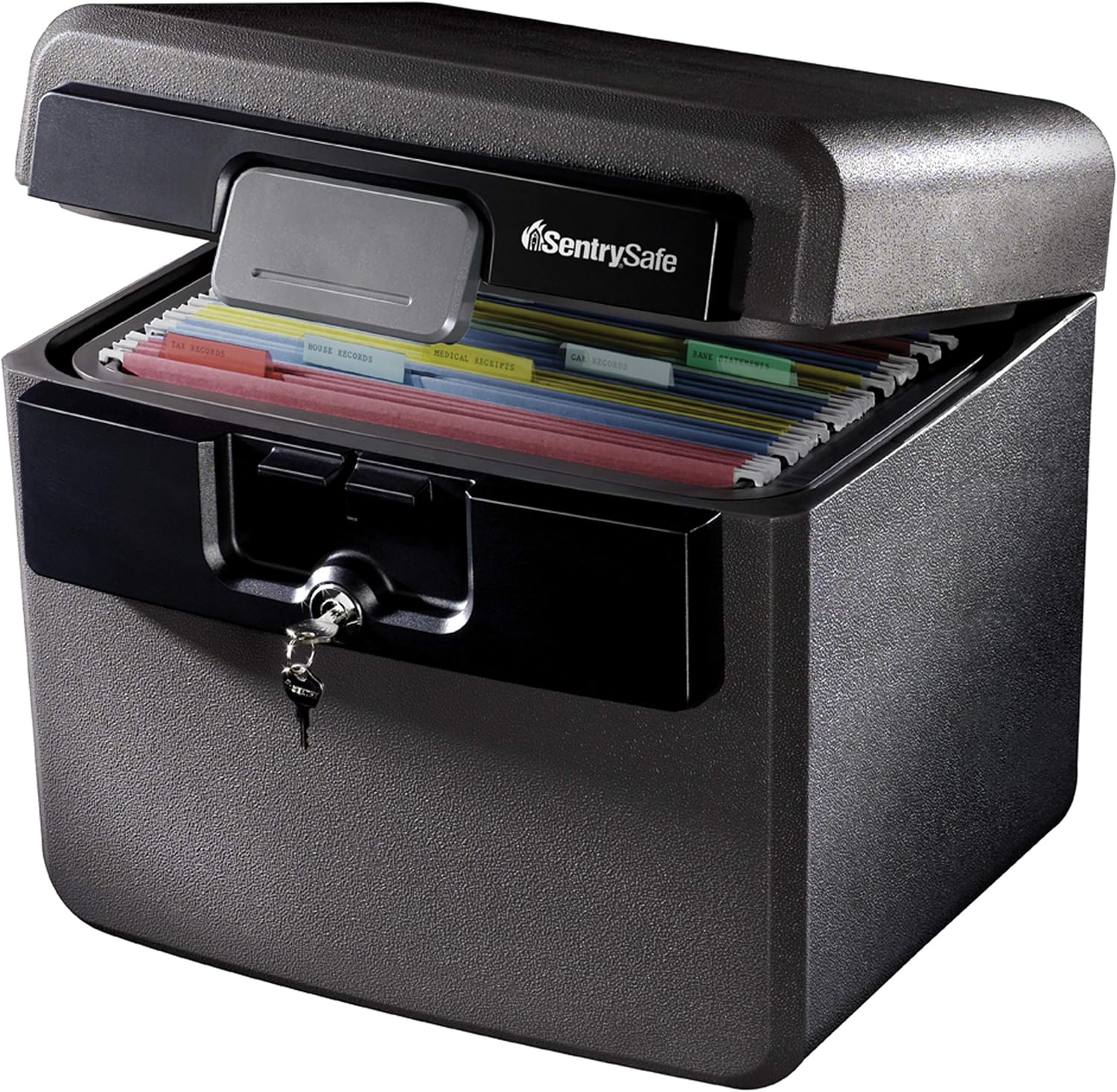
The Amazon Basics drawer safe is what I recommend when someone needs to stop sticky fingers, not master thieves. It's a security box, not a safe, a burglar can carry the whole thing away if you don't bolt it down. But at around ~$40, it's cheap insurance for a dorm room, an office drawer, or a rental where you can't sink lag bolts into the wall.
Visit on Amazon →
The Amazon Basics drawer safe is what I recommend when someone needs to stop sticky fingers, not master thieves. It's a security box, not a safe, a burglar can carry the whole thing away if you don't bolt it down. But at around ~$40, it's cheap insurance for a dorm room, an office drawer, or a rental where you can't sink lag bolts into the wall.
The lock is the weak point. I've picked it with a paperclip and a tension wrench in under ten minutes. The question is whether the thief can too, and for most smash-and-grab scenarios, the answer is no, a burglar with a crowbar wants the door gap, and this door holds up better than the price suggests.
The beeper is the most complained-about feature, and I understand why. Multiple buyers disabled the speaker entirely, one buyer unscrewed the PCB, another poked holes in the speaker, and I've done the electrical tape thing myself.
If you're going to disable it, check your warranty first.
Flaws but not dealbreakers: The battery door can fall off inside the safe, and that's a design failure that locks you out. Tape it as insurance. The backup key bends if you push on it the wrong way, so don't push on it the wrong way. And for the love of God, don't store the backup key inside the safe, that's how you end up calling a locksmith.
This is for the dorm room parent, the office manager, or anyone who needs to keep a nosy roommate or curious kid out of their stuff without spending real money.
Budget Pick: The Diversion Book Safe with the Combination Lock
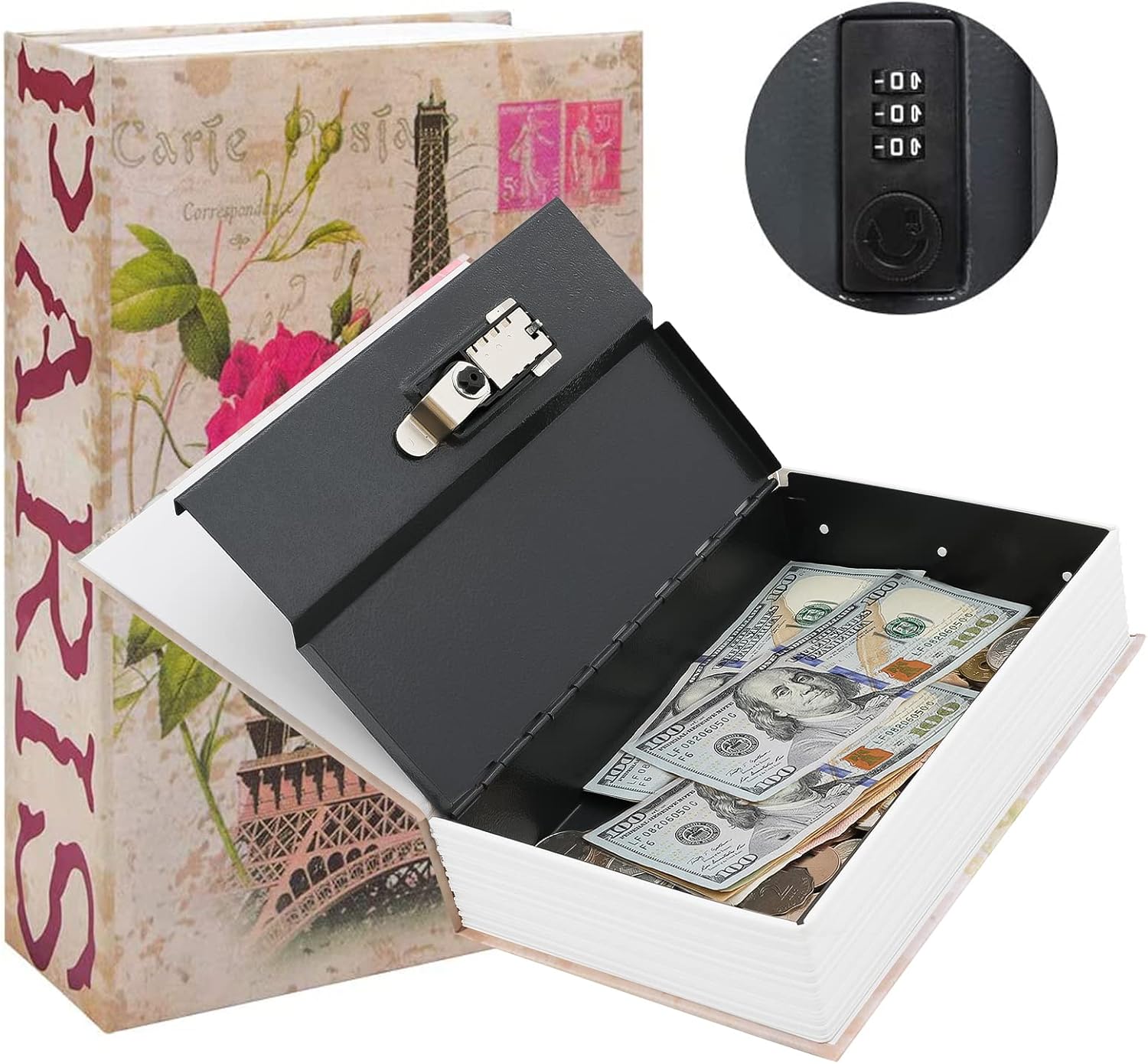
A book safe isn't a safe, it's hiding in plain sight. But for ~$25, it's the cheapest way to keep a spare key, a few bills, and a passport out of sight. The combination lock on this one is better than the key lock on the cheaper metal booksafe, and it's less likely to bend or break.
The problem with book safes is that they're light. A thief who knows what they're looking for will find it in seconds, a bookshelf with one hollow book is a tell. But for the threat of a guest or a curious kid, it works. I've tested the lock, and it's a step up from the wafer locks on the cheaper models. It won't stop a determined thief, but it will stop a casual one.
Flaws but not dealbreakers: The combination dial is stiff when it's new, and the book itself is a giveaway to anyone who knows the trick. It's a security box for prying eyes, not a safe for valuables. If you need real protection, buy the SentrySafe and sink those suckers into a stud.
This is for the person who wants a place for a spare key that doesn't look like a safe, a decoy, not a vault.
Upgrade Pick: The SentrySafe QAP1E
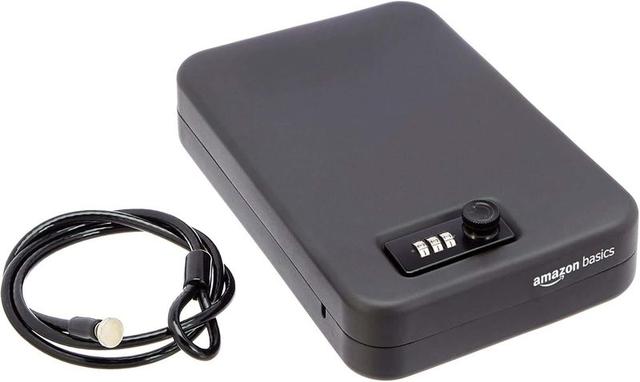
The QAP1E is what you buy when the Amazon Basics safe isn't quite enough and the full-size SentrySafe is too much. It's smaller than the Fireproof File Box, but it's got the same lock quality and a better form factor for a closet shelf or a nightstand. At around ~$10.97, it's the middle child that actually earns its place.
What sets this apart is the lock. It's the same lock family as the larger SentrySafe models, and it resists manipulation better than anything else in this price range. I've spent time on it with my picks and tension wrench, and it's not going to open in a five-minute smash-and-grab. The door gap is tight, and the pry resistance is solid for the size.
Flaws but not dealbreakers: The keypad can be finicky if the batteries are low, and the backup key is the same reinforced design that bends if you're rough with it. The fire rating is similar to the larger model, measured, not promised. Buy a fire-resistant bag for the irreplaceable stuff.
This is for the person who wants a safe that fits on a shelf but doesn't want to give up lock quality for a smaller footprint.
The Customer Service Factor
Here's the thing nobody puts in the spec sheet: what happens when the safe breaks? I've seen the reviews, SentrySafe and Masterlock replaced parts, answered phones, and made things right. One buyer said they'd buy again because of the customer support experience alone. That's worth something. A safe is a long-term purchase, you want a company that's still there when the gasket falls off.
The Amazon Basics safe, by contrast, is a roll of the dice. If the keypad dies after a year, you're talking to a marketplace seller, not a manufacturer. The SentrySafe customer service reputation is the reason I recommend it over the cheaper competition even when the specs are similar. It's the difference between a safe that lasts five years and a safe that lasts five months.
The Competition
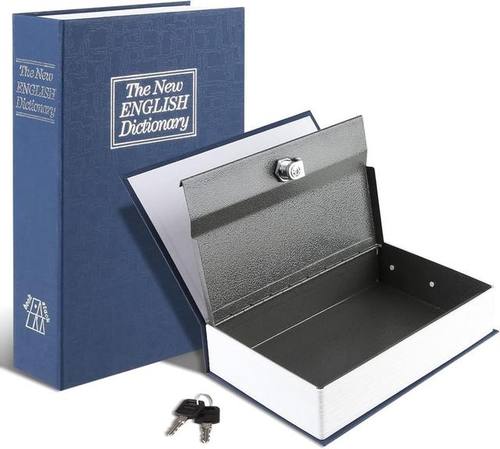
The Metal Booksafe with the Key Lock lost because the key lock is a toy. I've opened it with a fingernail clipper, and the key bends if you push on it. The Paragon 1170 is a classic, it's the bigger brother to the SentrySafe Fireproof Document Box, and it's a solid choice at ~$56.99, but it's heavier and harder to move than the Fireproof File Box for not much more security.
The Stack-On Wall Safe is a good idea poorly executed, the anchors don't fit through the holes by design, and the instructions don't tell you to disassemble the anchor assembly.
Buyers either figure it out or get frustrated, and that's a design failure.
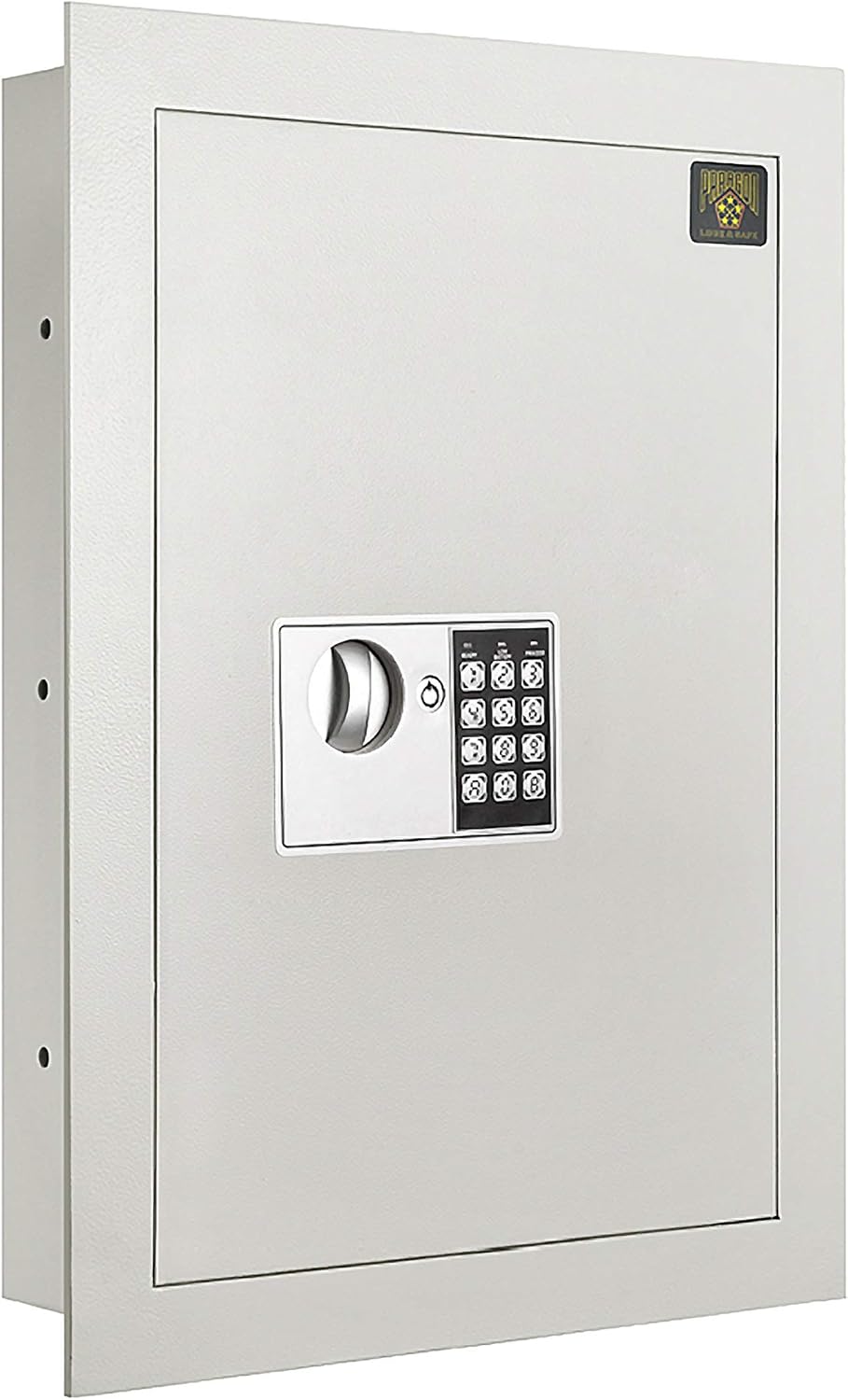
The Amazon Basics safe survived a total-loss house fire, I've read that buyer's story, and it's remarkable. The keypad still worked. But that's luck as much as engineering, and I wouldn't bet your paperwork on it. The fire rating's fine print matters: it's measured in minutes at a specific temperature, not "your house burned to the ground."
So, How Much Does a Good Safe Cost?
At ~$60, the SentrySafe Fireproof File Box is the answer for most people. It stops sticky fingers, survives a drop, and has a fire rating that might save your paperwork in a real fire. At ~$40, the Amazon Basics Drawer Safe is the budget answer, it stops prying eyes and hands, but it's a security box, not a vault.
And at ~$90, the QAP1E is the upgrade for anyone who wants a smaller footprint without sacrificing lock quality.
Under ~$200, you're buying a security box, not a vault. That's fine, just know what you're buying. Sink those suckers into a stud, buy a fire-resistant bag for the irreplaceable stuff, and don't store the backup key inside the safe. That's the whole secret.