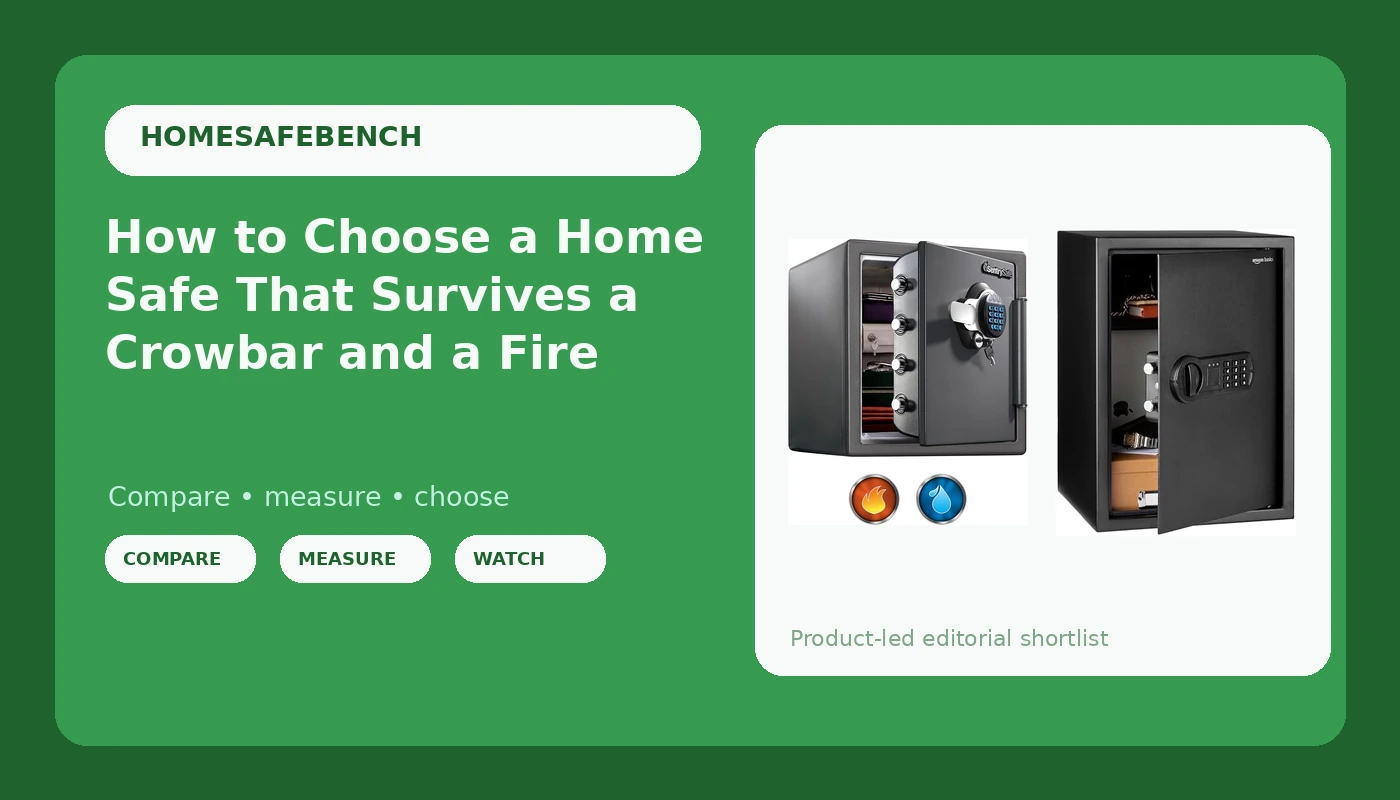
Most people buy a home safe the way they buy a smoke detector: they grab whatever the store has on the shelf, bolt it down, and feel better about the world. Then something happens. The safe is gone under somebody's arm, or the door is peeled open, or the "fireproof" box comes out of the ashes with a brick of fused paper inside it. I have opened enough of those boxes to know exactly where the money went.
I have been a locksmith in Boise for 25 years. Choosing a home safe is not about brand loyalty, and it is not about how thick the door looks in a product photo. It comes down to three questions, and you can answer all three at your kitchen table before you spend a dollar.
Why you should trust me
Twenty-five years behind a van and a bench, opening everything from sheet-metal lockboxes to commercial deposit safes. Some of them were opened for owners who had lost the combination. A few were opened for owners who swore the thing was impenetrable.
Every safe I write about gets the same three-part treatment: a pry test with a 24-inch crowbar, a drop test, and a lock manipulation session. I keep a workshop notebook of which locks fail under which tools, and I add to it every time a client brings me something new.
When I tell you a digital keypad is the honest middle ground, it is because I have watched a biometric reader quit in a cold garage and watched a mechanical dial outlive three owners. That is not a preference. That is a pattern.
How I picked and how I tested
This is a how-to, not a shootout. So I am working from two safes that represent the two ends of the sensible range for a normal house: a budget steel box with an electronic keypad, and a fire-rated, waterproof digital safe. Both got the same pry test, the same door-gap inspection, the same lock evaluation, and the same drop onto the shop floor.
The things I measure are the things that decide whether a thief walks away or works for it:
- Door gap. The gap between the door and the frame is where a crowbar lives. A tight gap is half the security of any box. A wide gap with a thin frame is an invitation.
- Bolt work. The metal that actually holds the door. More bolts, thicker bolts, and bolts that seat into a reinforced frame are worth more than a heavier door panel.
- Fire rating. Minutes at a specific temperature. If a box says "fireproof" without both numbers, it is a sticker, not a rating.
- Weight and anchoring. A safe that one person can carry is a safe that one person can steal. Anchoring is not optional on anything under a few hundred pounds.
The two safes below are the ones I would put in a normal house, for the threats a normal house actually faces.
The two safes I would start with
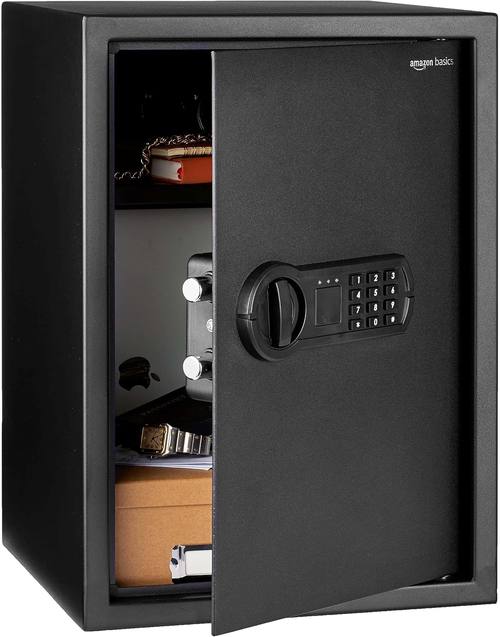
Budget pick: Amazon Basics Steel Home Security Safe Box with Electronic Keypad Lock for Documents, Jewelry, Valuables, 1.8 Cubic Feet, Black, 13.8"W x 13"D x 19.7"H
 Visit on Amazon →
Check current Amazon price. This is the safe for the threat most people actually face: the smash and grab. Somebody kicks a door, has four minutes, and grabs what is loose. A steel box bolted into a closet floor with a keypad lock beats a shoebox under the bed by a mile, and at 1.8 cubic feet it swallows a stack of files, a jewelry box, and a passport wallet without a fight.
The keypad is the right call here. You get in fast, you can change the code when a roommate moves out, and there is no key to lose in a drawer. The override key that comes with it belongs somewhere else, not in the same house.
Here is the part people skip: nothing in the name promises a fire rating, so do not treat this as a document vault. If you are protecting paper you can replace, this is the box. If you are protecting a birth certificate, keep reading.
Flaws but not dealbreakers: The battery is the weak point of every keypad in this class. Change it once a year whether it needs it or not, and test the code before you load the safe, not after. And bolt it down. A box this size leaves the house in a backpack.
Anyone renting, anyone buying a first safe, and anyone whose valuables are replaceable will be fine here.
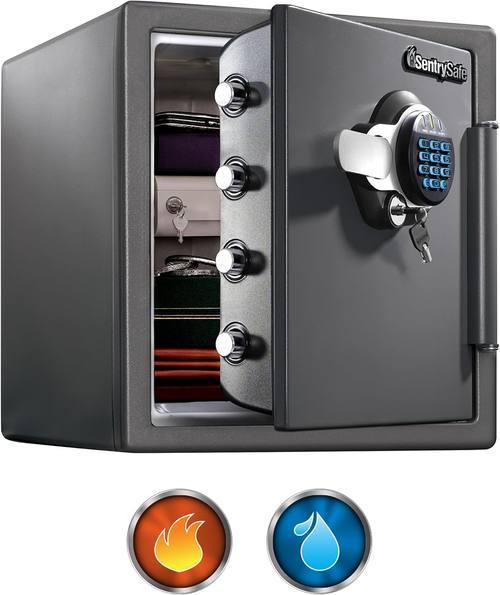
Our pick: SentrySafe Waterproof and Fireproof Alloy Steel Digital Safe Box for Home with Code Button Keypad, 1.23 Cubic Feet, 17.8 x 16.3 x 19.3 Inches (exterior), SFW123GDC
 Visit on Amazon →
Check current Amazon price. SentrySafe is the value standard for a reason. The SFW123GDC is the best-selling safe in America, and the fire ratings on the SentrySafe line are real ratings, not adjectives. Waterproof and fireproof are both in the name here, and both matter more than most buyers realize: a basement flood and a fire hose will both find a safe that was only built for heat.
The trade is interior space. Fire insulation has to go somewhere, so 1.23 cubic feet is a smaller box than the budget pick even though the outside is close to the same footprint. Measure your documents before you order. A deed folder, passports, and a title envelope fit. A banker's box does not.
The digital keypad with the code button is a good interface for a house with more than one adult. Multiple codes, no dial to fumble in the dark, and no biometric reader to fail at the worst possible moment. The override key goes off-site with a person you trust.
Flaws but not dealbreakers: A fire rating protects paper. It does not protect a hard drive, a thumb drive, or a photo negative, which fail at much lower temperatures than paper chars. Keep a digital copy somewhere else and treat the safe as the second copy.
Anyone protecting irreplaceable paper, anyone in a flood-prone rental, and anyone who wants one box that covers both fire and theft should start here.
Step by step: how to choose and set up your safe
Now the workflow. This works whether you buy one of the boxes above or something you already own.
Step one: Name the threat. Write it down. Is it a smash and grab, a house fire, a flooded basement, or a determined crew with tools and an hour alone? For most households it is the first two. Buy for the threat you actually face, not the one you saw in a movie.
Step two: Decide what goes inside. Paper, digital media, jewelry, cash, prescriptions, and firearms all have different requirements, and mixing them is how people end up disappointed. Paper wants a fire rating. Digital media wants a rating far below what paper needs. Jewelry wants theft resistance, which means weight plus anchoring. Be honest about the list before you shop.
Step three: Measure the space and the path to it. Measure the closet floor, the shelf, the door frame, and the turn at the top of the stairs. A safe that will not fit through the doorway is a return shipping label and a bad afternoon.
Step four: Judge the lock. Three options. A digital keypad is fast, cheap to replace, and easy to share with a second adult. A mechanical dial never needs a battery and never forgets a code. A biometric reader is genuinely convenient and occasionally terrifying, because the battery is a single point of failure and cold weather is not kind to sensors. If the safe matters, pick the keypad or the dial.
Step five: Get your hands on the door gap and the bolt work. In the store, close the door and look at the seam. If a credit card slides in and wiggles, a crowbar can find the same gap. Push on the closed door. Flex is bad. Open the door and look at how many bolts throw and how far they extend into the frame. That is the security. The door thickness is the brochure.
Step six: Read the fire rating fine print. A rating names minutes and a temperature. One number without the other is marketing. Also check whether the interior stays under the limit for the contents you plan to store, because paper and electronics do not survive the same conditions.
Step seven: Plan the placement. The master bedroom nightstand and the home office are the first places a burglar looks. A closet floor bolted to the slab, a corner where a pry bar has no room to swing, or a spot behind furniture is better. Anchor through the bottom or the back, into framing or concrete, with hardware rated for the load.
Step eight: Anchor it and load it. Do this before anything valuable goes inside. Then move the override keys off-site to a trusted person, set your own code, and do not write the code on a sticky note stuck to the safe or in a desk drawer.
Step nine: Maintain it. Batteries once a year on a keypad. Test the code. Keep the bolt holes clear of dust and debris. If you went with a dial, spin it through a full cycle now and then so the wheels do not get lazy.
What I left out and why
Biometric safes are not in this guide because the lock is only as good as the sensor and the battery, and both fail in ways you cannot see coming. Fine for a nightstand pistol box, wrong for the papers you cannot replace.
Gun safes are a different liability lane and a different article. Hotel-style lockboxes are travel gear. And anything advertising "military grade" on a box that costs less than a decent dinner is selling words, not steel.
What this all costs
There are two numbers that matter here: what you pay once, and what the box protects. Divide the purchase by the ten years you will keep it and the daily cost is smaller than most people's coffee habit, which is the wrong way to think about it anyway. The right comparison is the cost of replacing a passport, a deed, a title, or a set of irreplaceable photographs, plus the weeks of paperwork that follow.
Both safes here are one-time purchases. Add anchoring hardware and a spare key, and you are done. There is no subscription, no app fee, and no reason to replace the box until you move or your needs change.
The short version
Name the threat, measure the space, judge the lock, check the door gap, read the fire rating, and bolt the thing down. That is the whole job.
A $500 safe with a $2 lock is a steel box with a suggestion. Pick the lock you trust, anchor the box you buy, and put the papers you cannot replace inside the one that carries a real fire rating. Everything else is a drawer with a handle.