Most spare keys I get called about were hidden in one of five places, and every homeowner was certain nobody would think to look there. The person who used the key thought of it first. Good spare key storage is not about being clever. It is about removing the obvious and putting the key somewhere that takes a tool, a code, or a decision a smash-and-grab thief will not make in ninety seconds.
I have been a locksmith in Boise for 25 years. I have opened more consumer safes than the manufacturers would like to admit, including a few the owners swore were impenetrable. Every lock I meet gets the same treatment: a pry attempt at the door gap, a manipulation session on the dial, and a hard look at the bolt work. The lock is the safe. A steel box with a cheap lock is a steel box with a suggestion.
This guide covers the two hiding jobs people actually have. The first is the lockout key, the one a neighbor or a contractor needs to reach without being handed the run of your house. The second is the small valuables you would rather not leave in a bedroom drawer: the passport, the spare cash, the title to the truck. Neither job needs a 400-pound safe. Both need you to stop hiding things where everyone looks.
Why you should trust me
I have been in the trade since before keyless entry was standard on a pickup, and I keep a workshop notebook of which locks fail under which tools. That notebook is not a marketing document. It is a record of what actually gave way when I put a crowbar to it or sat down to feel the gates in a dial.
My bias is simple: I care about the lock first, the box second, and the brochure last. A $99 safe with a $2 lock is a steel box with a suggestion, and I will say so in a client's driveway. What I will not do is call anything burglar-proof. Nothing is. The realistic goal is to make your house the harder target on the street and to keep your key out of the hands of someone who is already standing on your porch.
How I picked and how I tested
The two items below are not vaults and are not sold as vaults. They are the tools for two specific jobs, and I picked them because they do those jobs without pretending to be something bigger.
Here is the routine any lock box gets from me. First, a pry attempt at the seam where the lid meets the body, because that is where cheap hardware announces itself. Second, a manipulation session on the dial, feeling for the gates the way I would on a customer's safe. Third, a look at whether the thing stays shut when it is bumped, dropped, or left out in weather. For a diversion box, the test is different: does it read as a book from three feet away, and does the lid still line up after a few dozen open and close cycles.
What I am measuring is delay. A portable combination box buys you minutes, not hours, and that is the honest trade for something you can hang on a gate and hand a code to a house sitter. A hidden book box buys you the same thing in a different currency: it survives the search a thief actually performs, which is a fast pass through drawers, a mattress flip, and a glance at the shelf.
The two numbers worth remembering: three-digit locks have a thousand possible combinations, which is enough to stop a curious teenager and not enough to stop anyone patient, and the factory code on a new combination box is published online, which is why you change it before the box ever goes outside.
What you need before you start
You cannot hide a key well if the hiding place is a plastic rock by the walkway. Before you mount anything, walk to the sidewalk and look back at your own front door like a stranger. Anything that looks placed was placed. Anything at eye level from the street is a sign that says spare key here.
Two pieces of hardware do most of the work for the jobs in this guide.
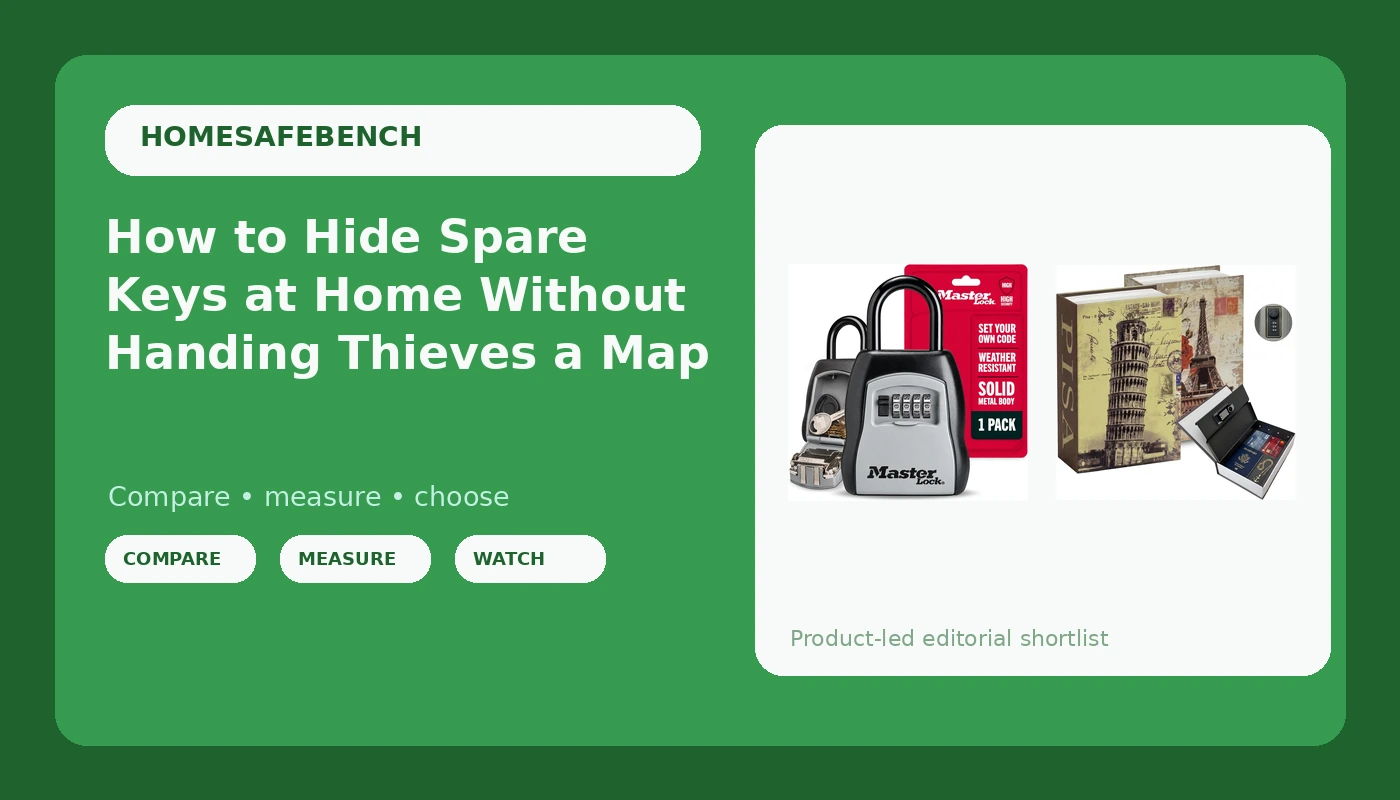
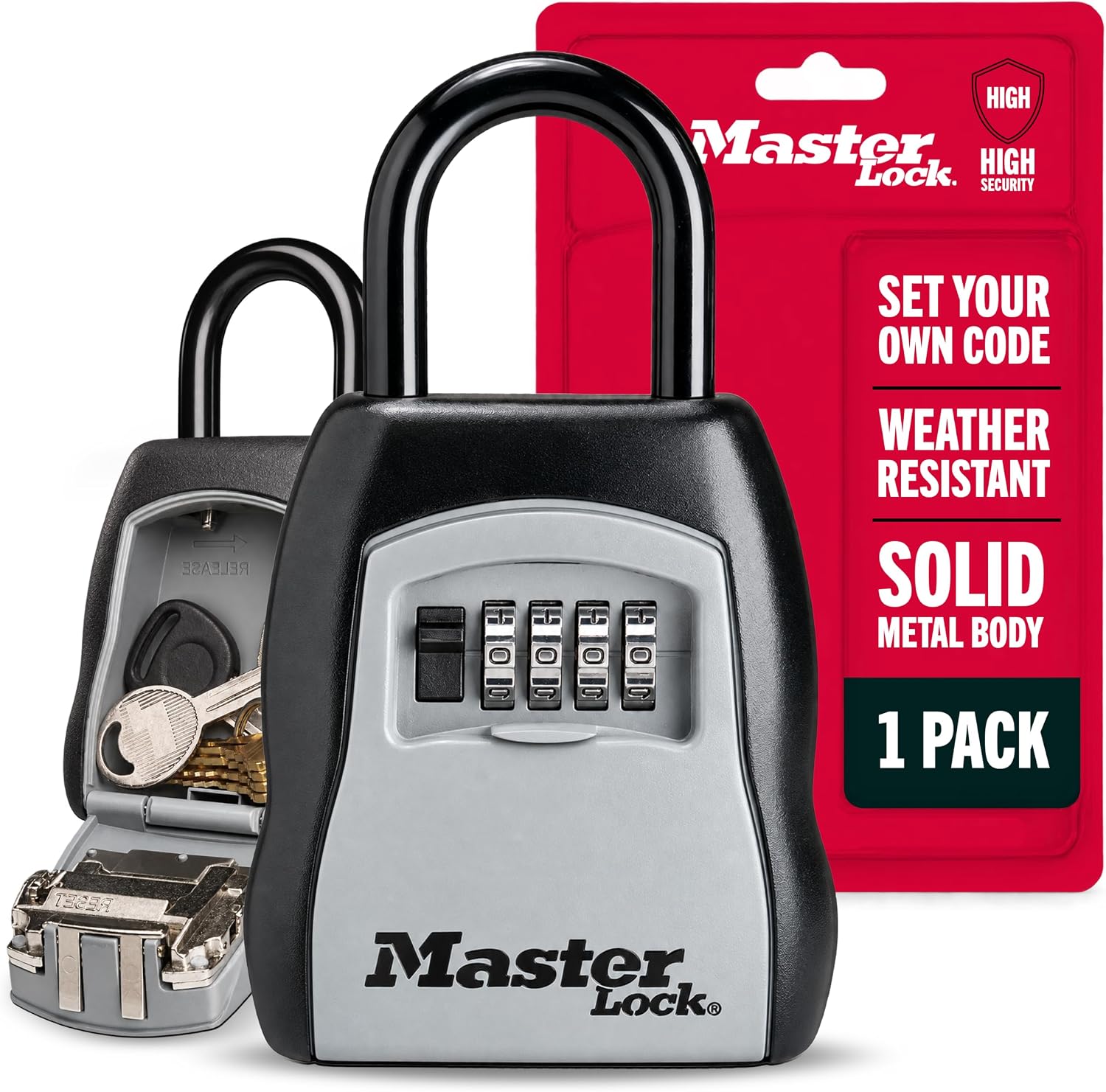
Budget pick: Master Lock Portable Key Lock Box, Combination Lock Box Holds 5 Keys 5400EC
 Visit on Amazon →
This is the box I point people to for the lockout key, the contractor key, and the key that lives with a neighbor. It is a combination box rather than a keyed one, which matters more than people think: a keyed box means you carry a second key to get the first one, which defeats the entire exercise. It holds up to five keys, so it can carry the house key, the shop key, and the key to the shed without becoming a jumble.
Check current Amazon price. The code reset is the step nobody does. Set your own combination before this hangs anywhere, and do it again after any contractor or cleaner has had the code. A default combination on an outdoor box is the same as leaving it unlocked with extra steps.
Flaws but not dealbreakers: This is a portable box, not a bolted safe. Anyone with a pry bar and five uninterrupted minutes is going to win. That is not the threat it was built for. It was built for the neighbor who needs to let the plumber in while you are at work, and for that it is exactly right.
Anyone who has ever paid for an after-hours lockout will get their money's worth out of this on the first bad night.
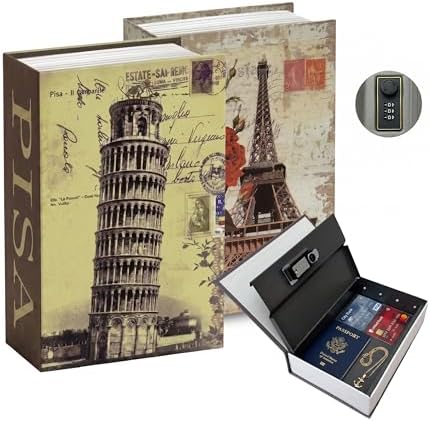
Hidden storage pick: 2 Pcs Diversion Book Safe with 3-Digit Lock, Hidden Metal Box (Pisa&Paris)
 Visit on Amazon →
This is the second job: the passport, the backup cash, the spare truck key, the documents you do not want in a nightstand. The set comes as two book-shaped boxes with a three-digit lock and a metal interior box, styled as a pair of travel titles. That styling is the point. On a shelf with real books, a travel guide looks like a travel guide, and a thief searching a bedroom in a hurry does not read spines.
Check current Amazon price. The three-digit lock is a delay, not a wall. A thousand combinations is plenty against a curious guest and thin against someone who has decided to sit down and work through them. Treat it as a speed bump and hide it accordingly.
Flaws but not dealbreakers: The disguise only works if the shelf looks lived in. A single book box sitting alone on an empty shelf is the most suspicious object in the room. Two boxes means you can split your valuables across two locations, which is better practice anyway.
Anyone who wants a document stash that does not look like a document stash will get more out of this than out of a small safe in the closet.
The actual hiding workflow
Step one: audit your own porch. Stand on the sidewalk and look at the door. Under the mat, in the fake rock, on top of the frame, inside the mailbox, and in the flowerpot are the first five places anyone checks, and they are the first five I check on a lockout call. If your key is in any of them, move it today.
Step two: decide which job you are solving. A lockout key has to be reachable by someone you trust, which means it needs a code and a location that is not your porch. Valuables have to be unreachable, which means they need to look like something other than a hiding place. These are opposite problems and they need different hardware.
Step three: get the key off the property if you can. The best spare key is at a neighbor's house, or in a combination box that a neighbor or a trusted contractor can reach. If you own a business or rent a unit, a box on that property is better than one on your porch, because it puts distance between the key and the door it opens.
Step four: mount the box out of the sight line. A combination box that faces the street is an invitation with a code. Put it behind a gate, on a fence rail around the side, or on a post that is not visible from the road. If a contractor needs it, you can text the location along with the code.
Step five: change the code before it goes outside. Factory combinations are printed in manuals and posted online. Set your own before the box leaves the kitchen table, and change it when the job ends.
Step six: pick the valuables spot by thinking about time and noise. A thief who is in your house for three minutes pulls drawers, tips the mattress, and sweeps the closet shelf with a hand. They do not pull books one at a time. That is why the book box works, and it is why a wall safe hidden behind a hanging shirt works, and it is why the drawer under the socks does not.
Step seven: split what you hide. Two book boxes means two locations. Keep one on a shelf with at least fifteen real books around it, and put the other somewhere completely different, an office shelf, a storage tote of paperbacks, a cabin, a relative's house. No single search should be able to take everything.
Step eight: write nothing down and label nothing. No code taped inside the cover, no note in the drawer, no helpful label on the box. Pick a number that has nothing to do with your birthday, your address, or the last four digits of anything. If you need a reminder, store it in a password manager, not in the house.
If you want to go further than a delay, that is a different job. A bolted-down safe with real bolt work is the right answer for documents and irreplaceable items, and it is a different conversation with a different budget. Today is about the ninety seconds a thief spends in a bedroom.
The competition and why it lost
The fake rock is the classic, and it is the first thing I check. The magnetic box under the bumper of a car is the second, especially on a truck parked in a driveway. The key hanging on a nail inside the garage, the one on top of the door frame, the one in the electrical panel, the one in the sprinkler head box, all of them share the same flaw: they are places a person who breaks into houses has already learned to look.
Keyed lock boxes lose for a different reason. If the box needs a key, the person who needs access has to carry a key, and now you have two keys to lose instead of one. The combination box solves the problem the keyed box creates.
A small closet safe loses on cost and on weight. A twenty-pound box is a theft convenience for anyone with a dolly and a minute alone in your bedroom, and it announces itself as the place where the good stuff lives. If you are going to buy a safe, buy one heavy enough and bolted well enough that it stays put, and keep the everyday items somewhere quieter.
Fire ratings are their own subject. If your concern is documents surviving a house fire, a diversion box with a metal liner is not that product, and no combination box is either. Fire protection is measured under specific conditions at a specific temperature for a specific number of minutes, and it belongs to safes that were tested for it. Read the fine print, not the sticker.
What this all costs
I am not going to quote prices here, because they move and the listings above will tell you the truth in one click. Check current Amazon price on each, and judge the two together rather than separately. For most households, this is the cheapest security purchase you will make all year, and it is the one that prevents the call I get at 2 a.m.
Compare it against what a missing key actually costs. A rekey of every exterior lock is a real bill, and it happens every time a key disappears with a contractor, a house guest, or a rental turnover. A lockout call is another bill, usually paid at the worst possible hour. Set the cost of both of those against a combination box and a book box and the math stops being close.
The cost-per-day argument is the easy one. Both items together are a small one-time expense that sits on a shelf for years and does exactly one thing: it keeps a stranger from walking through your front door with your own key. That is the job. Your spare key should be the easiest thing in your house to live with and the hardest thing to find.