Most people buy a fireproof home safe, drop the deed inside, and call the job done. Six months later the safe is bolted in a garage that takes on water every spring, the paperwork went in slightly damp, and nobody has checked the keypad battery since installation day. The safe did its part. The process around it failed.
I'm Frank. I've been a locksmith in Boise for 25 years, and I've opened more safes than most manufacturers would care to admit, including a few the owners swore were impenetrable. I test every safe the same way: a pry test with a 24 inch crowbar, a drop test, and a lock manipulation session. I keep a workshop notebook of which locks fail under which tools.
Here is what that notebook taught me about document storage. A fireproof home safe is one layer of a system. It is not the whole system, and the paperwork inside it survives a bad night only if you build the other layers yourself.
Why you should trust me
Twenty-five years on the bench, a pry bar in the truck, and a habit of writing down what fails. That is the whole resume.
Three things I believe after all that time. First, the lock is the safe. A $500 box with a $2 lock is a steel box with a suggestion. Second, fire ratings are measured, not imagined. A one hour rating at 1,550°F means something only if the test behind it was real, and the fine print is where you find out. Third, weight is security. A 20 pound safe is a theft convenience for anyone with a dolly and a minute alone in your house.
I also won't tell you a consumer safe is burglar proof, because nothing is. What I can tell you is how to make the box you own work harder, and what to put inside it so the contents survive the two threats that actually show up: heat and water.
How I picked and how I tested
Full disclosure before we go further: I have not put a crowbar to the two items in this article. What I did was run them against the checklist I use when a client asks me to look at a safe before they buy it. That checklist, in order:
The lock. Mechanical dial, digital keypad, or biometric. Digital keypads are the honest middle ground: fast, replaceable, and no battery-free fantasy. Biometrics are quick when they work and a paperweight when the battery dies.
The door gap. The gap is what a crowbar wants to find. A tight gap is half the security, and it matters more than the steel thickness on the brochure.
The fire rating fine print. Look for an independent classification label inside the door that states a temperature and a time. The word fireproof on the outside of the box means nothing by itself.
The weight, empty and loaded. A safe has to be heavy enough that two people cannot walk it out, and anchored so one person cannot tip it.
The interior. Volume you can actually use beats volume on a spec sheet. A safe that fits three binders and nothing else is a safe you outgrow in a year.
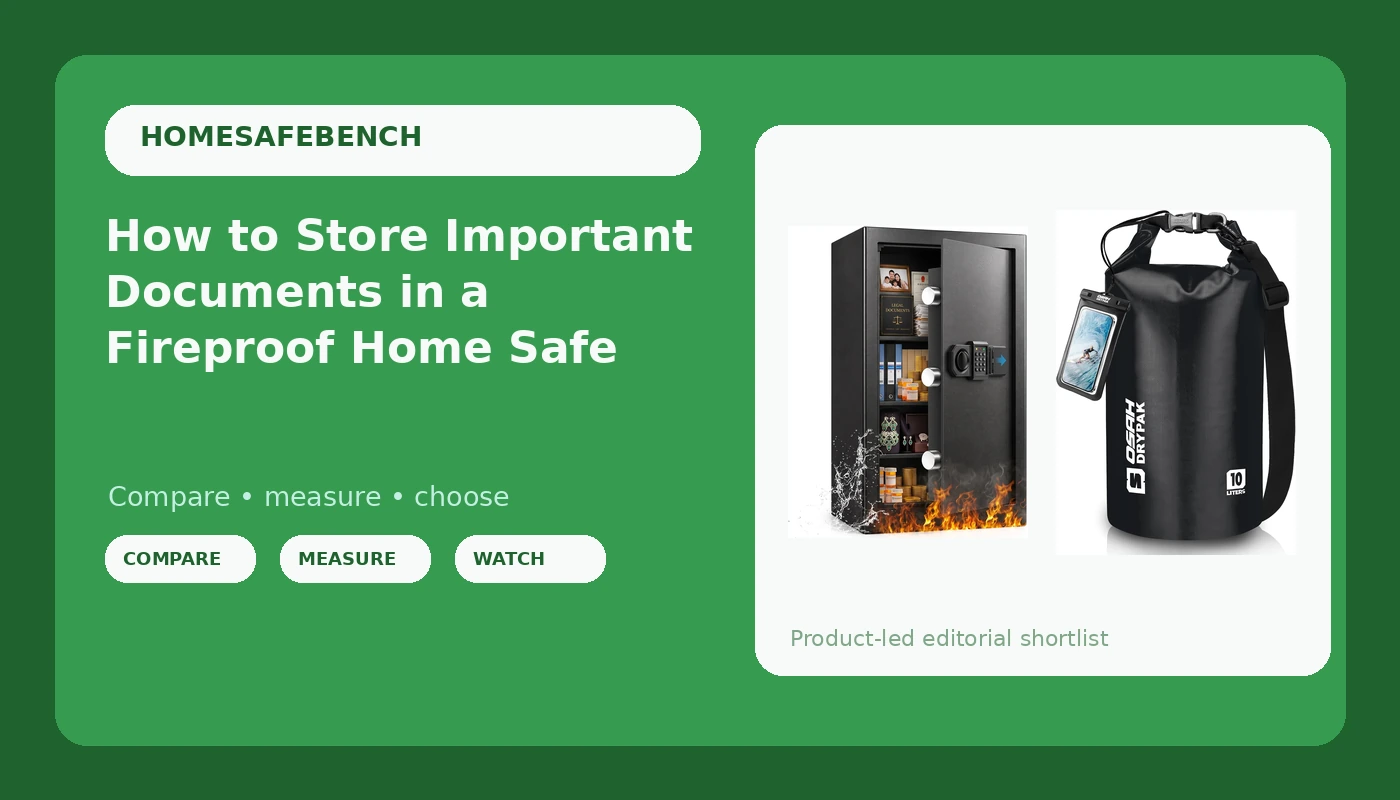
The two products below cover the two halves of this job: a box with enough interior volume for a household's paperwork, and a waterproof layer for everything inside it. I don't quote prices in this article because they move. Each block links to the listing so you can check the current number yourself.
The gear that does the work
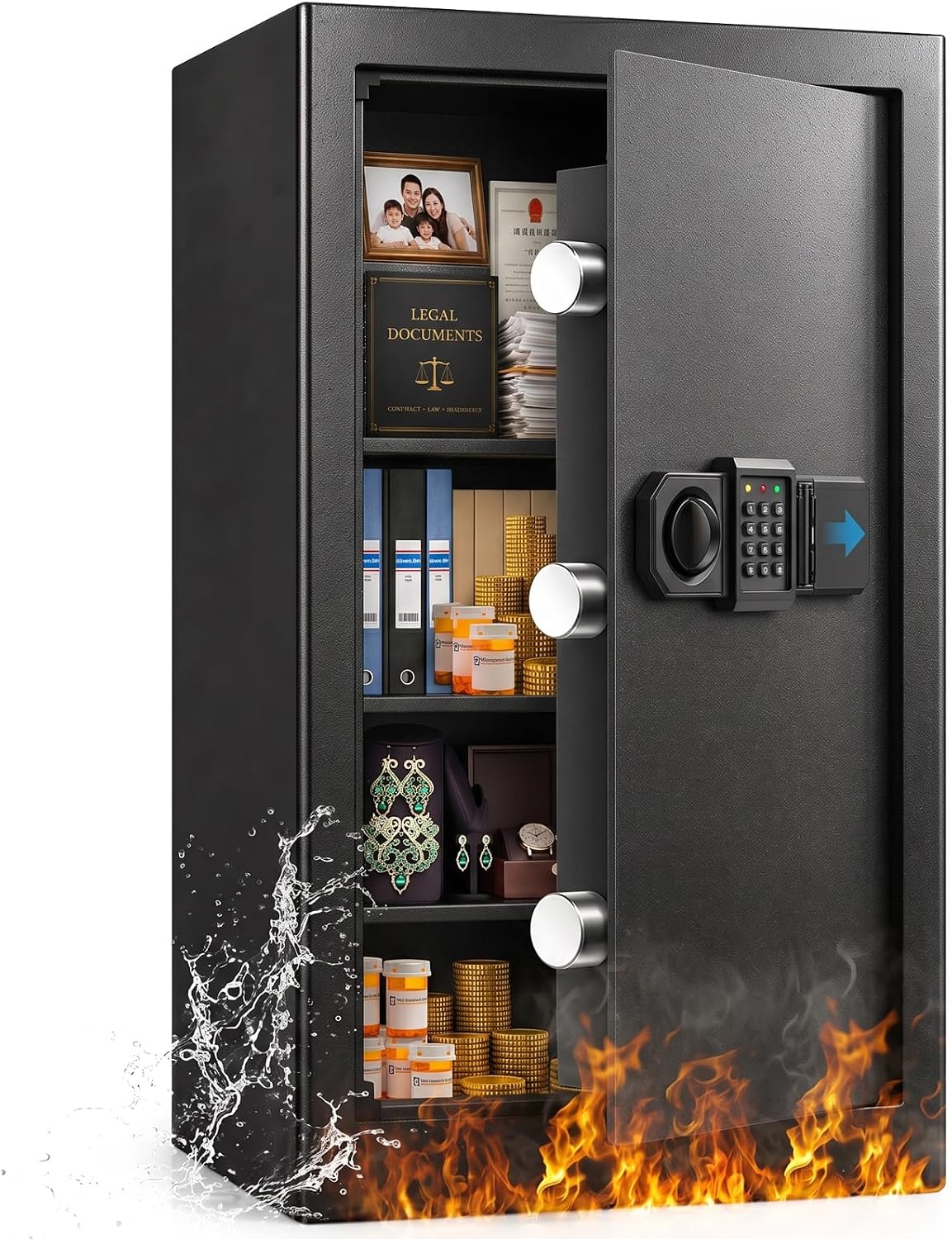
The safe: 7.0 Cuft Large Fireproof Safe for Home
 Visit on Amazon →
Seven cubic feet is the number that matters here. Most home document safes live in the 1.2 to 2.0 cubic foot range, which sounds fine until you put a deed binder, two passports, a folder of insurance policies, and a small box of backup drives in there and discover the door will not close. At 7.0 cubic feet this one is sized for the whole document life of a household, with room left for the things people forget to protect: titles, a will, a little jewelry, a hard drive.
What to verify the day it arrives. Open the door and find the rating label, then read the classification rather than the sticker on the front of the box. Run a business card around the door gap: if it slides in past the first knuckle all the way around, the gap is wide and a crowbar will find it. Feel the bolt work when you turn the handle and count how many bolts throw into the frame. Then bolt the safe down. A large empty safe is exactly the kind of thing a smash and grab crew carries out through a sliding door.
Flaws but not dealbreakers: Safes in this size class are heavy and awkward to install alone. Measure the doorway of the room you plan to put it in before it ships, not after. Check current Amazon price.
Anyone who has been stacking documents in a filing cabinet and wants one box for everything irreplaceable should start here.
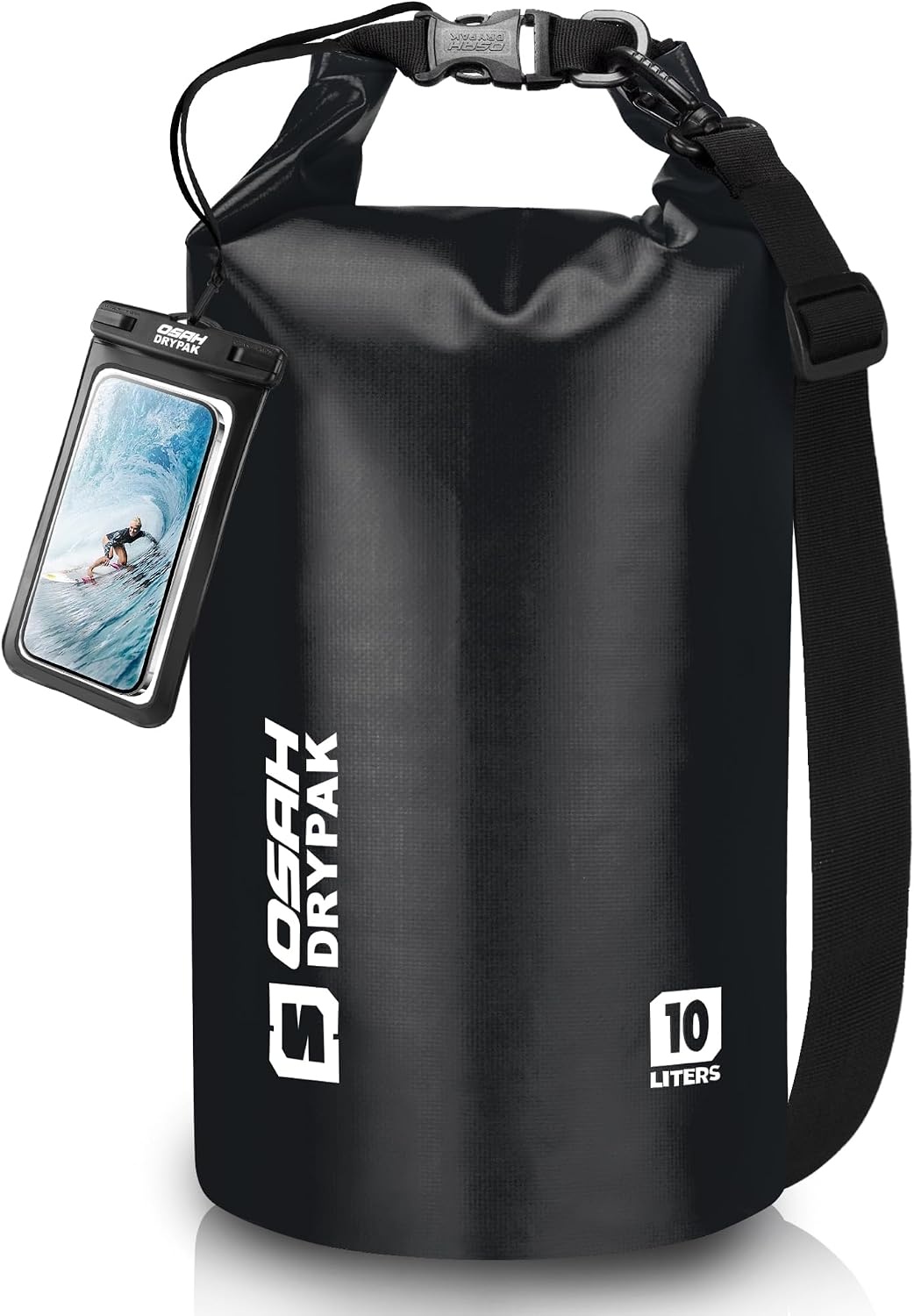
The waterproof layer: Waterproof Dry Bag, 5L/10L/20L/30L/40L Roll Top Lightweight Storage Backpack with Phone Case for Women & Men, Floating Waterproof Sack for Travel, Swimming, Kayaking, Paddle Board, Camping & Beach
 Visit on Amazon →
Here is the part most people skip. A fire rating covers heat. It does not cover the water a fire department puts on your house, the flood water that comes up through a garage floor, or the humidity that builds inside a sealed steel box in a cold climate. Paper does not need a flame to be ruined. A slow soak is enough.
A roll top dry bag is the cheapest insurance in this whole article. For documents, the 5L or 10L size holds a stack of file folders flat, and the larger sizes are for the go-kit you grab on the way out the door. Roll the top three times and clip it and the bag is closed against water. It floats, which matters if the bag ever ends up outside the safe. The included phone case is a bonus for the evacuation version of this setup.
Two rules. Seal only dry paper: a dry bag keeps water out and keeps moisture in just as well, so anything that came out of a damp basement goes in front of a fan first. And drop a desiccant pack in with the documents to handle the humidity that gets trapped inside the roll. Check current Amazon price.
Flaws but not dealbreakers: It is a water barrier, not a fire barrier, and it is not armor. Its job is to sit inside the safe, not to replace it.
Anyone storing documents in a garage, a basement, or any room with a floor drain nearby needs this more than they think.
The storage workflow, step by step
Step one: decide what earns a place. Originals you cannot replace: birth certificates, passports, deeds, titles, insurance policies, and a written inventory of your home for a claim. Photocopies of anything you can reorder from a government office do not need the space.
Step two: digitize the copies, not the originals. Scan everything once and keep the files in two places that are not your house: cloud storage and an encrypted drive. A scan gets you through the first month after a loss. The original proves the asset exists.
Step three: sort by threat. Paper and photos in one stack. Backup drives, cards, and anything with magnetic media in another. Media has different heat tolerances than paper, so keep them separate and know which stack you care about most.
Step four: dry everything. Documents that spent years in a basement carry moisture. Spread them out, run a fan, and give them a day before they go anywhere near a sealed container.
Step five: bag the paper. Slide the stack into the dry bag, add a desiccant pack, press the air out gently, roll the top three times, and clip it. Do not vacuum seal a bag of paper and expect the creases to come out later.
Step six: load the safe in layers. Heavy items on the bottom, documents in the middle, small valuables up top. Nothing should press against the door seal. Leave the top shelf clear if you store a keyed interior box.
Step seven: anchor it. Bolt the safe to a concrete floor or into wall studs with anchors rated for the load. If you rent, at minimum put it in a closet on the lowest floor where a dolly cannot easily reach the door.
Step eight: change the code and store the backup key off site. Change the factory code the first day. Keep the mechanical override key somewhere outside the house, because a key inside the safe is a key you cannot reach when the keypad fails.
Where people get this wrong
They trust the word on the box. Fireproof is a marketing word. A rating is a measurement and it comes with a temperature and a time. If you cannot find the classification, assume there is not one.
They ignore water entirely. Fire and water arrive together. The truck that puts out the fire floods the room the safe sits in. The dry bag exists for exactly that sequence.
They buy weight instead of bolt work. A 200 pound safe on a tile floor slides. Weight without anchoring is a speed bump.
They forget the contents weigh something. A safe packed with 80 pounds of paper and drives is a different problem than an empty one, and the floor under it knows the difference.
They set a code the whole family knows and never change it. A code is a key. Change it when a roommate moves out, when a contractor has been in the house, and once a year regardless.
The five minute quarterly check
Put a reminder in your phone for the first weekend of every quarter. Open the safe. Look at the paper for any sign of moisture or curling. Squeeze the desiccant pack; if it feels heavy or the indicator has changed color, replace it. Test the keypad with the door open, and swap the batteries once a year on a fixed date whether they need it or not. Turn the handle and cycle the lock. Wipe the door seal and check for debris that would hold the door off its seat. Five minutes, four times a year, and the system keeps working.
What this costs you
The safe is the one-time purchase and the dry bag is the small one, so I won't pretend the numbers are close. The ratio is what matters: most of the money goes to the box that handles heat and theft, and a fraction of it goes to the layer that handles water. Desiccant packs cost less than a sandwich. The scanning and the filing cost nothing but an evening.
The part people skip is the free part, and it decides whether the box is worth owning. A safe full of damp, unsorted paper is a heavy filing cabinet. A safe with a dry bag inside, a desiccant pack, a bolted base, and a code only two people know is a system.
Check the door gap, bag the paper, bolt the box, and set the quarterly reminder. That is the job, and it takes one afternoon.