Related: Best Small Safe for a Dorm Room
Most people ask me the wrong question. They want to know which safe is best. The real question is what you are protecting, from whom, and for how long. A portable safe lock box that rides in a beach bag and a 7.0 cubic foot fireproof safe bolted to a closet floor are not competing products. They solve different problems, and buying the wrong one wastes money in both directions.
I have been a locksmith in Boise for 25 years, and I have opened more safes than the manufacturers would like to admit, including a few the owners swore were impenetrable. Every unit I write about gets the same treatment: a pry test with a 24-inch crowbar, a drop test onto concrete, and a lock manipulation session where I try to open the thing by feel. None of the four products below is a bank vault and I will not pretend otherwise. But three of them do a specific job well, and one of them is the only thing on this list that will still be standing after a house fire.
Here is how they break down.
7.0 Cuft Large Fireproof Safe for Home
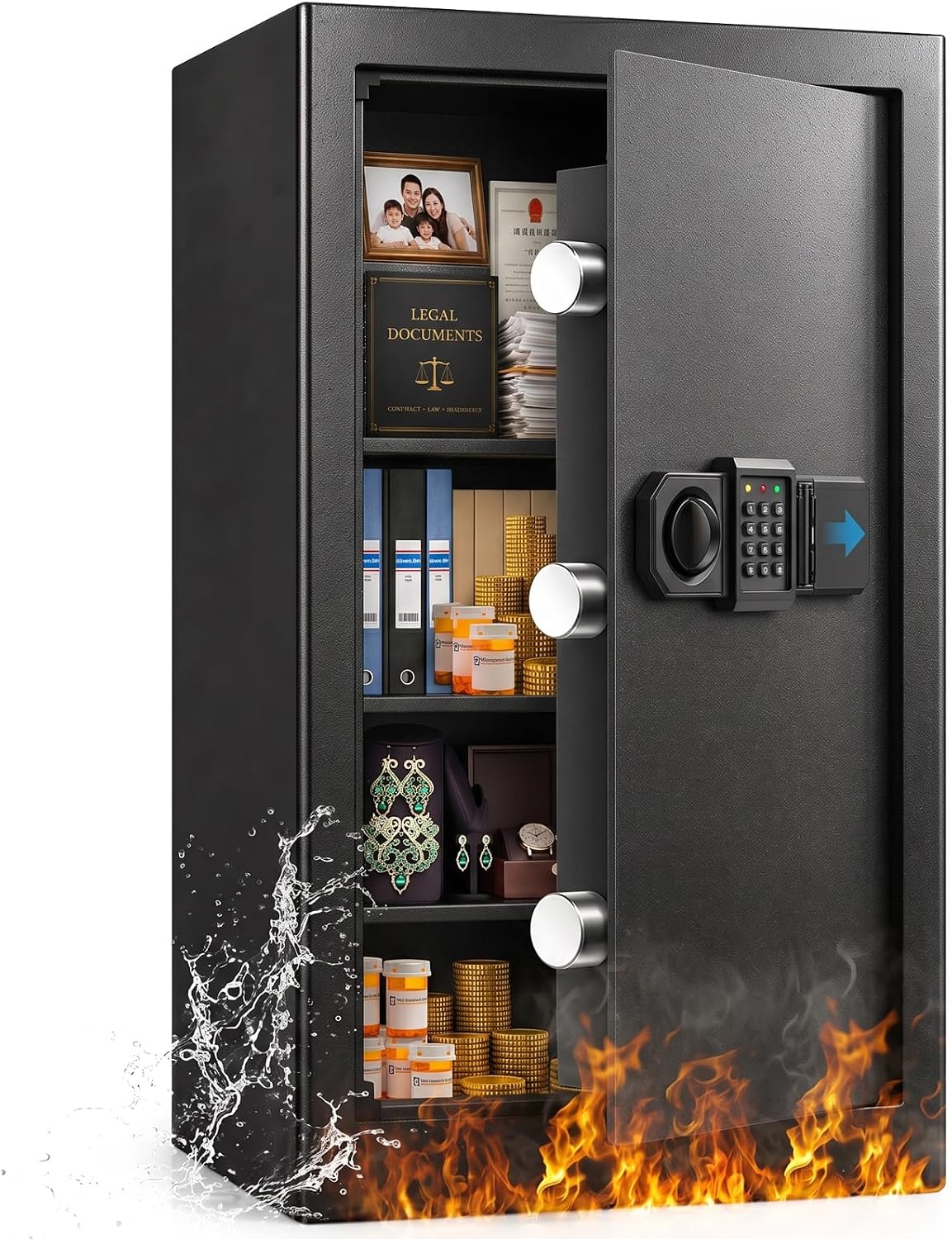
This is the only safe here that addresses the threat homeowners actually lose sleep over, and it is not a burglar. It is a fire. Paper burns at 451 degrees Fahrenheit, and a house fire runs far hotter than that. That is why the word fireproof printed on a box means nothing and a stated fire rating means everything. A rating is minutes at a specific temperature from a real test. Read the fine print, not the sticker.
At 7.0 cubic feet this is a full-size upright, the kind that swallows document binders, a laptop, photo albums, and the things you would grab if you had five clear minutes. That capacity is also the problem. A safe this size is heavy, and heavy is the point, because a safe two people can carry out the front door is a gift to a thief with a hand truck. Bolt it through the bottom into a slab or a joist, and put it where nobody can work a bar into the hinge side.
The honest caveat: capacity numbers measure the empty box, the way trunk space does. Fill it with binders and boxes and you will have less room than the spec sheet suggests. Measure your stack of paper before you buy, not after.
Portable Travel Safe Lock Box Waterproof & Durable
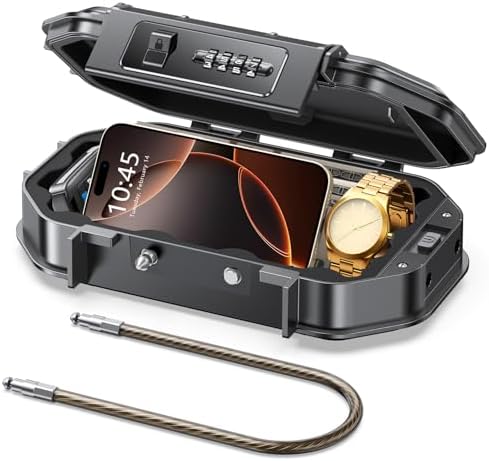
Beach, hotel room, dorm, tailgate. This category gets called a safe but it is really an anchor point you carry in a bag. The idea is simple and it works: a small coded box, a removable steel cable, and something solid to loop that cable around. A bed frame, a cooler handle, a balcony rail, the leg of a beach chair. Now the box cannot walk off while you are in the water.
The cable is a deterrent, not a defense. Anyone with a decent pair of cutters gets through a thin cable, and I have watched it happen in a parking lot in under a minute. What the cable buys you is time and noise, which is exactly what a smash-and-grab thief is unwilling to spend. The four-digit combination means no key to lose and no key sitting in the sand. The waterproof claim is the part that matters most on an actual beach.
What it will not do is stop a determined person with tools and privacy. Nothing at this size will, and any listing that tells you otherwise is selling you a feeling.
Diyife Portable Safe Box
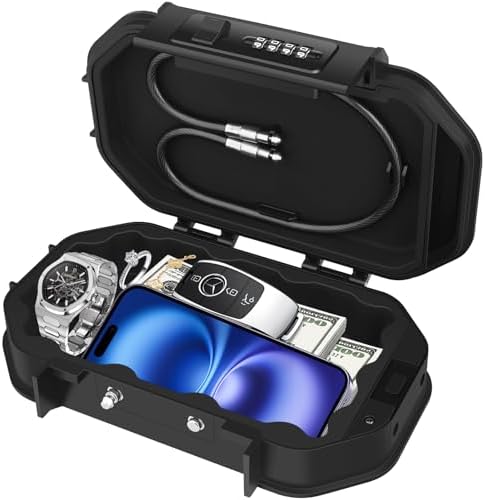
Same category, same job, and that is the honest way to describe it. This is a coded, waterproof travel box built for the same threat model as the unit above: a thief with thirty seconds and no privacy. The reason to pick one over the other comes down to fit, meaning which box actually swallows your phone, wallet, passport, keys, and sunglasses without turning packing into a puzzle.
A code instead of a key is the right call for travel. A key in a beach bag is a key in the sand, and a key in a hotel room is a key someone else can find. A four-digit code you can reset is the better trade for this use case, provided you can remember it after a day in the sun.
My judgment is simple. Buy one of these and treat it as a locked bag with an anchor, and you will be happy with it for years. Treat it as a vault and you will eventually be disappointed, and you will blame the box for a promise it never made.
KMC Book Safe with Key
A book safe is the oldest trick in the business and it still works, because burglars are in a hurry and they do not read spines. It looks like a dictionary on a shelf, opens with a key, and holds cash, a spare card, a passport, or a couple of rings.
Here is the honest version. This is a hiding place, not a safe. If someone pulls it off the shelf the game is over, because the inside is hollow and the whole thing weighs about as much as a paperback. What it does well is beat the sock drawer, which is where most people keep their emergency cash and their grandmother's rings. Put it among real books, in a room nobody thinks of as the room with the valuables, and do not tell a soul where it is.
How I evaluate a small safe
Every safe I write about gets three treatments, and they have not changed in 25 years.
The pry test. A 24-inch crowbar worked into the door gap, hinge side first, then the corners. What I am measuring is the gap itself and the bolt work behind it. A tight gap and multiple bolts make a crowbar useless. A wide gap makes a thick door irrelevant, and the brochure will still brag about the steel.
The drop test. Off a bench onto concrete, loaded. This is what happens when someone knocks it off a shelf or a thief drops it down a stairwell. Seams open, latches bend, and codes occasionally reset. If a box survives that, it will survive the way people actually treat it.
The manipulation session. I sit with the lock and try to open it by feel. Cheap combination locks have sloppy tolerances and a wide window between correct numbers, which makes them easier to read than they should be. Better locks feel tight and give nothing away. This is the step most reviews skip, and it is the step that matters, because the lock is the safe.
For cable boxes and book safes the pry test is quick and mostly about whether the seam flexes under thumb pressure. The real question for those is whether the thing stays attached to something heavier than the person taking it.
What actually matters when you choose
Three things, in order.
The lock. A steel box with a bad lock is a suggestion. Four digits is plenty for a beach box, because the thief gets thirty seconds and no privacy. It is not enough for anything you would cry about losing.
The anchor. Weight is security. The big fireproof safe is the only unit here that can be heavy enough to matter, and only if you bolt it down. The two travel boxes and the book safe are all about placement, not resistance.
The fire rating's fine print. Minutes at a specific temperature, from a test that actually happened. If the listing never states the test, the word fireproof is decoration.
The four safes side by side
| Product | Format | Lock | Best for | Anchor | Price |
|---|---|---|---|---|---|
 Visit on Amazon → 7.0 Cuft Large Fireproof Safe for Home |
Full-size upright, 7.0 cu ft | Combination lock | Documents, albums, a laptop | Bolt through the floor | Check current Amazon price |
 Visit on Amazon → Portable Travel Safe Lock Box Waterproof & Durable |
Small case with cable | 4-digit combination | Beach, hotel, dorm | Removable steel cable | Check current Amazon price |
 Visit on Amazon → Diyife Portable Safe Box |
Small waterproof case | Coded lock | Travel, pool, gym | Anchor point not stated in the listing | $25.99 |
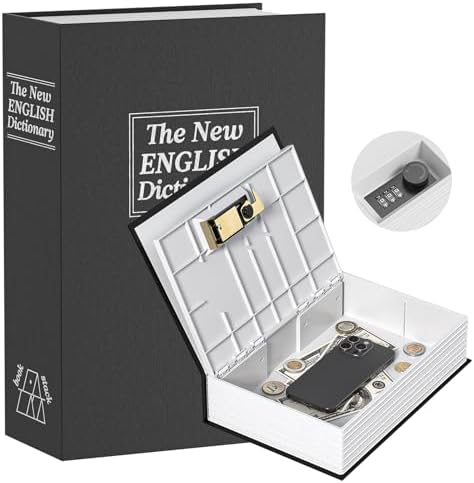 Visit on Amazon → KMC Book Safe with Key |
Shelf camouflage | Key lock | Cash, cards, small valuables | None, hiding only | $9.99 |
Should you buy the 7.0 Cuft Large Fireproof Safe for Home?
Yes, if you own documents you cannot replace and you have a floor you can bolt it to. It is the only unit here designed around a fire rather than a grab-and-run, and it is the only one that can hold a whole filing drawer's worth of paper. Do not buy it if it will sit loose in a bedroom, because then its size works for the thief instead of for you.
Should you buy the Portable Travel Safe Lock Box?
Yes, with honest expectations. A coded box on a steel cable stops the smash-and-grab, which is the theft you are actually likely to meet on a beach or in a hotel room. It will not stop a person with cutters and time. If you accept that, it earns its spot in your bag every trip.
Should you buy the Diyife Portable Safe Box?
Yes, if it fits your gear. This is the same class of product as the box above, so the deciding factor is interior shape and whether your phone and passport drop in without a fight. The code lock is the right choice for travel. Just remember you are buying a locked bag with a code, not a vault.
Should you buy the KMC Book Safe with Key?
Yes, if you want cash and small valuables out of the obvious places. It hides in plain sight on a bookshelf, which is more than the sock drawer can say. It is not a safe in any structural sense, and I will not pretend it is. As a hiding place that costs less than lunch, it is hard to argue with.
The bottom line
Match the box to the threat. Most people face a burglar in a hurry and a house fire, and those two problems need two different products. Bolt the big fireproof unit down for the documents, keep a coded cable box for travel, and if you want a few hundred dollars out of the master bedroom, a hollow dictionary on the shelf is a better hiding place than the drawer everyone checks first. Buy the safe for the threat you actually face, not the one the marketing department invented.