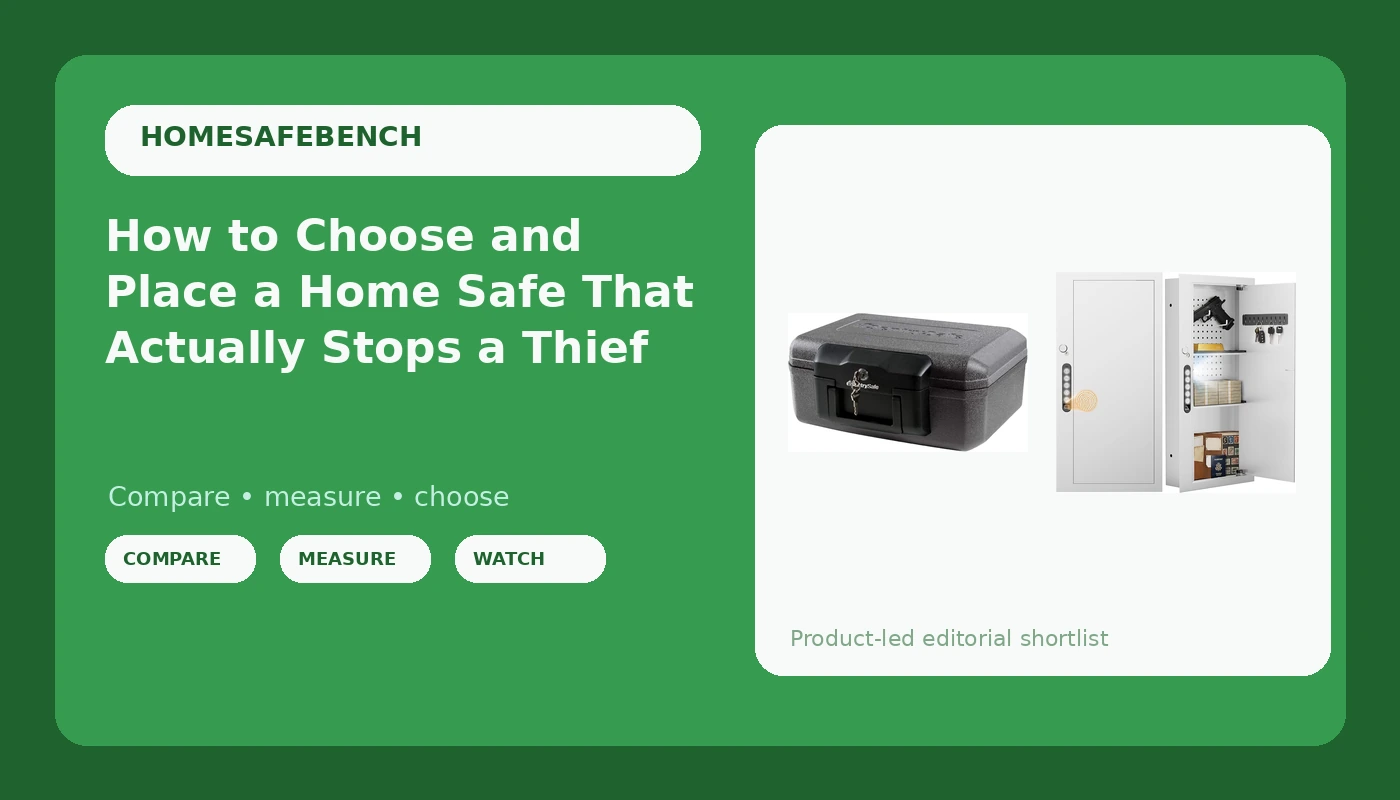
Most people buy a home safe backwards. They pick a box, carry it home, and then walk around the house looking for somewhere to put it. Home safe placement is the decision that actually determines whether your documents and valuables survive a break-in, and it is the one decision most buyers make last, standing in a closet with a tape measure and a hopeful expression.
I have been a locksmith for 25 years in Boise, Idaho. I have opened more safes than the manufacturers would like to admit, including a few the owners swore were impenetrable. I can open most consumer safes in about ten minutes with hand tools. The question that matters is not whether I can. It is whether the person who breaks into your house can, and how long they are willing to stand there trying.
That changes the way you shop. This guide is the order I would do it in: threat first, placement second, lock third, box last. Follow that order and you will spend less money and end up with a safer house.
Why you should trust me
I make my living selling security and I will tell you the thing most salespeople will not: nothing in the consumer price range is burglar-proof. Every safe I look at gets the same treatment. A pry test with a 24-inch crowbar at the door gap, a drop test to see what rattles loose, and a lock manipulation session to find out how the lock actually behaves when someone is patient.
I keep a workshop notebook of which locks fail under which tools. It is not a fun read for the manufacturers. I have also installed these things in my own shop and in my own house, and I have had to explain to a customer why the safe they trusted with their mother's rings did not hold.
Two things I will not do here. I will not call anything burglar-proof, because that word is a lie. And I will not tell you a heavy safe is automatically a good one. Weight matters, but weight without anchoring is just a heavier thing for a thief to carry.
What you are actually defending against
Before you look at a single product, name the threat. There are only three that matter for a home.
Smash and grab. Someone is in your house for five to fifteen minutes with a pillowcase and no tools. This is the overwhelming majority of residential theft. A locked container that is bolted down defeats this threat completely, and a cheap safe that a thief cannot pick up and cannot open fast is enough.
Targeted theft. Someone knows you keep valuables, or they find your safe and come back with a pry bar, a dolly, and time. No consumer safe stops this. What slows it down is a tight door gap, real bolt work, anchoring into structure, and a location that costs them minutes they do not have.
Fire and water. A house fire is the threat most people forget, and it is the one that destroys the things you cannot replace: deeds, passports, birth certificates, insurance paperwork, a drive full of family photos. Fire ratings are measured, not imagined, and I will get to the fine print in a minute.
Buy for the threat you actually face. For most households that is smash and grab plus fire, not a professional crew with a stethoscope and all afternoon.
How I evaluate a safe before I trust it
Four checks, in this order.
The lock. The lock is the safe. A $500 box with a $2 lock is a steel container with a suggestion attached. Mechanical dials are the most reliable and the slowest. Digital keypads are the honest middle ground and my usual recommendation. Biometric readers are fast and genuinely convenient, and they are also an electronic component with a battery, which means they fail eventually.
The door gap and the bolt work. Pry resistance lives in the gap between the door and the frame, not in the thickness printed on the box. A tight gap and live bolts that engage the frame are what make a crowbar boring. A wide gap and short bolts make it a two-minute job.
Weight and how it is anchored. A 20-pound safe is a theft convenience for anyone with a dolly and a flight of stairs. If the safe is not bolted into framing or a floor, it is portable no matter what it weighs.
The fire rating, read carefully. Minutes at a specific temperature, and an internal temperature limit. If the label does not state both, it is decoration.
Where a home safe actually belongs
The master bedroom closet is where everyone puts a safe, which is exactly why it is the first place a thief looks. Same for the home office behind the desk. Placement is free security, and most people give it away.
In-wall between the studs is the strongest placement for a homeowner. The safe disappears behind a hinged mirror, a closet wall, or the back of a linen closet, and the wall framing becomes part of the security. A thief who does not know it exists cannot attack it, and one who finds it is standing in an awkward position with no leverage.
A chest safe anchored to structure is the right answer for renters, apartment dwellers, and anyone who travels with documents. It goes where you go, which is its advantage and its weakness.
Low-traffic, non-obvious rooms. A laundry room, a stairwell wall, a hall closet, a utility room. Somewhere a burglar is not going to spend time. The goal is to buy minutes, and a safe in an unexpected place buys more of them than a more expensive safe in an obvious one.
Whatever you choose, anchor it. Lag bolts into studs or a concrete floor for the wall unit, a cable or bolt for the chest. Drywall anchors are theater. They hold a picture frame, not a safe, and anyone who has watched a safe come off a wall knows that sound.
Two safes that cover the two real jobs
The two units below are not competing with each other. One is a portable container for documents and cash, and one is a permanent fixture in a wall. Most households that get this right end up wanting the second one, and renters and travelers want the first.
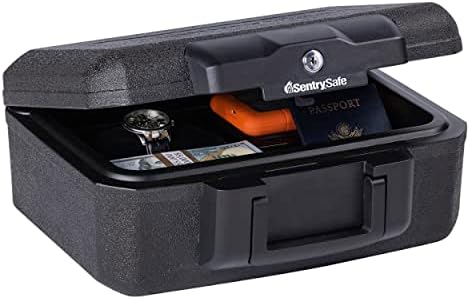
Budget pick: SentrySafe Fireproof Safe with Key Lock, Chest Lock Box for Home or Travel Secures Money, Documents, 0.18 Cubic Feet, 6.1 x 14.3 x 11.2 Inches, 1210
 Visit on Amazon →
This is the value standard for a portable document safe, and the key lock is the reason I like it. No battery to die, no keypad to fail, no code to forget. A key lock is a lock you can test in five seconds, and if you own two keys you can leave one with a relative and still get into your own documents.
The 0.18 cubic foot interior is document storage, not jewelry storage. Think passports, birth certificates, titles, a few folded documents, a little cash. It is small on purpose, and small is what makes it portable enough to take on a road trip or keep in a rental where you are not allowed to cut drywall.
Flaws but not dealbreakers: It is light enough for one person to carry, which is exactly why it must be cabled or bolted to something structural. A chest safe sitting loose on a closet shelf is a gift with a handle. The key is also the whole security model, so where you keep the spare matters as much as the safe itself.
Renters, travelers, and anyone who needs documents protected today without a construction project will get the most out of this one.
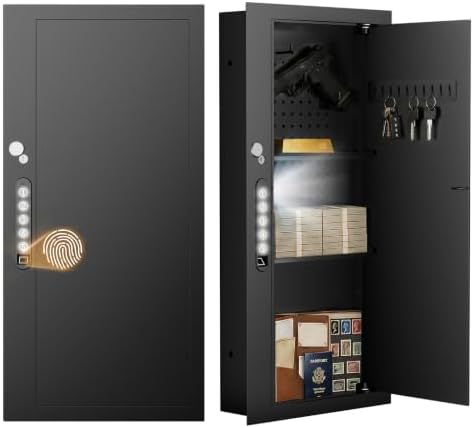
Our pick: 31.49‘’ Wall Safe Between the Studs, Biometric Hidden Safe with Removable Pegboard, In Wall Safe with Removable Shelf and Backlit Keypad (Fingerprint-White)
 Visit on Amazon →
This is the one I would put in my own closet wall. It sets between the studs, which means the framing does the anchoring work for you, and it disappears behind drywall and a hinged cover instead of announcing itself from a shelf. A safe a thief never finds is a safe that never fails a pry test.
The biometric reader plus backlit keypad covers both failure modes. Fingerprint for the fast open when your hands are full, code for when the reader is finicky, which happens with cold or damp fingers. The removable pegboard and shelf mean you can configure the interior instead of fighting it, and the removable shelf is the difference between storing a document folder and storing a document folder plus a small case.
Flaws but not dealbreakers: The biometric reader runs on batteries, and batteries are a single point of failure. Keep the keypad code memorized, keep the mechanical override key somewhere you can actually reach in an emergency, and test both before you patch the drywall. Installation also means cutting into a wall, so you need to confirm what is behind that wall before the saw comes out. Stud bay width and any wiring or plumbing in the cavity decide whether this is a 40-minute job or a call to a contractor.
Homeowners with a closet or stairwell wall, irreplaceable documents, and a willingness to spend an afternoon with a drywall saw should start here.
Step by step: installing an in-wall safe between the studs
Step one: pick the wall, then verify it. Interior wall, low-traffic room, and nothing on the other side you care about. Look for outlets, switches, and plumbing on both sides of the wall. A wet wall behind a bathroom is the wrong wall.
Step two: find the studs and confirm them. A stud finder gets you close, a thin nail or a strong magnet gets you the truth. Most interior walls are framed 16 inches on center, but old houses and remodels ignore that rule, so measure the actual bay before you order anything.
Step three: check the depth and the contents of the cavity. Insulation, wiring, a drain stack, a duct. If the cavity is crowded, pick another bay. This is the step people skip and regret.
Step four: mark and cut the opening. Trace the safe's face, cut inside the line, and keep the cutout piece. It is useful for patching and for hiding the safe later. A drywall saw and a steady hand beat a reciprocating saw here, because a reciprocating saw blade does not know where the wire is.
Step five: frame the opening if the bay is loose. If the safe does not sit tight against framing, add wood blocking so the mounting points land on real lumber. A safe screwed into drywall is a shelf.
Step six: set the safe and fasten it into the studs. Level it, then drive the fasteners into the framing on both sides. Check that the door swings freely before you finish anything.
Step seven: wire and program before you close the wall. Install batteries, program the fingerprint, set a code you will remember, and test the mechanical override key. Do this now, while the wall is still open, not after you have patched and painted.
Step eight: cover it and make it forgettable. A hinged mirror, a picture, or a closet shelf in front of the door. The point is that a stranger walking through your house does not see a safe.
Step by step: securing a portable chest safe
A chest safe takes ten minutes, and most of that is deciding where it goes.
Cable or bolt it. Run a security cable through the handle and around something structural, or bolt the body to a shelf or floor. If neither is possible, at least put it somewhere a thief has to work to reach, not on the nightstand.
Do not put it where you keep your jewelry box. Two obvious targets in the same drawer is one stop for a thief.
Keep the key off the safe. A spare key taped to the bottom of the safe, or in the drawer next to it, is not security. Off-site with a relative or in a second locked location is better.
Mind the seal. Fire protection depends on the door closing flush. Overstuffing a chest safe breaks the seal and voids the protection you paid for.
Key management and the backup plan
This is where most people fail, and it has nothing to do with the box.
Digital keypads are the honest middle ground, and I recommend them. Biometric locks are fast and occasionally terrifying, mostly because of what happens when the battery dies at the wrong moment. Whichever you choose, the plan is the same: a primary method, a secondary method, and a mechanical key stored somewhere that is not the same room as the safe.
Change the default code the day you install it. Test the backup method once a month. Keep the keypad clean and dry, because a keypad that eats batteries is usually a keypad with a bad seal or a cheap battery, and a keypad that fails silently is worse than a dial.
The fire rating fine print
Paper chars at around 451 degrees Fahrenheit. Media, meaning drives, discs, and film, is damaged well below that. A rating that says one hour at 1,550 degrees means nothing unless the label also tells you what the interior temperature stayed under during the test.
For documents, you want an interior that stays under 350 degrees for the rated period. For anything digital, you want much lower, and most chest safes in this class are paper-rated, not media-rated. Read the label, not the sticker on the front of the box. A safe that says fireproof without a rating and a duration is a steel box with a nicer word on it.
Mistakes I see most
Bolting nothing. A safe that is not anchored is a carrying case.
Hiding it in the master bedroom closet. That is the first place anyone looks.
Relying on a biometric reader with no backup. Convenience is not a security plan.
Keeping the spare key in the same room. Same problem, different drawer.
Buying by brochure thickness. Door gap and bolt work decide pry resistance, not the millimeter count in the marketing copy.
Ignoring the weight of the contents. A safe rated for a shelf load does not care about your coin collection, but the shelf does.
The tradeoffs, and what you are really paying for
The chest safe buys you portability, zero installation, and a mechanical lock that will work in twenty years. It costs you anchoring convenience and interior space. Check current Amazon price on the listing and compare it against the cost of replacing a passport, a deed, or a birth certificate, which is mostly measured in weeks of your life, not dollars.
The wall safe buys you concealment, framing-anchored security, and interior space you can actually organize. It costs you an afternoon, a drywall repair, and a battery you have to remember. Check current Amazon price on that listing too, and then decide whether you are the kind of person who will maintain a keypad and a fingerprint reader, or the kind who wants a key on a ring.
Neither one stops a determined professional. Both stop the thief you are actually likely to meet, which is the person who wants to be out of your house in ten minutes.
The bottom line
Decide the threat first. Pick the location second, and pick a location a thief will not think of before he thinks of your bedroom. Choose the lock third, and prefer a lock you can test and back up over one you cannot. Buy the box last, and anchor it no matter which box you buy.
That is the whole job. Do it in that order and a modest safe in the right wall beats an expensive safe in the wrong one, every time.