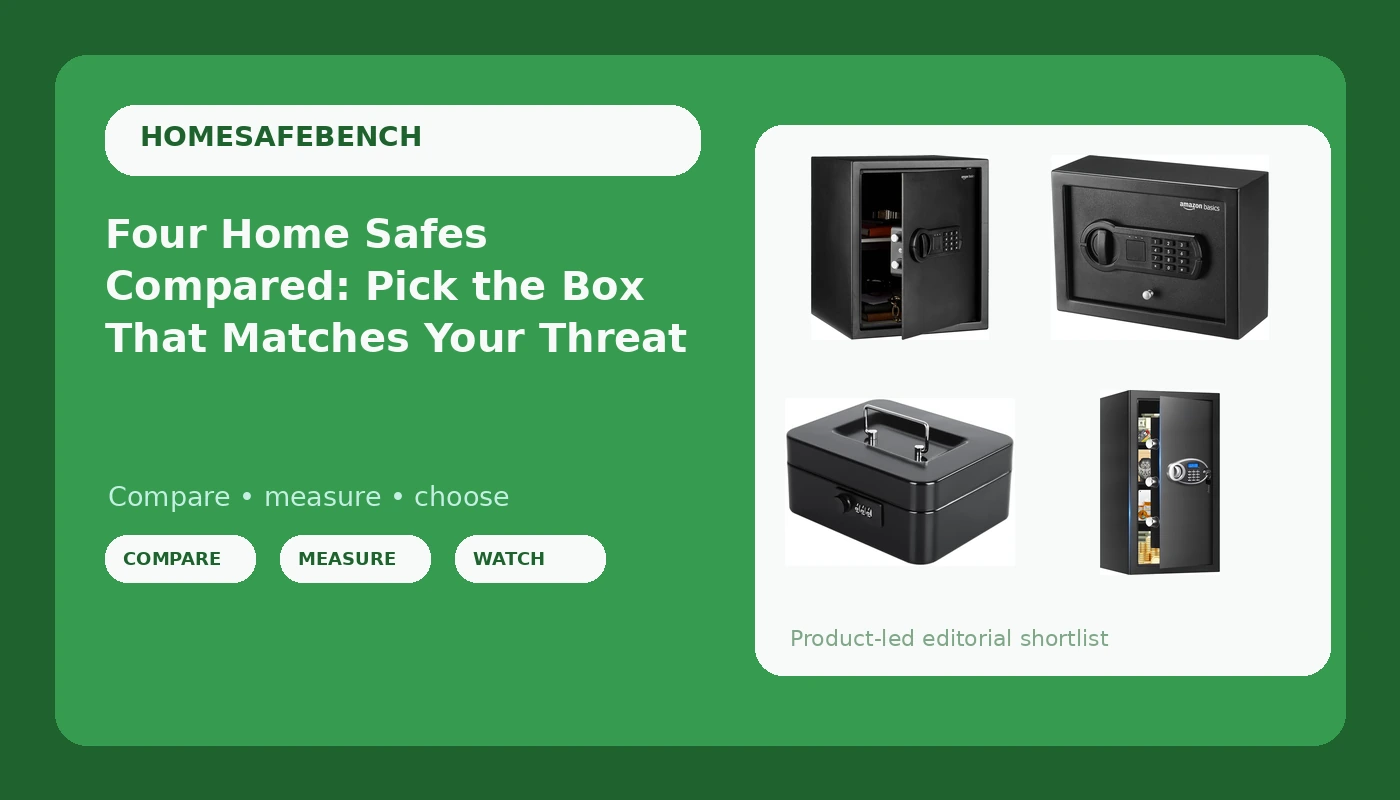
I have been opening safes for a living for 25 years in Boise, and the four units in this comparison cover almost the entire range of what people actually buy: a 6.2 cubic foot fireproof cabinet, a 1.52 cubic foot steel safe with an electronic keypad, a slim drawer box, and a cash box with a combination lock. When someone asks me about home safes for documents and cash, they usually want one word back: best. I do not have one word. I have a threat model, and so should you.
The best all-around pick for most households is the Amazon Basics 1.52 cubic foot steel safe, because it swallows a real document folder, can be anchored, and still gives you keypad access in seconds. The big fireproof cabinet wins if you are protecting a decade of paperwork and family records. The drawer box and the cash box are not scaled-down versions of either one. They solve narrow problems, and I will be blunt about where each of them stops.
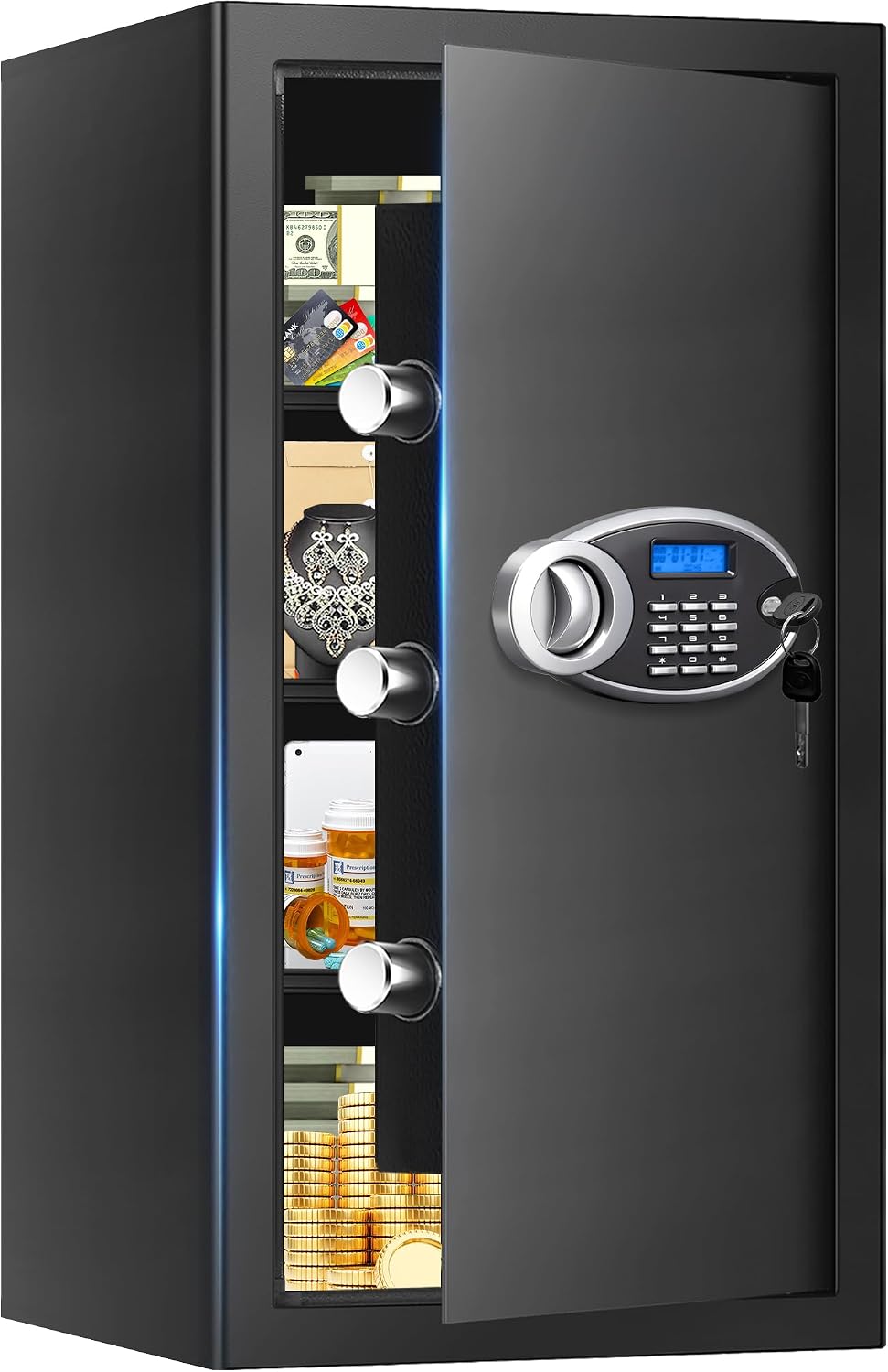
6.2 Cuft Large Fireproof Safe for Home Documents, Digital Security Personal Safety Box with Programmable Keypad, Spare Keys and 3 Removable Shelf
The only real capacity play here, with three shelves, a keypad, and spare keys
Heavy, bulky, and the fire rating fine print has to be verified in writing
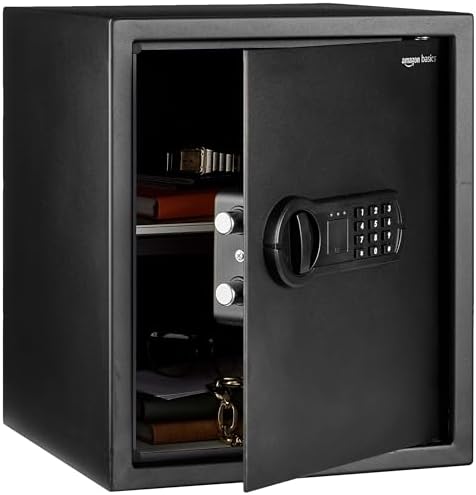
Amazon Basics Steel Home Security Safe with Electronic Keypad, 1.52 Cubic Feet
Best balance of size, weight, anchoring, and quick keypad access
Not a fire cabinet, and no match for a thief with tools and time
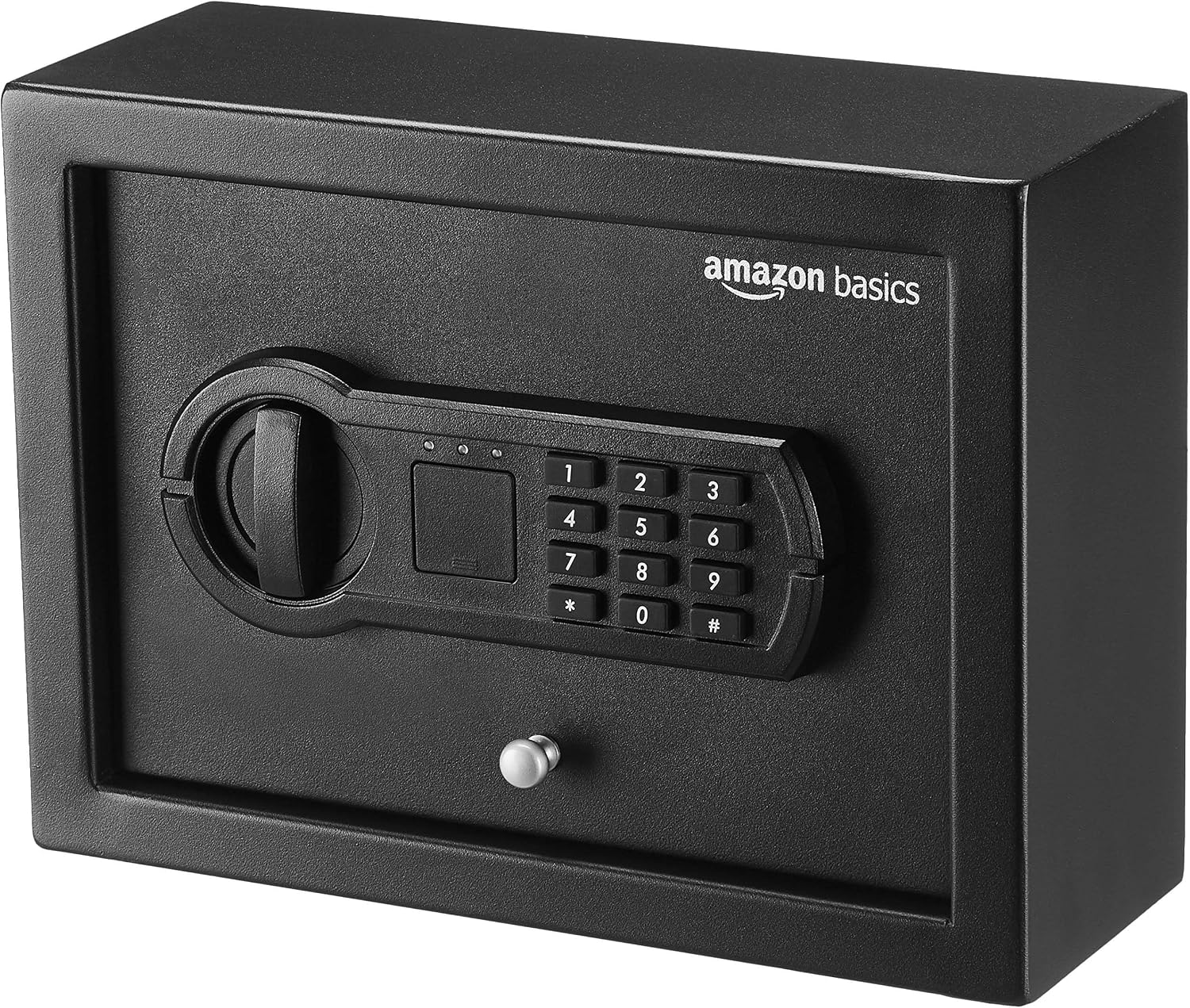
Amazon Basics Small Slim Desk Drawer Security Safe with Programmable Electronic Keypad, 0.1 Cubic Feet
Fast access exactly where you stand, and a shape that fits a drawer
Tiny capacity, light enough to carry off, zero fire protection
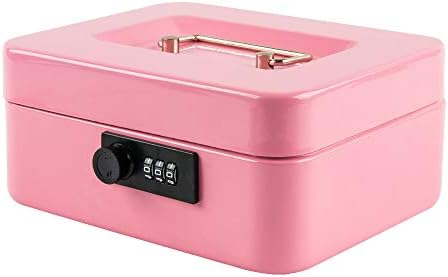
KYODOLED Small Cash Box with Combination Lock & Removable Money Tray, Black
Cheap, organized cash handling with a tray that lifts out
It is a locking box, not a safe, and it should never hold anything irreplaceable
Prices and availability were captured from Amazon Creators API and may change.
How I judge a safe before I ever touch the keypad
The lock is the safe. A heavy door with a cheap lock is a steel box with a suggestion printed on the front, and that is true at every point in this comparison. Two of these four have programmable electronic keypads, one has a mechanical combination, and the difference matters more than the cubic footage printed on the carton.
The second thing I look at is the door gap, the space between the door and the body when the door is shut. That gap is what a crowbar wants to find. A tight gap and a proper bolt pattern resist prying. A wide gap with two short bolts does not, no matter how thick the door steel is or how confident the marketing copy sounds.
Third is weight. A light safe is not a safe, it is a carrying case with a lock on it. Anything one person can lift and walk out with will eventually leave through the front door during a burglary, usually with the contents still inside. Anchoring changes that math, and anchoring is a five-minute job with a concrete bit and four bolts.
Fourth is the fire rating. A rating is minutes at a specific temperature, tested by somebody other than the marketing department. "Fireproof" is a word. A rating with a number and a standard behind it is a claim you can check. Read the fine print, not the sticker, and remember that paper, photos, and digital media all fail at different temperatures.
The 6.2 cubic foot fireproof cabinet
This is the unit for people with a file drawer problem. Three removable shelves, a programmable keypad, and spare keys mean you can organize by category instead of by pile, and the capacity is the entire reason to buy it. Birth certificates, passports, deeds, tax returns, external drives, medication, and the box of family photos you keep meaning to scan can all live in one place.
The trade-offs are real. A cabinet this size is heavy and wants to be bolted to a concrete floor, not set on a shelf in a closet. A taller door means a longer door gap, and on budget imports the steel gauge and the bolt work are where the money gets saved. Before you trust it with irreplaceable paper, find the fire rating in writing, confirm whether it is rated for paper or for media, and confirm the keypad has a mechanical override that does not depend on the battery.
The 1.52 cubic foot steel safe
This is the one I would put in most houses. The footprint is 13.8 inches wide, 13 inches deep, and 16.5 inches tall, which is small enough for a closet, an office corner, or the bottom of a wardrobe, and large enough to hold a document folder, jewelry, passports, and a backup drive with room left over. The removable shelf lets you split the interior into a quick-access layer and a bulk layer.
Electronic keypad safes in this class live or die on two things: the battery and the override. Change the battery on a schedule, once a year, whether it complains or not, and store the override key somewhere that is not inside the safe and not on the same ring as your house key. Anchor it. A safe this size is a two-person lift for a determined thief, which is one person with a hand truck.
Where it loses: it is not a fire cabinet. If your priority is protecting paper through a house fire, buy the bigger unit or buy a rated document box and accept the smaller capacity. If your priority is keeping a smash-and-grab burglar from walking off with your passport and your grandmother's rings, this safe, bolted down, does that job for a sensible amount of money.
The slim drawer safe
This one is 0.1 cubic feet, roughly 11.8 inches by 8.6 inches by 4.4 inches, and it exists for exactly one reason: speed. It goes in a desk drawer, a nightstand, or on a shelf where you actually stand when you need it, and the keypad gets you in without hunting for a key. If you have ever hidden something important so well that you needed twenty minutes to find it, you understand the value of a box that lives where you live.
What it will hold: a passport, a few hundred dollars in cash, a flash drive, a spare car key, a couple of pieces of jewelry. What it will not hold: a document folder, a laptop, or anything you would cry about losing in a fire. It is light, which means it is carryable, so bolt it to the drawer or the shelf, or accept that a burglar with two free hands can take the whole thing.
The cash box
I need to be honest about this one, because the category confuses people. A cash box with a combination lock and a removable money tray is a locking box. It is not a safe. It has no pry resistance worth measuring, no fire protection, and no anchoring, and a person with a screwdriver and a bad attitude will get into it.
Where it shines is small-business cash handling and household organization. The removable tray makes making change easy, the combination means no key to lose, and the price is what it is. Use it for a yard sale till, a farmers market stall, a scout troop's dues, or a teenager learning to budget. Do not use it for your passport, your grandmother's rings, or the cash you would need after a house fire, because it will not be there.
The trade-offs nobody prints on the box
- Fire ratings are measured, not imagined. Minutes at a temperature, with a standard behind the test, is the only claim worth trusting. If the box says "fireproof" and nothing else, treat it as a steel box.
- Weight is security. The heavier the unit and the better it is anchored, the less attractive it looks to a thief on a schedule.
- The lock is the safe. A digital keypad is the honest middle ground between convenience and security, but the override key and the battery are the two failure points, so plan for both.
- Door gap and bolt work decide pry resistance. Steel thickness in a brochure is not the same thing as bolt work in a door.
- Nothing here is burglar-proof. Any safe can be opened by someone with the right tools, enough time, and no nosy neighbors. Your job is to make the time cost higher than the reward.
Which one for which threat
If your threat is a smash-and-grab burglar who is in the house for four minutes, anchor the 1.52 cubic foot safe or the drawer box and you have done the sensible thing. If your threat is a house fire and a filing cabinet worth of irreplaceable paper, the 6.2 cubic foot cabinet is the only one of the four built for that job. If your threat is a drawer full of loose valuables and you need them in ten seconds, the slim drawer safe is the right shape. If your threat is a cash drawer that needs a lid, the cash box does that and nothing more.
What I would do in your shoes
Buy for the threat you actually face, not the one in the movies. Most households need one anchored keypad safe in the 1.5 cubic foot range and a plan for the keypad battery. Households with real paperwork need a rated fire cabinet on a bolted floor. Everyone else is buying convenience, which is fine as long as you call it what it is.
Whichever one you pick, do the boring work: bolt it down, change the battery, store the override key somewhere else, and write down what is inside so your family knows what to look for after the worst happens. The safe is only half the plan.