I have been a locksmith for 25 years, most of them in Boise, and I have opened more consumer safes than the companies that built them would like on the record. A few of those were the safes their owners swore were impenetrable. So when four small home safes landed on my bench for this 2026 comparison, they did not get a spec sheet review. They got the standard treatment here: a pry test with a 24 inch crowbar, a drop test onto concrete, and a lock manipulation session. This comparison of small home safes is what came out of that bench time, plus the parts of the buying decision that no product listing ever mentions.
Related: Fire Safe Ratings Explained: What One Hour At 1,550F Actually Means
For most households, the 1.2 Cub Small Fireproof Safe for Home is the pick, because a real digital keypad, a key override, and a tight door gap cover the threats people actually face. If you own documents you cannot replace and you have a wall cavity to spare, the Viking Security Safe VS-52BLXW is the only unit in this group I would call a safe rather than a steel box with a lock.
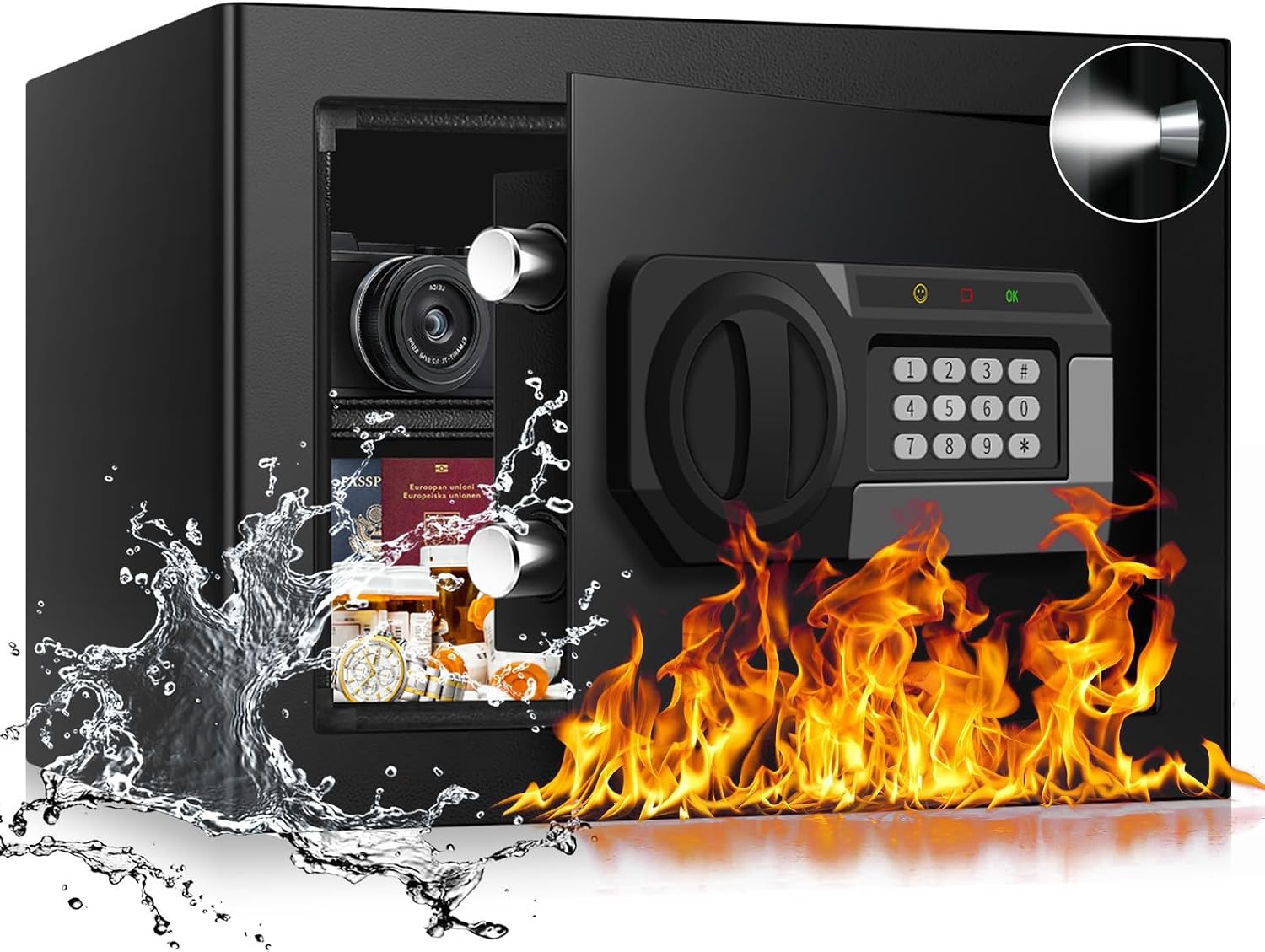
1.2 Cub Small Fireproof Safe for Home
Digital keypad plus a key override, removable shelf, and the tightest door gap in the small format group
Light enough for one person to carry out, so it has to be anchored to mean anything
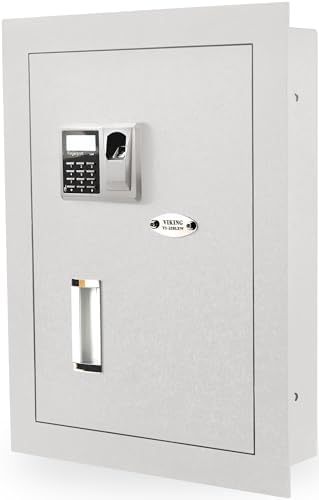
Viking Security Safe VS-52BLXW Hidden Wall Biometric Safe
Mounts inside a wall cavity and disappears behind a picture, so the best defense is that nobody knows it exists
Highest cost here, needs a stud bay and drywall work, and biometric locks live or die on battery discipline
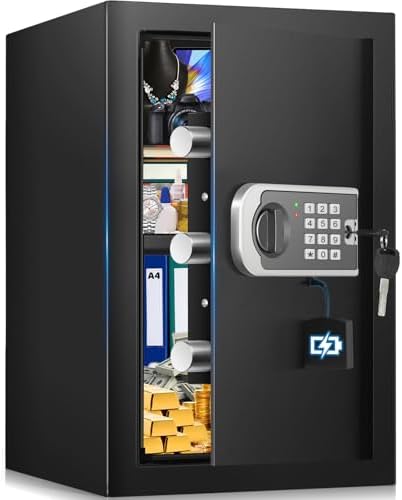
[16.54" Tall] Safe Box, 2.8 Cuft Home Safes With Fireproof Bag
2.8 cubic feet of real capacity with a 16.54 inch tall body, so binders and a laptop fit, and the fireproof bag covers your papers
Tall cabinet shape tips if it is not bolted down, and the keypad is the entire lock
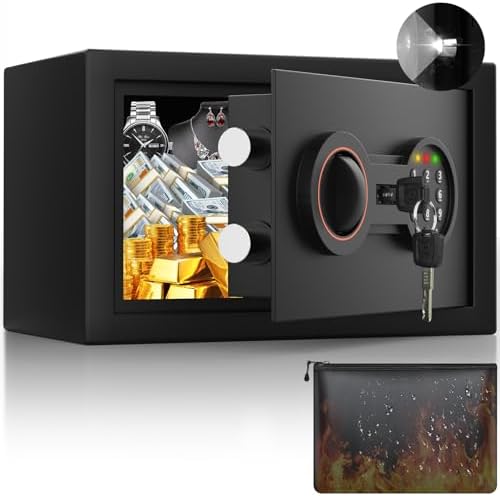
Small Safe for Home, 6.69"H Safe Box with Fireproof Waterproof Bag
Cheapest way into the category, small enough for a nightstand, and the included bag is the part doing the real work
6.69 inches tall and light. This is a deterrent, not a safe, and I would not trust it alone with documents
Prices and availability were captured from Amazon Creators API and may change.
What I check before I care about the brochure
My questions do not change, no matter what the box claims. First, what is the lock? A digital keypad, a mechanical dial, and a biometric reader are three different products wearing the same steel door. Second, can I get a crowbar into the door gap? If I can seat the tip, the safe is a math problem, and I am good at math. Third, what does the fine print on the fire rating actually say? Minutes at a specific temperature, or a sticker that says fireproof with no test behind it. Fourth, and this is the one that matters: would I trust this with someone's irreplaceable documents?
That last question is the whole review. Everything else is sales copy.
The lock is the safe
A $500 safe with a $2 lock is a steel box with a suggestion. That is not a slogan, it is the pattern I have watched repeat for two and a half decades. Thieves rarely attack the body of a cheap safe. They attack the lock, the hinge, or the door gap, in that order.
Digital keypads are the honest middle ground. They are fast, they do not require you to remember a combination sequence, and the good ones let you set your own code and keep a key override for the day the battery dies. The failure mode is predictable: a keypad that eats batteries. If a manufacturer does not publish a battery life figure, plan on replacing them on a schedule whether the low battery light comes on or not.
Biometric readers are convenient and occasionally terrifying. When they work, they are the fastest way into a safe, which is exactly the problem. Fast for you is fast for anyone who gets your fingerprint, and a reader that fails to recognize you at 2 a.m. with a dead battery is a very expensive paperweight. The Viking unit here is the one biometric in this group, and it earns its place for a specific reason I will get to.
Mechanical dials remain the most reliable lock ever put on a consumer safe. No battery, no firmware, no reader to scratch. They are also slower, and slow is a feature only if you have the patience for it.
Door gap and bolt work
Pry resistance is not about how thick the brochure says the steel is. It is about the gap between the door and the frame, and where the bolts land.
A tight door gap leaves no room for a crowbar tip. A wide one gives a thief a fulcrum and a lever arm, and once that tip seats, every pull bends the frame a little more. The bolts are the second half. More bolts, better safe, and bolts that extend into the frame on all four sides of the door are worth more than a thicker door plate. A safe with one bolt and a wide gap is a locked drawer with better marketing.
This is also why weight matters. Weight is security, because a 20 pound safe is a theft convenience for anyone with a dolly and a set of stairs. If the safe is not bolted to something structural, the lock is irrelevant. A thief takes the whole box and opens it later with tools and time.
Fire ratings are measured, not imagined
A one hour rating at 1,550 degrees Fahrenheit means something only if the test was real. Read the fine print. A rating that names a temperature and a duration was tested. A sticker that says fireproof was printed.
There is a second problem nobody mentions: the box is not the whole system. Paper starts to char well below the temperature inside a burning house, and the moisture in the air inside a safe during a fire does as much damage as the heat. That is why the fireproof bag matters. A bag inside a box gives you two barriers instead of one, and two of the four products here ship with one. If you are storing documents, the bag is not an accessory. It is the protection.
The 1.2 cubic foot digital keypad safe
This is the safe I would hand to most people, and the reason is boring: it does the ordinary things well. Digital keypad, key override for the day the electronics quit, removable shelf so you can actually organize the interior, and a small enough footprint that it fits in a closet, under a desk, or on a shelf without announcing itself.
The door gap is the tightest of the small format units in this group, and that is the single number I care about most at this size. A tight gap plus a keypad plus a key means the cheapest attack, prying, is also the slowest one. Slow is what you want. A thief with a crowbar is on a clock.
The honest criticism is weight. This is a one person carry. Set it on a closet shelf and a thief with a backpack walks out with your passport, your backup drive, and your grandmother's rings. Bolt it down, or accept that you bought a delay device rather than a safe.
The Viking hidden wall biometric safe
The Viking is the only unit in this comparison that solves the actual problem with small safes, which is that small safes are stealable. A wall safe that mounts inside a stud bay and hides behind a picture or a mirror removes the dolly from the equation. A thief has to find it, then cut it out, then deal with whatever is framing it. That is a different threat model entirely.
The biometric reader is the part I have mixed feelings about. I have made fun of biometric safes for years, and then I installed one for my own shop, because speed matters when you are reaching for a key or a register drawer during business hours. For a hidden wall safe the calculus is different than for a nightstand box. The safe is already concealed, so the reader is a convenience rather than a security layer, and you should keep the backup key somewhere that is not the wall cavity.
What it costs is real, and so is the install. You need a stud bay, a drywall saw, and the willingness to cut a hole in your house. If you rent, or if you are not handy, that is a genuine reason to pass. If you own and you have a closet wall you do not care about, this is the best answer here for anything you cannot replace.
The 2.8 cubic foot tall safe box
Capacity is the feature people underrate, and this is the unit that fixes it. At 2.8 cubic feet with a 16.54 inch tall body, it holds what a real household actually has: binders, a laptop, a folder of documents, medication, a small box of valuables. The smaller units in this comparison force you to choose. This one does not.
It ships with a fireproof bag, which tells me the manufacturer understands the difference between a box and a document protection system. Put the papers in the bag, put the bag in the safe, and now you have two barriers between your birth certificate and a house fire.
The trade off is geometry. A tall, narrow cabinet is top heavy when the door swings open, and an unanchored tall safe is a tipping hazard as much as a theft target. This one gets bolted, ideally into a corner where the wall helps you. The keypad is also the whole lock on this model, so battery discipline matters more here than on the unit with a key override.
The 6.69 inch small safe
Let me be plain about this one, because it is the cheapest thing here and cheap deserves an honest description. At 6.69 inches tall, this is a box for a handgun-sized item, a wallet, a few documents, or a nightstand stash. It is small enough to tuck into furniture and light enough that a determined teenager can carry it out.
What it does well is the entry point. It comes with a fireproof and waterproof bag, and the bag is genuinely the most valuable part of the package. If your threat is a house fire or a burst pipe and your valuables are a passport and a title deed, the bag inside a locked box is a real answer at the lowest cost in this group.
What it does not do is stop anyone. Treat it as a deterrent and a document bag holder, not as a safe. I would not put an heirloom in it without bolting it into a drawer or a closet floor, and even then I would call it a speed bump.
Which safe for which threat
Buy the safe for the threat you actually face. For most people that is smash and grab, not a professional crew, and the answer is a locked, anchored box with a tight door gap. That is the 1.2 cubic foot unit, and it is why it sits at the top of this comparison.
If your threat is fire and water, capacity plus a fireproof bag beats lock sophistication every time, and the 2.8 cubic foot safe box is the pick. If your threat is a burglar who has time and a pry bar, the only real answer here is the hidden wall safe, because concealment beats steel at this price level.
And if your threat is simply "I have nowhere to put this and I want it locked up tonight," the 6.69 inch box does that job for the least money, as long as you understand what you bought.
One more thing, and I mean it: no consumer safe in this comparison stops a determined thief with tools and privacy. Nothing is burglar proof. What you are buying is minutes, and minutes are worth paying for.
What I am testing next
There is a 2026 fireproof document safe on the bench right now with a one hour rating and a door gap I do not like. I am running it through the same crowbar and drop protocol, and I am logging where the frame flexes first. The notebook says the lock will be the weak point, and the notebook is usually right. Full report when the warranty is already void.