Related: Fireproof Safe Ratings Explained: What 30, 35, and 60 Minutes Actually Mean
Most people who come to me for a home safe buying guide have already picked a model. They walk into my shop with a link on their phone and a question about price. Then I ask what is going inside it, where it will sit, and who they are worried about. The answers usually change the choice.
I have been a locksmith in Boise for 25 years. I have opened safes the owners swore were impenetrable, and I have watched a modest keypad box outlast an expensive one because it was bolted to a slab. The lock is the safe. A heavy door with a cheap lock is a steel box with a suggestion. Weight is security too, since a 20-pound safe is a theft convenience for anyone with a dolly.
Four products cover most of what a household actually needs: a fireproof document safe with dual entry, a light hotel-style box for shared spaces, a wall safe that disappears into a stud bay, and the anchor plate that keeps any of them from walking out the door. Here is how I would sort them, and what to check before you spend.
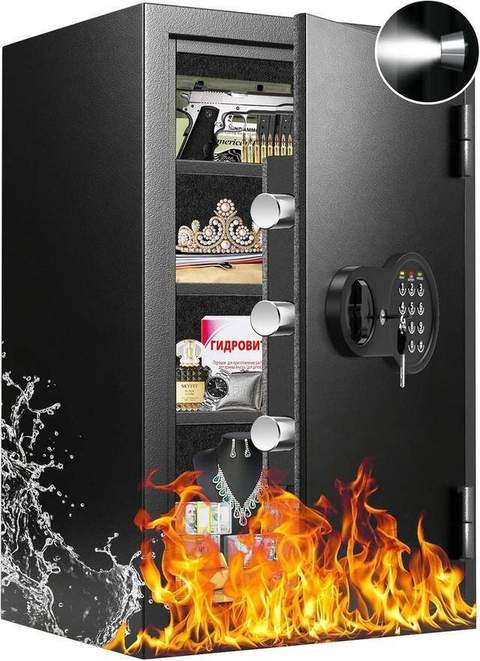
Mitlvge 35Min Real Fireproof Safe Box: best for documents and valuables
The Mitlvge is where I would point a homeowner first if the contents are paper. The name claims a 35-minute fire rating, and 35 minutes is a real figure in this world. It sits at the low end of what a residential fire test produces, but it is a number, not a mood. Fire ratings are measured, not imagined. Read the fine print and look for the temperature the test was run at. A rating with no degrees attached is a sticker, not a rating.
It stands 23.4 inches tall, which is a useful height for hanging files and document wallets without taking over a closet floor. The water and fireproof construction matters more than most people expect. The fire is often survivable. The water the fire department leaves behind is what ruins the paperwork.
The lock is where this one earns its place in the list. Keys and a pass code give you two ways in, and neither one is a battery. That is the honest middle ground. Biometric locks are fast and I have installed them, but a dead battery is still a dead battery, and a key override is the difference between a five-second entry and a service call. Three removable shelves let you split the interior between documents, jewelry, and the things you do not want to think about twice. The smart alert tells you when the door opens, which is worth more than it sounds if you travel.
What I cannot give you from a product listing is a pry test number. What I can tell you is what to look at when it arrives: the door gap and the bolt work. A tight gap is half the security.
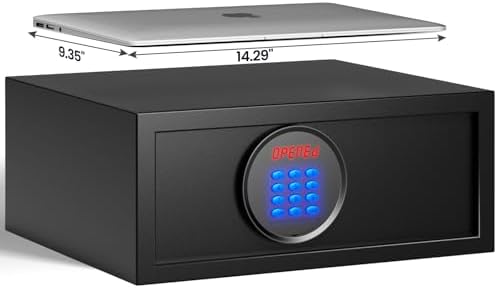
KornerBatl 19.4 lb Hotel & Dorm Safe Box: best for shared spaces and laptops
At 19.4 pounds this is the lightest safe here, and that is the whole story. On a hotel or dorm shelf it makes sense. An admin password lets whoever manages the room reset a forgotten code without drilling the door, and the interior fits a laptop, a passport, and a small camera. For a dorm, a first apartment, or a rental where you cannot open up a wall, that is a real use case.
In a house, a 19.4-pound box is a carry-out item. Someone with a backpack and thirty seconds takes the whole thing, and then they have unlimited time to work on the lock in a parking lot. That is not a knock on the build quality. It is physics. Buy this one and bolt it down.
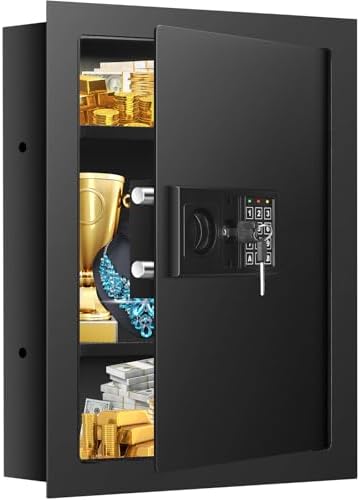
25.6" Tall Fireproof Wall Safe Between Studs: best for hiding in plain sight
A wall safe sized for 16-inch stud centers is the answer for anyone who wants the safe to not look like a safe. It recesses into the cavity, so there is no floor space lost, no obvious box in the closet, and no easy grip for a crowbar at the base. That placement does more for theft resistance than most of the marketing language you will read this year.
The 25.6-inch height leaves room for documents and a couple of small boxes. The combo lock is the part I like most. A mechanical dial does not need a battery, does not beep, and does not have a keypad that eats batteries in a month, which is a pet peeve of mine. It is slower to open than a keypad, and I keep a dial on my own shop safe for exactly that reason.
Two things to plan for. A wall safe goes into a wall you are willing to open, so this is a project rather than a drop-in. And the fire rating applies to the box, not to the wall around it. A rated box in an unrated wall is a rated box in a hot wall. It still beats a shoebox.
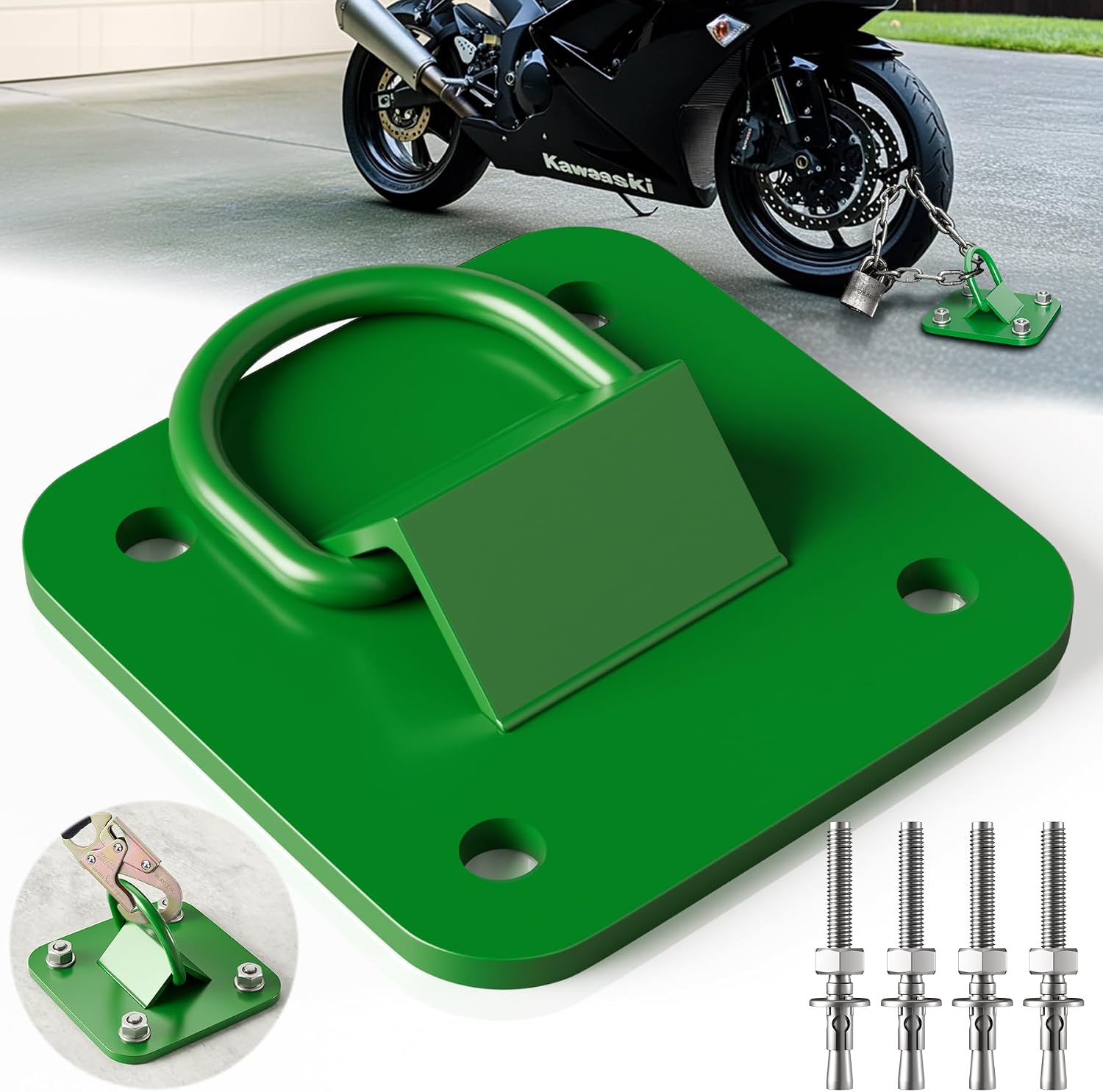
D Ring Anchor Plate: the cheap part that makes the rest work
This is not a safe. It is the reason a safe stays in the house.
A reusable concrete anchor plate bolts to a slab or masonry floor and gives you a hard point to chain or cable a safe to. It comes as a single pack, and it is the least expensive way to fix the biggest weakness in consumer safe ownership, which is that most safes are never secured at all. An unanchored safe is a safe that gets carried.
If you are buying the KornerBatl, buy this with it. If you are buying the Mitlvge, this is what keeps a two-person lift from turning into a permanent loss. If you are installing the wall safe, the wall is already doing that job.
How I evaluate a home safe
Four things, in order.
The lock. What is it, and what happens when it fails? A dial needs no power. A keypad needs a battery and, ideally, a key override. A biometric needs both plus a finger that works in the cold. I am not against biometrics, I installed one at my own shop, but I would not want one to be the only way into a safe holding a passport.
The door gap and bolt work. Pry resistance comes from how tightly the door sits in the frame and how much steel slides into it, not from the thickness printed in the brochure. A crowbar wants a gap. Take the gap away and the job gets loud and slow.
The fire rating's fine print. Minutes at a temperature. If a listing says fireproof and gives you no minutes and no degrees, treat it as a claim rather than a rating.
Weight and anchoring. Under about 50 pounds, assume it can leave the building. Plan to bolt it.
I do not hand out "burglar-proof" verdicts, because nothing is burglar-proof. The real question is whether a thief with five minutes and a crowbar gives up and takes the television instead.
The four products side by side
| Product | Format | Lock | Best for |
|---|---|---|---|
 Visit on Amazon → Visit on Amazon →Mitlvge 35Min Real Fireproof Safe Box |
Freestanding, 23.4 in tall | Key and pass code | Documents, jewelry, valuables |
 Visit on Amazon → Visit on Amazon →KornerBatl 19.4 lb Hotel & Dorm Safe Box |
Freestanding, 19.4 lb | Admin password | Laptops, dorm rooms, rentals |
 Visit on Amazon → Visit on Amazon →25.6" Tall Fireproof Wall Safe Between Studs |
Recessed, 16 in stud centers | Combo lock | Hidden theft resistance |
 Visit on Amazon → Visit on Amazon →D Ring Anchor Plate |
Accessory, 1 pack | None | Anchoring any safe above |
What the specs tell you
Read the table as a set of trade-offs rather than a ranking.
If fire is your threat, the Mitlvge is the pick. A 35-minute rating, water resistance, and three shelves mean documents, passports, and jewelry in one box, with a key and a code backing each other up. That combination is what I would want if a house fire is the scenario I am planning around, which for most families it is.
If theft is your threat, the wall safe is the strongest of the four, and it is not close. A safe bolted inside a stud bay has no exposed base, no dolly access, and no obvious silhouette. It also asks the most of you up front, since it is a wall project and the combo lock is slower to open. That trade is usually worth it.
If you rent, or you are equipping a dorm room, the KornerBatl is the practical answer. The admin password feature exists because shared spaces need a reset path that does not end with a locksmith. Just add the anchor plate and a cable, because 19.4 pounds is not a theft deterrent on its own.
The anchor plate is the multiplier. It costs the least and it changes the math on the other three. It is the one item here I would buy even if I were not buying a safe yet.
One more thing about ratings. A fire rating on a box does not travel to the wall around it, and it does not cover the second floor if the floor itself goes. Store the irreplaceable stuff on the lowest level you can, and keep a copy somewhere else. No safe is a substitute for a backup.
Should you buy the Mitlvge fireproof safe box?
Yes, if paper and small valuables are the point. Dual entry means a battery failure does not lock you out, the 35-minute rating is the kind you can verify in the fine print, and the height fits real document storage. It is the one I would choose for a home office or a bedroom closet, and it is the easiest of the four to live with day to day.
Should you buy the KornerBatl hotel and dorm safe?
Yes, for a dorm, a rental, or a spare room you share. No, if it is going on the floor of a house you own and you never plan to bolt it down. At 19.4 pounds, it needs the anchor plate to be a security product rather than a convenience product.
Should you buy the wall safe between studs?
Yes, if you own the wall and you want the strongest theft resistance in this group. Budget a weekend for the install and accept a dial that takes a few extra seconds. This is the option I would recommend to someone who tells me they have already been broken into once.
Should you buy the D Ring anchor plate?
Yes, and honestly, buy it first. It is the cheapest line item in this article and it addresses the failure I see most often: a safe that was never secured. A reusable concrete anchor plate plus a cable or chain turns a light box into something that stays put.
The bottom line
Buy the safe for the threat you actually face. For most households that is a smash-and-grab and a house fire, not a professional crew with tools and time. The Mitlvge covers the fire and the documents. The wall safe covers the theft. The KornerBatl covers the shared space. And the anchor plate covers the mistake almost everyone makes.
Check the door gap when it arrives, bolt it down, and keep a copy of the important papers somewhere else.